

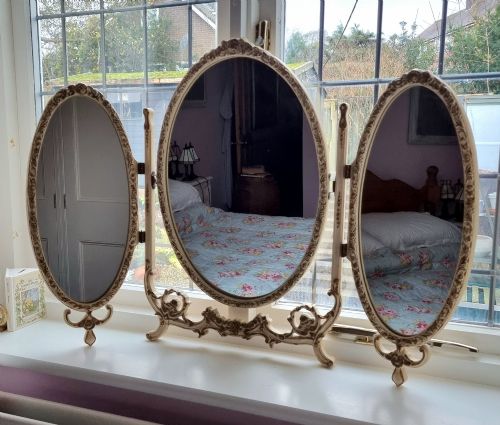
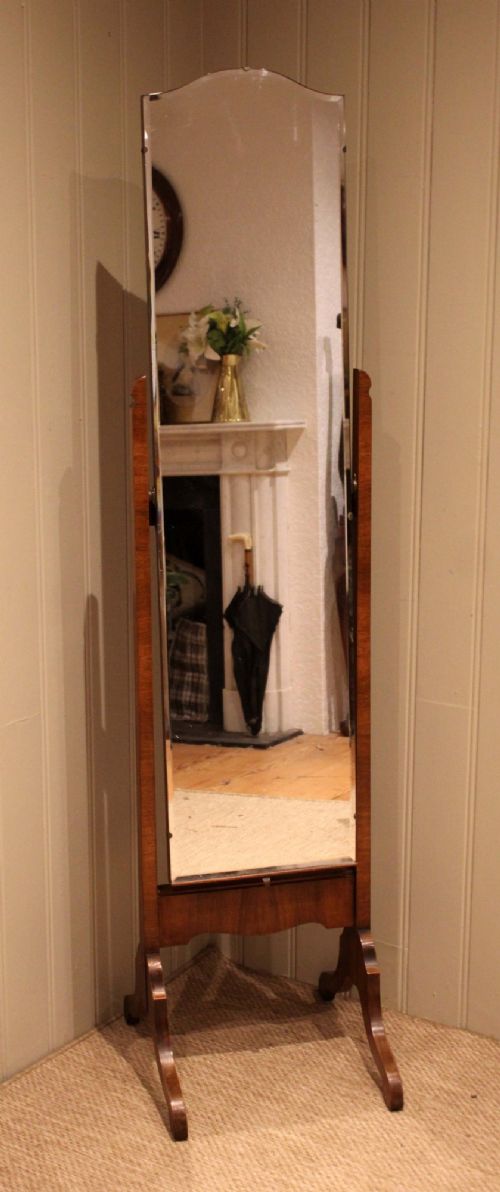
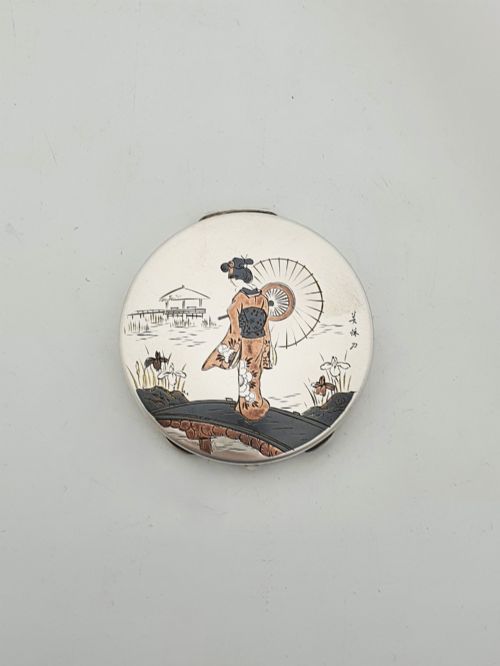
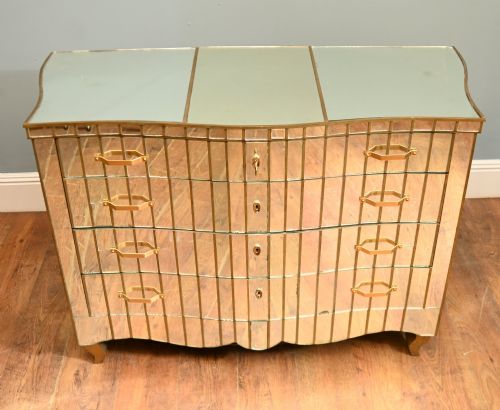
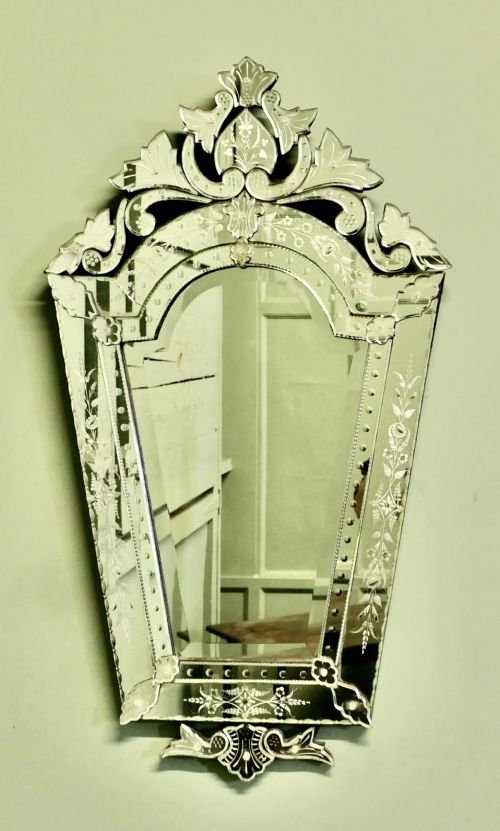
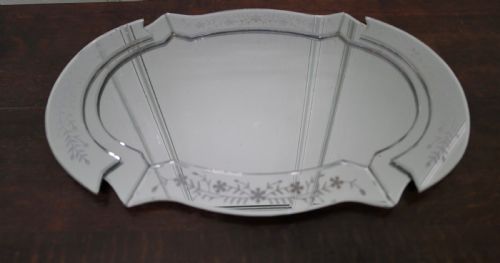


Deco Style Mirror
These deco style mirror pieces bring geometric elegance and strong lines into a room, making them essential for a sharp interior scheme.
Deco Style Mirror
A deco style mirror brings together the bold geometry and clean outlines characteristic of early twentieth-century design. When searching for a deco style mirror, buyers encounter wall hangings, trays, and framed pieces originating mostly from the 1920s and 1930s, alongside occasional Edwardian and mid-century examples.
The selection on this page ranges from French Art Deco leather wall mirrors and wrought iron hall stands to Venetian cut glass mirror wine trays and Odeon designs. These functional objects double as striking wall art that reflects light and opens up a space.
Most items date from the interwar period, capturing the energetic design ethos of the era through segmented glass plates, metal frames, and architectural silhouettes.
How they were made
Makers utilised a combination of traditional cabinet-making and modern industrial materials, mounting glass and mirrored panels into frames of wood, brass, chrome, and wrought iron. Leather and cut glass also appear as primary elements, demonstrating the varied craftsmanship applied to these domestic objects.
Metalwork involved framing and structural support using iron, brass, and chrome to achieve the sleek metallic sheen central to the aesthetic. Wood sections, including oak, provided solid backings and complementary cabinetry details.
Deco Style Mirror Retail Price Guide 2026
Typical asking prices for deco style mirror among the pieces listed under this phrase on Sellingantiques today, from the lower quarter to the upper quarter. They describe what is for sale here now, not the wider market.
The listings span four distinct decades, stretching from 1900 Edwardian pieces through the 1920s and 1930s Art Deco peak to 1950s items.
What varies in quality
The distinction between standard examples and superior pieces rests on the complexity of the glass work and the execution of the framing materials. Pieces featuring specialised cuts, combined media such as leather with glass, or intricate wrought iron integration represent higher levels of period craftsmanship.
Design configuration dictates desirability, with unusual architectural silhouettes, such as Odeon forms or layered Venetian plates, standing apart from simpler utilitarian frames.
Demetre Chiparus·Heals·Harrods
The Deco Style Mirror Glossary
- Art Deco
- A design style emerging in the 1920s characterised by streamlined forms, geometric patterns, and modern industrial materials.
- Venetian Mirror
- A glass wall mirror featuring decorative etched or bevelled glass panels surrounding a central reflective plate.
- Odeon
- An architectural style influence appearing in deco design, known for curved, stepped tiers reminiscent of cinema facades.
- Mercury Mirror
- A type of silvered glass mirror producing a mottled, aged reflective quality distinct from modern uniform silvering.
Deco Style Mirror: Frequently Asked Questions
What defines a deco style mirror?
These mirrors are defined by geometric shapes, clean lines, and an emphasis on industrial and exotic materials popular in the interwar decades. They often incorporate stepped profiles, segmented glass plates, and metallic framing.
Such characteristics distinguish them from earlier ornate Victorian styles or later minimalist designs, anchoring them firmly in the aesthetic of the 1920s and 1930s.
How do I hang a heavy wall mirror?
Heavy wall pieces require secure mounting into solid wall studs or the use of appropriate toggle bolts designed to bear substantial weight. Because many period frames combine heavy wood, iron, and thick glass, proper wall anchors are essential for safety.
Consulting a professional installer ensures the weight is distributed evenly across the hanging brackets provided on the frame.
Where were these pieces used originally?
They served as functional decorative items in entrance halls, bedrooms, and reception rooms of interwar homes. Hall stands and wall mirrors welcomed visitors and bounced light into narrow corridors.
Smaller mirrored trays and dressing pieces were kept in private chambers or entertaining spaces for serving drinks and organising personal items.
How do I care for antique glass?
Cleaning requires a soft microfiber cloth and a mild, ammonia-free cleaning solution applied to the cloth rather than directly onto the glass surface. This prevents moisture from seeping behind the silvered backing or into vulnerable wooden and metal frames.
Avoiding harsh chemicals preserves both the original mercury or silver backing and the integrity of the surrounding frame materials.