


Dark Wood Tub Armchair
A dark wood tub armchair brings solid craftsmanship and curved comfort into a room, offering supportive seating rooted in past centuries.
Dark Wood Tub Armchair
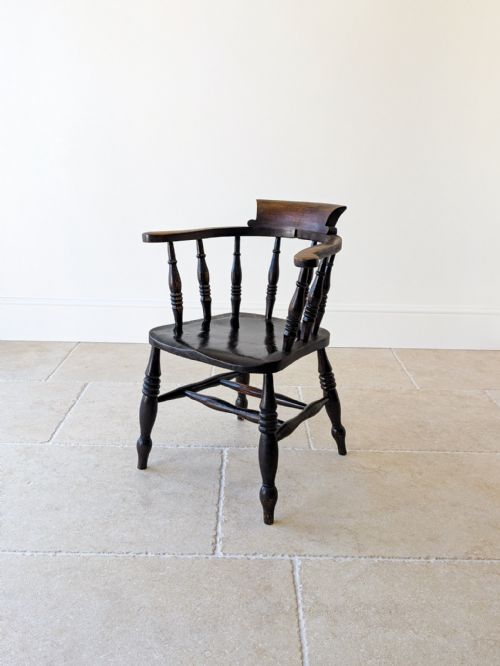
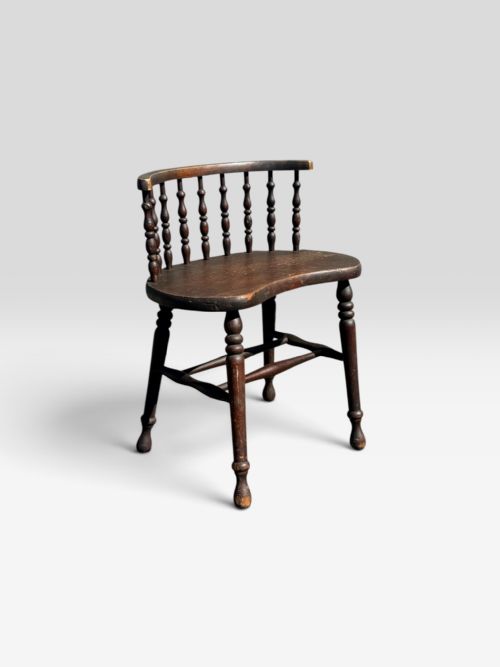
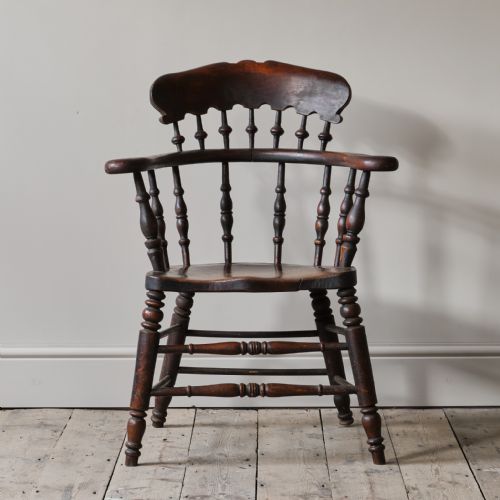
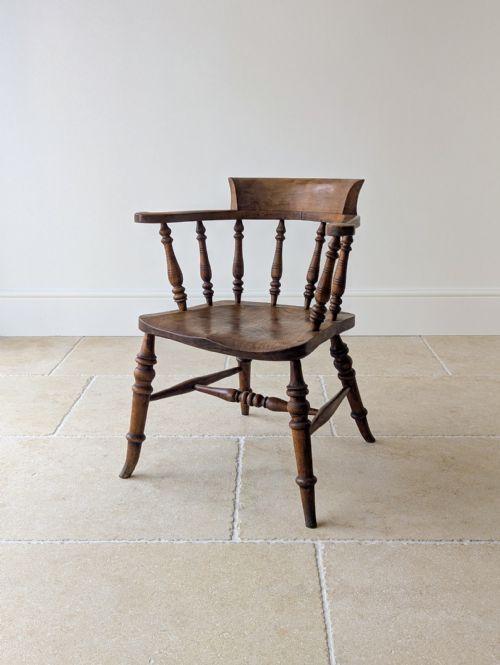
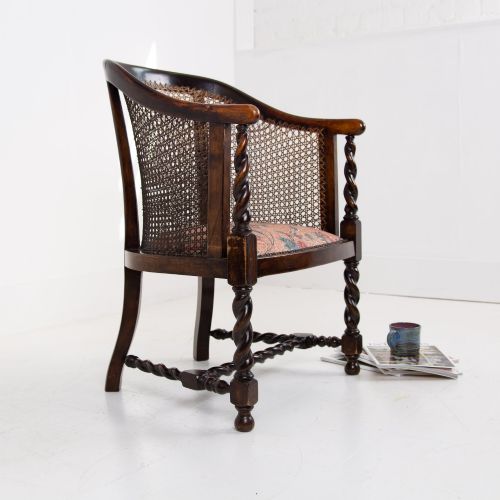
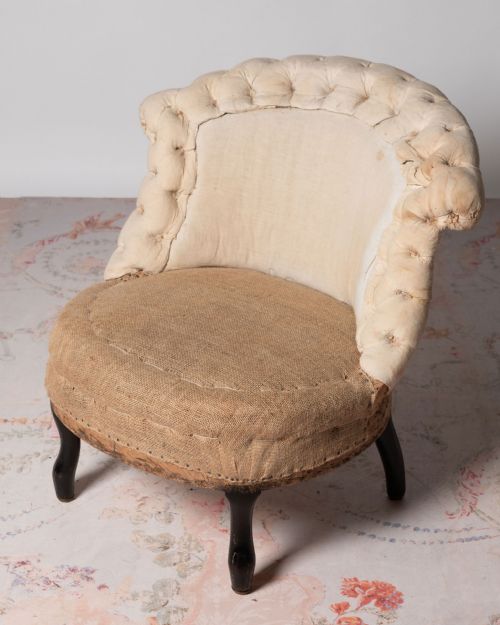
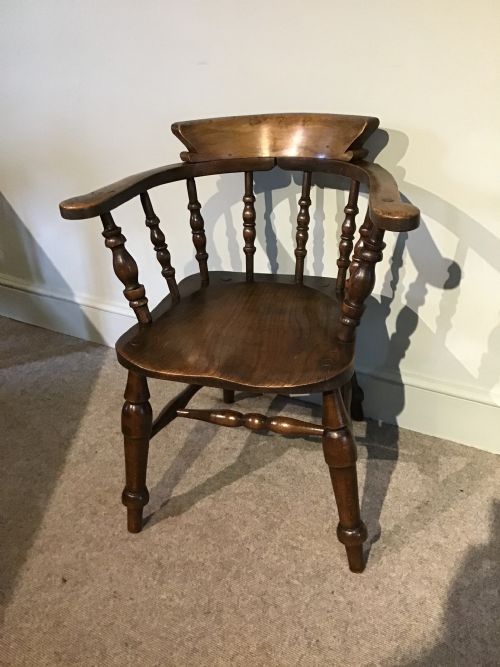
The dark wood tub armchair encompasses several forms found across the nineteenth and early twentieth centuries, including captain's chairs, smokers' bows, library chairs, and bergères. These pieces combine enclosed, curved backs with sturdy timber frames designed for daily utility.
Victorian and Edwardian iterations dominate the selection, often appearing in rich mahogany, elm, and beech. Vernacular country seating sits alongside more formal Regency and French-influenced library armchairs, reflecting diverse domestic interiors of the past.
Materials and Construction Methods
Construction relies on durable hardwoods such as mahogany, elm, beech, and oak, frequently paired with secondary timbers like ash and alder. Frames utilise turned spindles, bentwood techniques, and solid curved backs to achieve structural integrity.
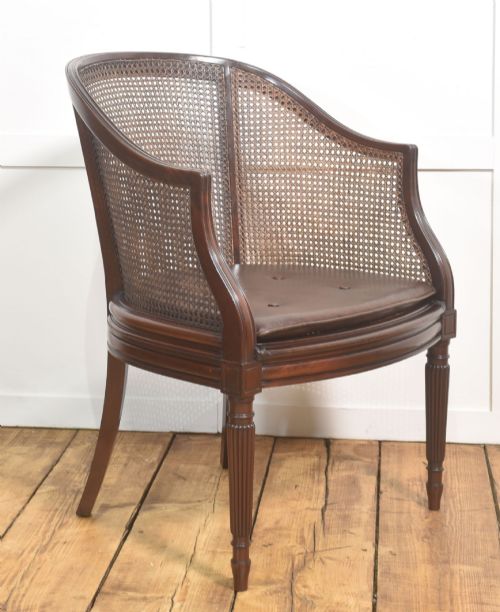
Seating elements incorporate cane, leather, and upholstered fabric panels, sometimes enhanced with brass inlays or marquetry details. These traditional joinery and upholstery methods ensure the curved forms endure through generations of use.
Listings feature woods like mahogany, elm, beech, oak, and hardwood, spanning the nineteenth and early twentieth centuries.
Distinctions in Quality
Quality rests upon the selection of timber and the precision of the curved joinery that forms the distinct tub or bow shape. Superior examples display thoughtful grain matching and robust construction that withstands the stresses placed on rounded frames.
Refinement in decorative elements, such as brass inlay, marquetry, or finely turned spindlework, separates standard utilitarian seating from more ambitious library and desk chairs. The integrity of the original cane or upholstery work also influences the overall standard of the piece.
The Dark Wood Tub Armchair Glossary
- Tub armchair
- A chair featuring a continuous curved back and arms that form a single enclosed, rounded shape. This design provides supportive enclosure for the sitter.
- Smokers bow
- A sturdy, low-backed Windsor-style armchair popular in nineteenth-century vernacular settings. It typically employs turned spindles and a solid wooden seat.
- Bergère
- An enclosed upholstered armchair with wooden framing exposed around the sides and back. Many period examples incorporate cane panels within the wooden structure.
- Marquetry
- The art of applying decorative veneer pieces to a structure to form intricate patterns. This technique frequently enhances Edwardian and Regency mahogany frames.
- Bentwood
- Wood softened by steam and bent into curved structural components. This method defines specific nineteenth-century seating designs.
Dark Wood Tub Armchair: Frequently Asked Questions
What is a tub armchair?
A tub armchair is a seat featuring a continuous curved back and arms that wrap around the sitter like a tub. These chairs appear in various forms across the nineteenth century.
They serve well as desk chairs, library seating, or occasional chairs in living spaces and bedrooms.
How do I identify a Victorian tub chair?
Victorian tub chairs typically utilise dark hardwoods like mahogany, elm, or beech, often featuring turned wooden legs and upholstered components. Look at the joinery and timber selection for clues regarding the period of manufacture.
Comparing the style against documented Victorian and Edwardian examples helps clarify the date of production.
Where were these chairs used historically?
These armchairs found places in libraries, studies, offices, and formal rooms as desk or reading chairs. Vernacular variants also served in country settings and domestic parlours.
Their sturdy construction made them practical for daily seating needs in busy Victorian and Edwardian households.
Are these chairs suitable for daily use?
Most of these timber armchairs are built with robust traditional joinery designed for regular seating. Ensuring the frame and any cane or upholstery remain stable guarantees comfortable daily service.
Placing them in studies or living rooms allows them to function just as they did in the nineteenth century.