



Dark Wood Serving Platter
These dark wood serving platter options are practical table pieces that bring rich grain and period character to everyday hosting.
Dark Wood Serving Platter
A dark wood serving platter encompasses various serving trays, platters, bowls, and lazy Susans designed for presentation and table use. The selection spans distinct eras, ranging from Georgian and Victorian to Edwardian and Art Deco periods.
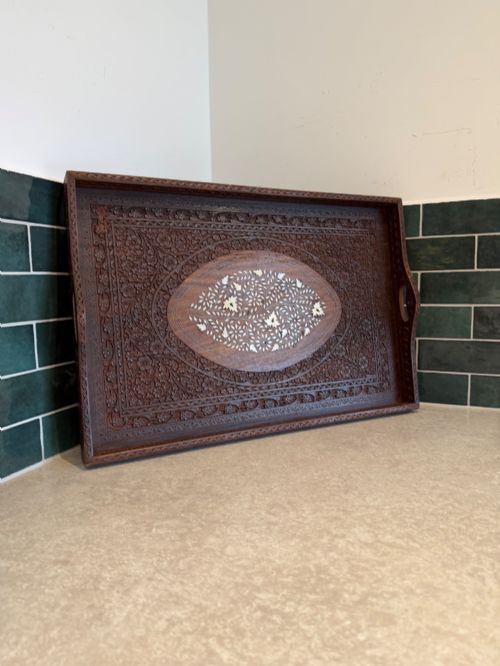
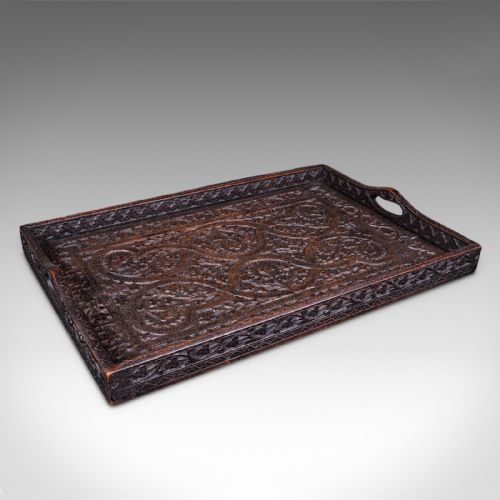
Buyers are most likely to encounter mahogany and walnut forms alongside regional variations such as Kashmiri and Anglo-Indian designs. These pieces often incorporate brass fittings, bone inlay, or glass elements to enhance their utility.
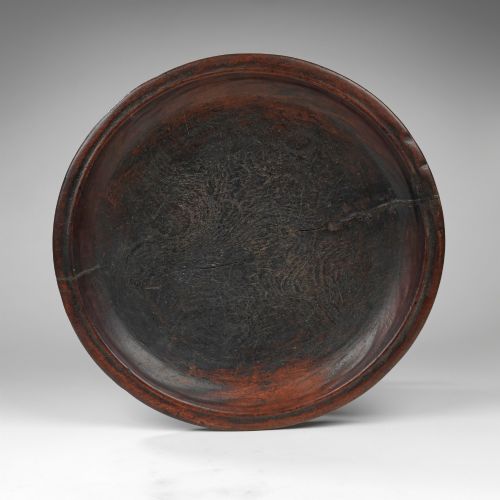
Object types vary from simple turned wooden bowls and galleried oval trays to specialised cartographer serving trays featuring maps and modernist French Macassar pieces. Each example reflects the distinct craftsmanship of its respective decade.
Materials and construction
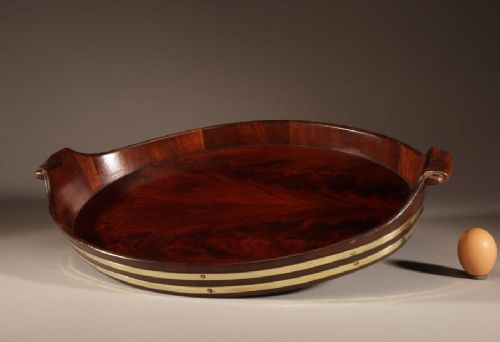
Makers utilised dense timbers including mahogany, walnut, teak, and general hardwood to ensure structural integrity for serving use. Coopered construction techniques appear in brass-bound pieces, requiring precise stave shaping to form sturdy oval trays.
Carving and turning define the surface decoration, seen in regional Anglo-Indian and Kashmiri work as well as traditional English turned wooden bowls. Scalloped edging and raised galleries are shaped directly from the solid wood during construction.
Metal and decorative accents integrate through brass handles and fittings, alongside intricate bone inlay work found in specific regional pieces. Rotating mechanisms support functional lazy Susan forms from the late nineteenth century.
The listings feature four distinct wood varieties: mahogany, walnut, teak, and general hardwood.
Distinctions in quality
Quality rests upon the selection of timber and the precision of the joinery, particularly in coopered vessels and galleried edges where structural strength matters. Superior examples display crisp, hand-carved detailing that retains sharp definition across regional motifs.
The integration of secondary materials such as brass mounts or bone inlay demonstrates the maker's level of care and expense. Finer items maintain balanced proportions and harmonious grain patterns across the primary surface.
The Dark Wood Serving Platter Glossary
- Coopered
- Method of construction using tapered wooden staves joined edge to edge, commonly bound with metal hoops as seen in traditional bucket and tray making.
- Galleried
- Having a raised decorative border or railing around the edge of a tray to prevent items from sliding off.
- Macassar
- A dense, figured tropical hardwood originating from Indonesia, frequently utilised in Art Deco design for its striking dark grain patterns.
- Lazy Susan
- A rotating circular tray placed on a table to assist with sharing food and condiments.
- Anglo-Indian
- Style describing items produced in India during the British period, combining local carving traditions with European forms.
Dark Wood Serving Platter: Frequently Asked Questions
What periods do these platters come from?
The listings include pieces spanning the Georgian, Victorian, and Edwardian eras, alongside later nineteenth and twentieth-century examples up to the nineteen-thirties.
Each period introduces distinct regional styles, ranging from traditional English mahogany work to Kashmiri and Anglo-Indian carved designs.
How were these wooden trays used originally?
These items served functional roles in domestic settings for afternoon tea, meal service, and table presentation. Specialised forms like rotating lazy Susans and cartographer trays indicate specific dining and display uses.
Their robust construction in hardwood allowed them to handle daily carriage of heavy tableware and glassware.
How do I care for a antique wooden tray?
Maintain the timber by keeping it away from direct heat sources and sudden humidity changes to prevent warping or cracking. Clean surfaces gently with a dry or barely damp cloth and apply appropriate wood balms occasionally to nourish the grain.
Avoid submerging antique wooden items in water or placing them in dishwashing machines.
How do I identify different wood types?
Mahogany typically displays a reddish-brown tone with a straight grain, while walnut offers darker, more varied figures. Teak and general hardwoods present distinct weight and colour characteristics depending on their regional origin.
Examining the underside and unpolished areas often reveals the true colour and texture of the timber.