


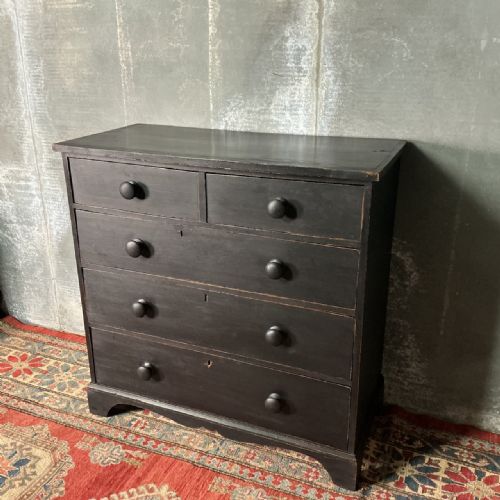
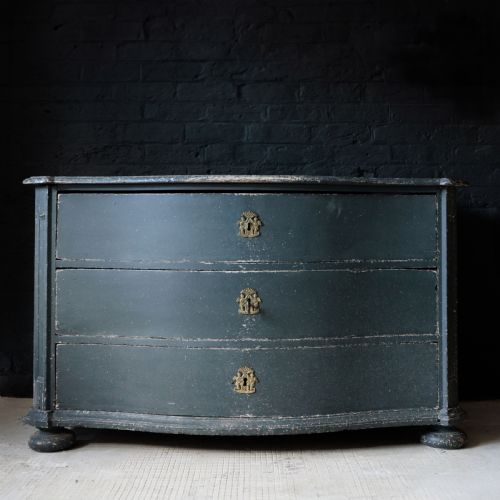
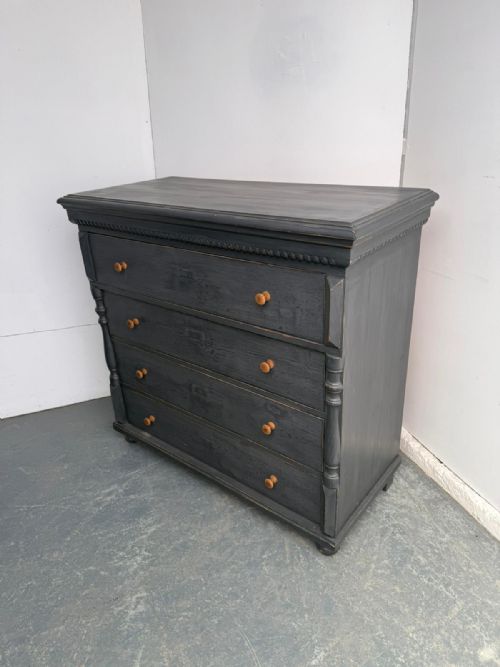


Dark Painted Dresser
A dark painted dresser brings deep tone and grounded character to a room, offering practical storage disguised in rich historical colour.
Dark Painted Dresser
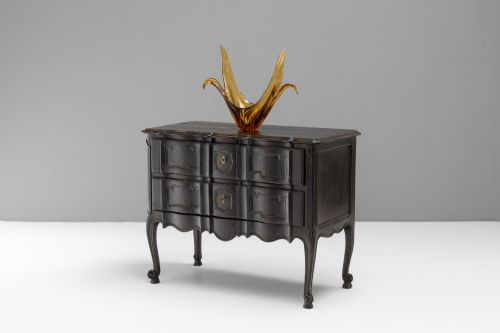
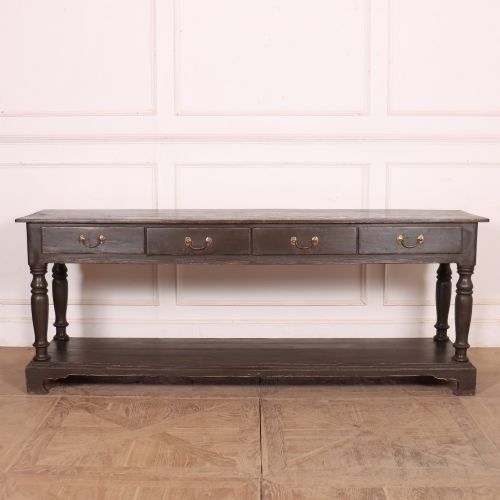
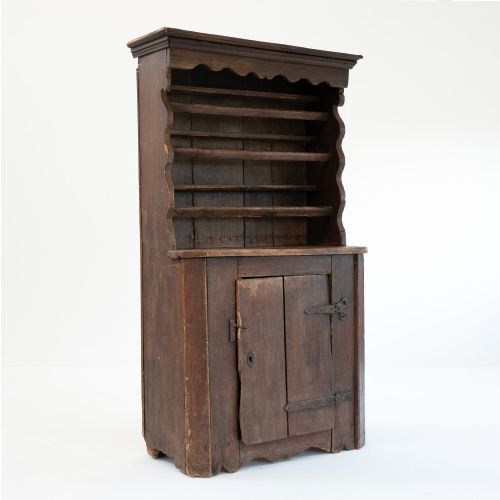
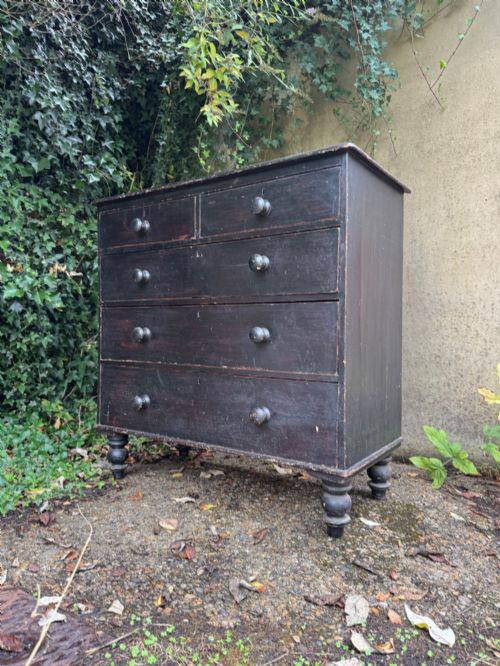
A dark painted dresser combines substantial timber storage with a heavily pigmented surface, spanning forms from kitchen potboard bases to housekeepers cupboards and library bookcases. These pieces emerge predominantly from the eighteenth and nineteenth centuries, taking shape across English, Irish, French, and Scottish country traditions.
The version most commonly encountered is the nineteenth century pine or oak kitchen dresser base, often retaining original scumbled or muted grey paint. Alongside these sit tall library bookcases and serpentine chests, reflecting both utilitarian farmhouse origins and more formal regional designs.
How they were made
Makers constructed these carcasses primarily from solid pine and oak, frequently incorporating brass handles, glass panes, and iron hinges for everyday utility. Surfaces received layers of oil or water-based paint, sometimes manipulated to simulate more costly timbers like rosewood.
Techniques relied on traditional joinery paired with decorative finishes, including scumbling where translucent glazes were dragged across the base coat to mimic grain. This protective and decorative skin allowed utilitarian softwoods to suit domestic interiors.
Dark Painted Dresser Retail Price Guide 2026
Typical asking prices for dark painted dresser among the pieces listed under this phrase on Sellingantiques today, from the lower quarter to the upper quarter. They describe what is for sale here now, not the wider market.
Miniature French dressers existed too, perhaps built as apprentice pieces or grand toys for the well-travelled doll.
What varies in quality
Quality rests heavily on the survival of the original painted surface rather than a later cosmetic coat, showing authentic wear from decades of domestic life. The integrity of the underlying timber framework and regional proportions also dictate the distinction between standard utility items and finer vernacular pieces.
Cabinetmaking nuance separates simpler boards from sophisticated serpentine commodes and carved oak fronts. The harmony between the original hardware, structural drawers, and untouched patination defines the upper tier of these examples.
The Dark Painted Dresser Glossary
- Potboard dresser
- A kitchen dresser featuring a low slatted open shelf beneath the main drawers for storing heavy pots and pans. This lower board sits just above the floor.
- Scumble
- A decorative paint technique involving a translucent top layer dragged or combed over a lighter base colour to simulate wood grain or add texture. It was widely used on nineteenth century furniture.
- Serpentine
- A curved furniture front characterised by a convex centre flanked by concave ends, or vice versa. This fluent shape demands advanced woodworking skill.
- Housekeepers cupboard
- A large storage cabinet traditionally used for linens and dried goods in substantial country houses. These pieces often feature deep panelled doors.
- Commode
- A low chest of drawers or cabinet, typically originating from French or formal English traditions. The term denotes a refined domestic storage unit.
Dark Painted Dresser: Frequently Asked Questions
How do I clean a painted finish?
Dust gently with a dry microfibre cloth to remove surface particles without disturbing the historic surface.
Avoid modern chemical cleaning agents or excess moisture, which can lift original paint layers.
Are these pieces made of solid wood?
The listings consist almost entirely of solid timbers such as pine, oak, and regional hardwoods.
Construction relies on traditional joinery rather than modern manufactured board.
What is a potboard base?
A potboard base is a dresser configuration featuring an open lower shelf rather than enclosed cupboards.
Country cooks used this space for large cookware and heavy crockery.
How do I spot original paint?
Original paint exhibits natural craquelure, soft edge wear, and integrated patination developed over generations of use.
Later overpainting often feels flat and conceals the underlying timber texture.