
Dark Oak Wooden Trunk
A dark oak wooden trunk offers sturdy storage with centuries of rich grain and dark patination.
Dark Oak Wooden Trunk
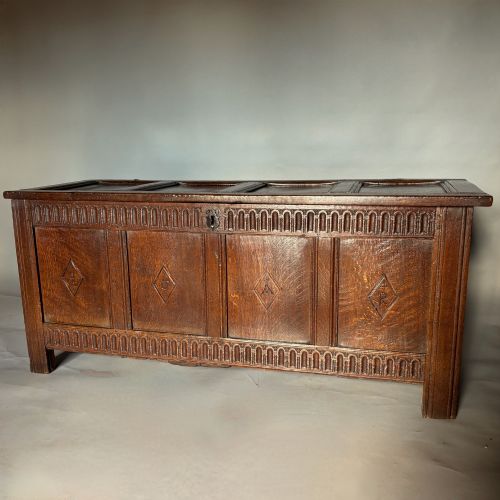
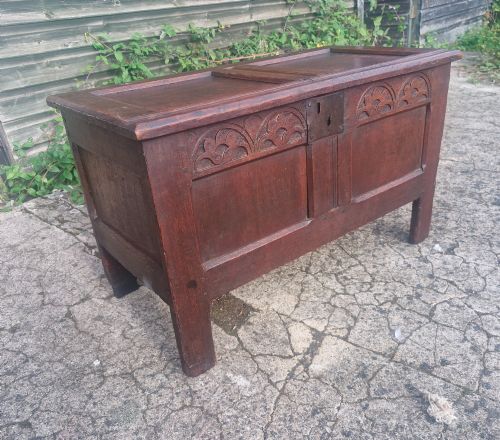
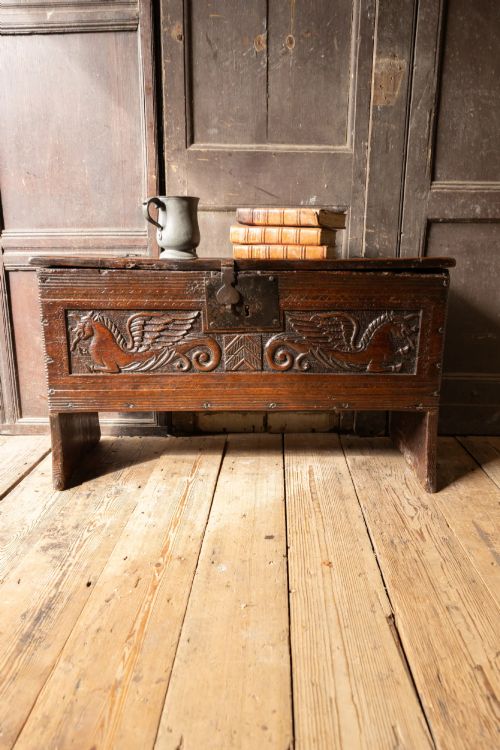
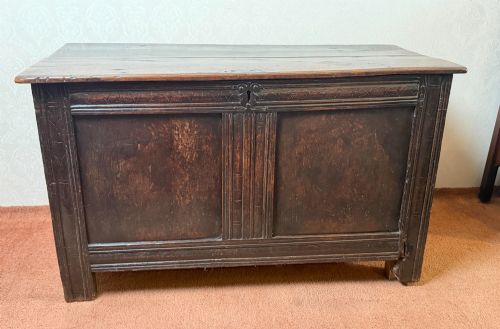
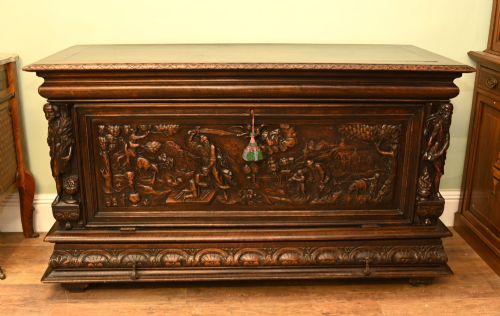
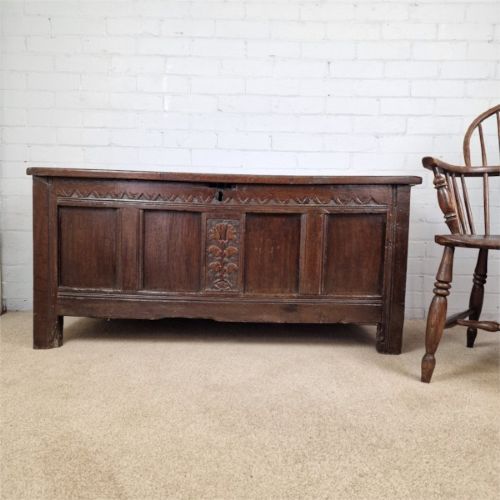
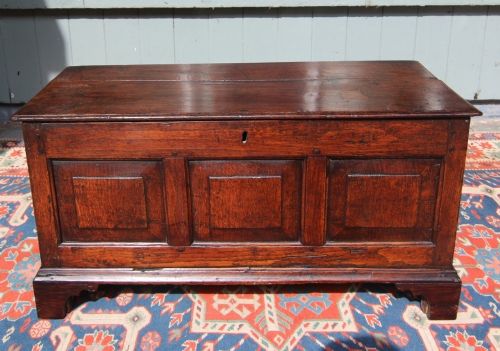
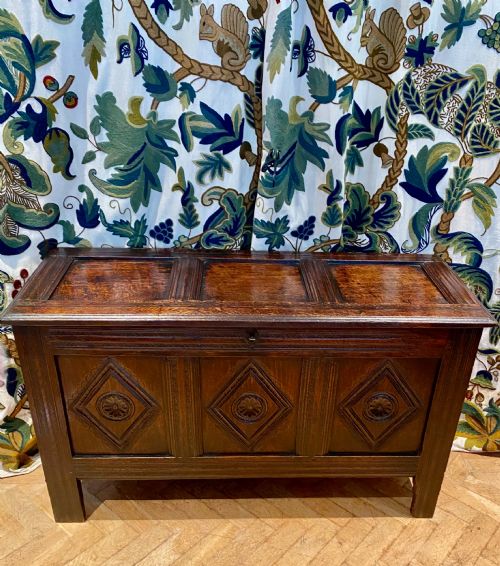
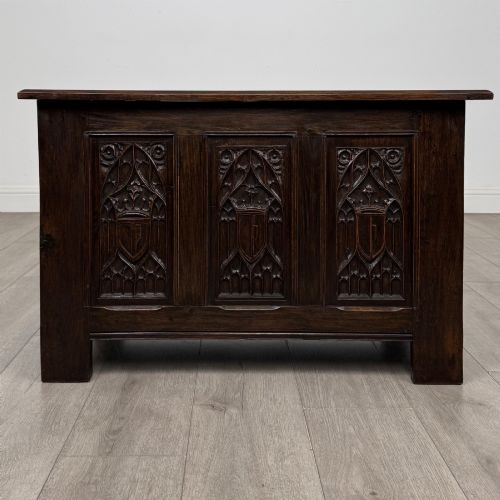
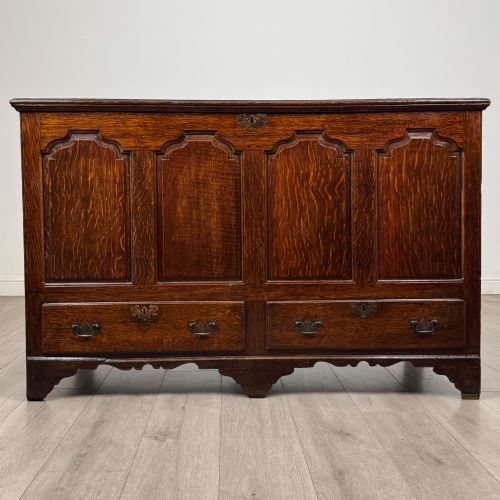
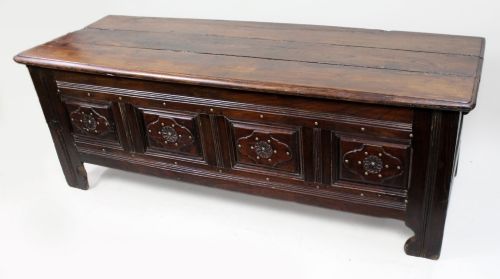
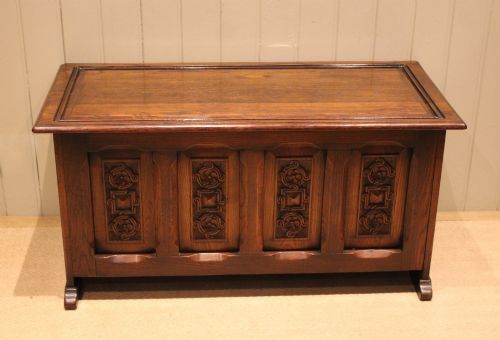
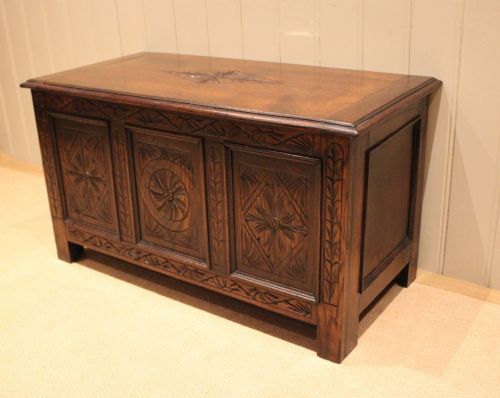
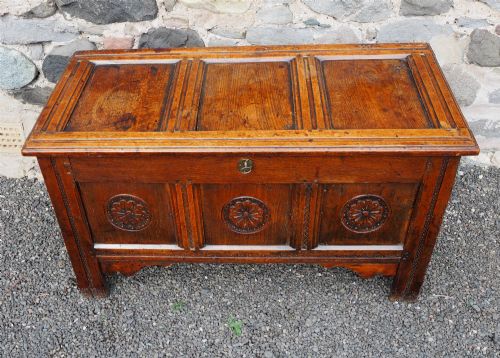
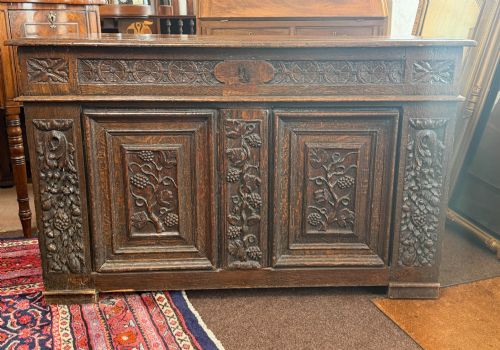
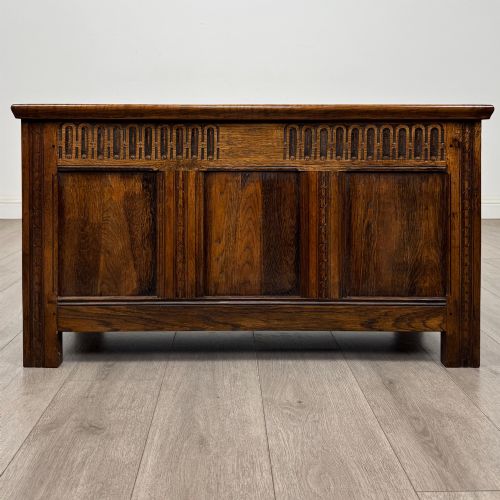
A dark oak wooden trunk typically takes the form of a coffer, blanket chest or mule chest designed for household storage. Buyers searching this phrase meet substantial storage boxes rooted in practical domestic use over successive centuries. The selections span simple boarded forms to panelled construction with carved details.
The periods represented stretch from the sixteenth century through the seventeenth and eighteenth centuries, alongside later revival pieces and twentieth-century interpretations. Welsh oak examples, including smaller coffer bach designs, appear alongside English, French and Flemish works. These boxes served varying household functions from linen storage to holding valuables and swords.
How they were made
Carpenters built these trunks primarily from solid oak, sometimes combining elm or incorporating wood inlay and ebonised wood details. Joined construction utilised pegged mortise and tenon joints to stabilise the heavy timber panels against seasonal movement. Carving, panel moulding and occasional marquetry decorated the principal surfaces.
Metal hardware played a functional role in construction and security, employing iron, wrought iron and brass for hinges, lock plates and strapwork. The timber developed its dark tone through age, natural oxidation and historic finishing methods. Surfaces often show the tool marks of early hand-working techniques.
Listings span eight distinct periods, reaching from the sixteenth century through the Georgian and Edwardian eras to the 1930s.
What varies in quality
Construction methods and timber selection distinguish simpler utilitarian boxes from high-status cabinet work. Crispness in hand-carved panels and the survival of original boarded lids or bases indicate superior craftsmanship. The depth and warmth of the patination on the timber surface reflect the history and care of the piece.
Proportions and scale influence desirability, with small proportions and regional Welsh or continental variants holding distinct character. The integrity of the original iron or brass hardware contributes to the overall coherence of the object. Substantial board thickness and minimal later alteration mark the finer examples.
The Dark Oak Wooden Trunk Glossary
- Coffer
- A heavy wooden chest traditionally used for storing valuables, linen or documents. These sturdy boxes often feature panelled construction and hinged lids.
- Mule chest
- A storage chest featuring one or more drawers beneath the main compartment. This form bridges the evolution between the simple coffer and the chest of drawers.
- Marquetry
- Decorative patterns formed by inserting thin pieces of wood veneer into a solid wood ground. This technique creates pictorial or geometric surface designs.
- Joined oak
- Furniture constructed using interlocking mortise and tenon joints secured with wooden pegs. This method replaced earlier boarded construction techniques.
Dark Oak Wooden Trunk: Frequently Asked Questions
What did people store in an oak trunk?
Households utilised these heavy chests to store textiles, blankets, clothing and valuable documents securely away from damp floors. The deep interior accommodated bulky items that lacked dedicated closets in early homes.
Over time, specific regional variants took on specialised domestic duties, such as holding family silver or personal belongings. Smaller boxes functioned as tabletop storage for smaller valuables.
How do I date an antique oak coffer?
Dating relies on examining construction methods, tool marks, timber characteristics and stylistic motifs. Sixteenth and seventeenth-century pieces typically feature joined frame-and-panel construction with hand-split oak boards and pegged joints.
Carving styles, such as strapwork, linenfold or geometric panels, align with specific historical periods like the Jacobean or Elizabethan eras. Later revival pieces from the twentieth century often display machine-cut elements or different interior secondary woods.
Are these trunks suitable for daily use?
These robust wooden boxes remain entirely practical for contemporary storage needs in living spaces or bedrooms. Their solid oak construction provides a stable environment for blankets, books or seasonal items.
Placing them away from direct heat sources and sudden humidity changes protects the historic timber. The flat tops also allow the chests to function as functional benches or coffee tables.
What is a mule chest?
A mule chest combines the deep top compartment of a traditional coffer with one or more lower drawers. This design innovation allowed users to access smaller items without lifting the heavy lid.
Most surviving examples date from the eighteenth century, reflecting developing domestic storage requirements. They bridge the transition between basic boarded trunks and fully drawer-fitted tall furniture.