

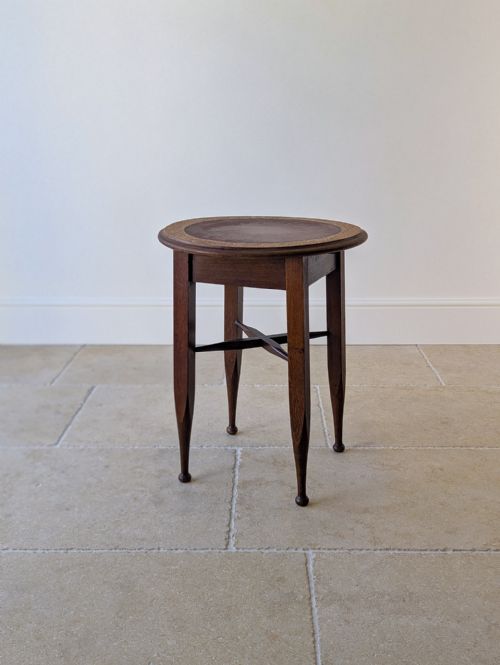
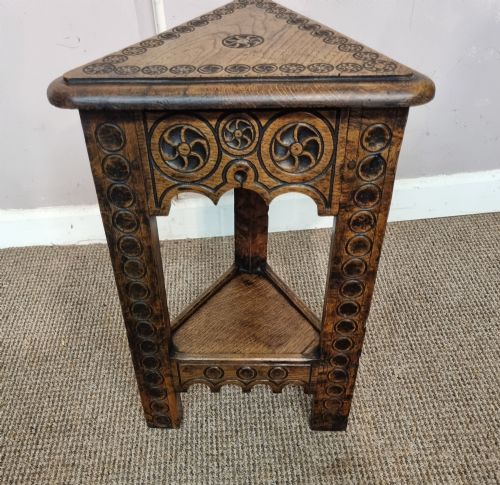
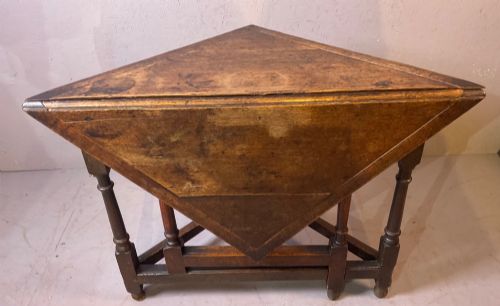
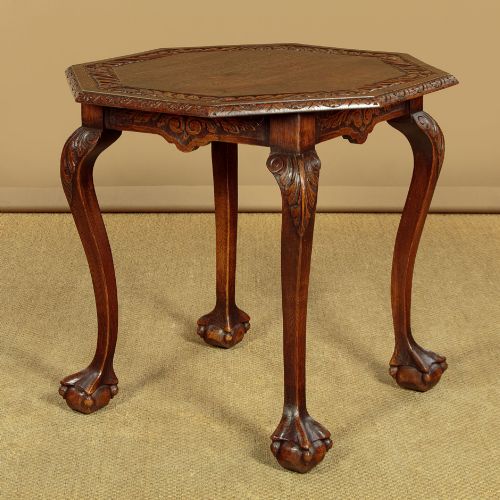


Dark Oak Corner Table
A dark oak corner table brings solid timber grain and clever space-saving shapes to an empty room angle.
Dark Oak Corner Table
A dark oak corner table appears in forms ranging from triangular lift-top designs and occasional pieces to trefoil and octagonal shapes. These items utilise sturdy timber construction designed to fit snugly into room junctions.
The evidence shows periods spanning the seventeenth century through the Victorian and Edwardian eras, alongside Regency and Georgian pieces. You will most frequently encounter nineteenth-century examples and Arts and Crafts interpretations on this page.
Makers and craftsmen applied styles such as Gothic Revival, Jacobean Revival, and seventeenth-century English traditions to these foundational timber forms. Each piece serves as a practical surface or plant stand within domestic spaces.
How they were made
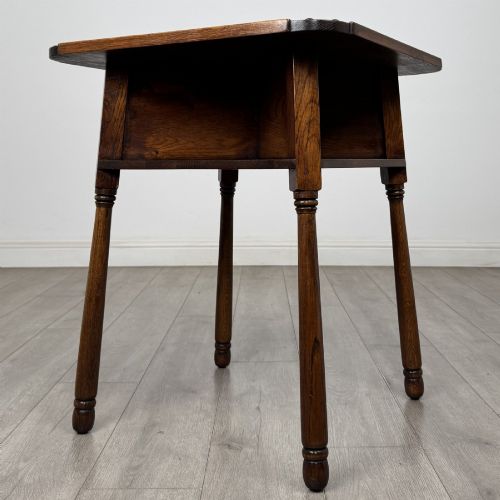
Cabinetmakers built these items primarily using solid oak, sometimes combining the timber with leather inserts or painted surfaces as seen in Dutch console variants. Construction methods rely on traditional joinery to shape triangular, octagonal, and trefoil configurations.
Dark Oak Corner Table Retail Price Guide 2026
Typical asking prices for dark oak corner table among the pieces listed under this phrase on Sellingantiques today, from the lower quarter to the upper quarter. They describe what is for sale here now, not the wider market.
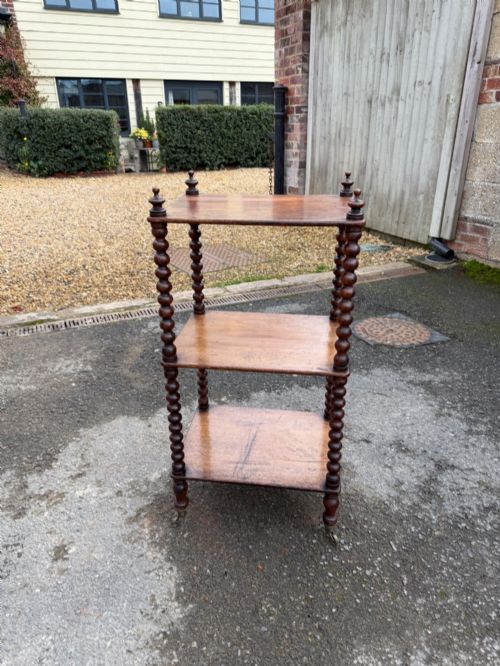
One listed plant stand employs a twist so vigorous it practically makes the corner of the room spin.
What varies in quality
The sophistication of the carving separates standard production from superior examples, with crisp hand-chiselled details elevating the overall appearance. Timber selection and grain density also dictate the visual weight and longevity of the surface.
Period integrity influences standing within the market, where authentic seventeenth-century construction methods command more attention than later revival pieces. The precision of the joinery and the condition of the original oak finish remain key indicators of the maker's skill.
The Dark Oak Corner Table Glossary
- Trefoil
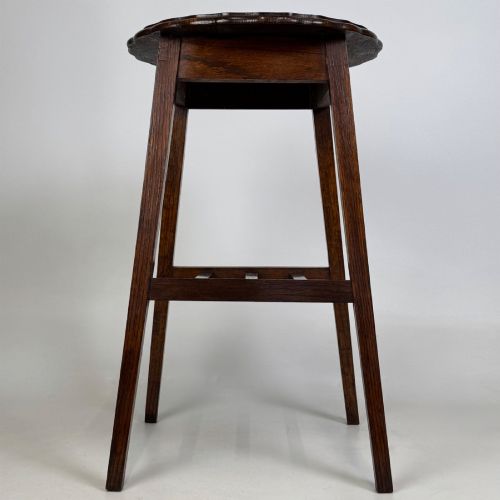
- A three-lobed shape resembling a clover leaf, often utilised for the tops of small occasional tables and stools. This geometric form allows three-legged pieces to fit neatly into room angles.
- Credence table
- A folding or triangular table with a hinged top supported by a swing leg, historically used in religious or domestic settings. Seventeenth-century examples represent early forms of this versatile furniture type.
- Barley twist
- A type of turned wooden support resembling a spiral rope, popular in furniture legs during the seventeenth century and later revival periods. This technique creates dynamic play of light and shadow across the oak surface.
- Etagere
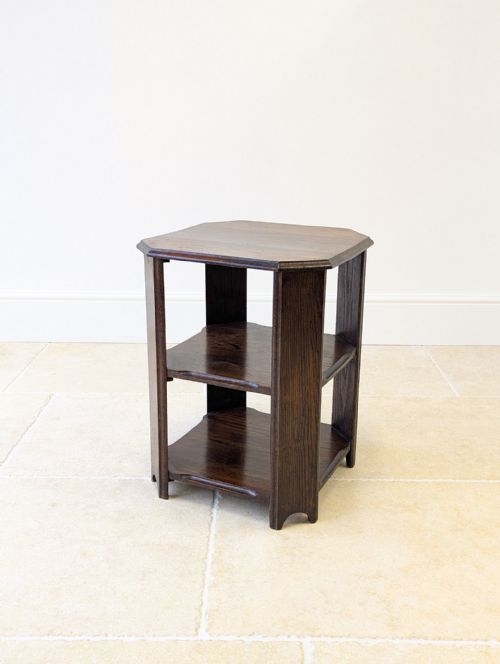
- A set of open shelves for displaying small objects, sometimes constructed in octagonal oak configurations as shown in Regency pairs. These pieces maximise vertical display space in corners or against walls.
Dark Oak Corner Table: Frequently Asked Questions
Where should I place a dark oak corner table?
These tables fit naturally into empty room angles and unused junctions where standard rectangular furniture proves too bulky.
Their compact footprints make them suitable as plant stands, occasional surfaces, or bedside companions in tighter spaces.
How do I identify a seventeenth-century oak table?
Seventeenth-century pieces typically display heavy pegged joinery, deep hand-carving, and dense timber patination developed over centuries of use.
Examining the underside and construction joints reveals the hand-tool marks characteristic of early English workshops.
What is an Arts and Crafts oak table?
Arts and Crafts pieces emphasise honest construction, visible grain, and simple geometric forms rather than heavy applied ornamentation.
Tables from this movement often feature exposed tenons and straightforward triangular or octagonal top designs.
How do I care for antique oak surfaces?
Maintain the timber by dusting regularly with a dry cloth and occasionally applying natural beeswax to nourish the dry grain.
Avoid placing solid oak furniture near direct heat sources or damp areas to prevent wood movement and splitting.