

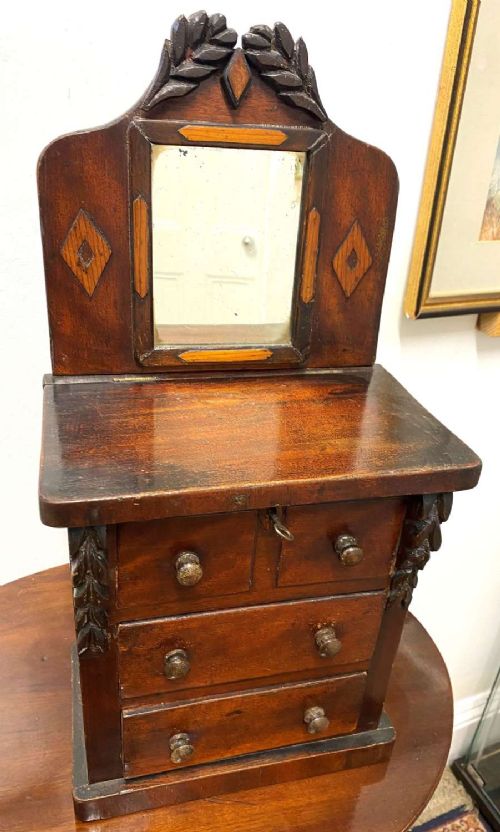
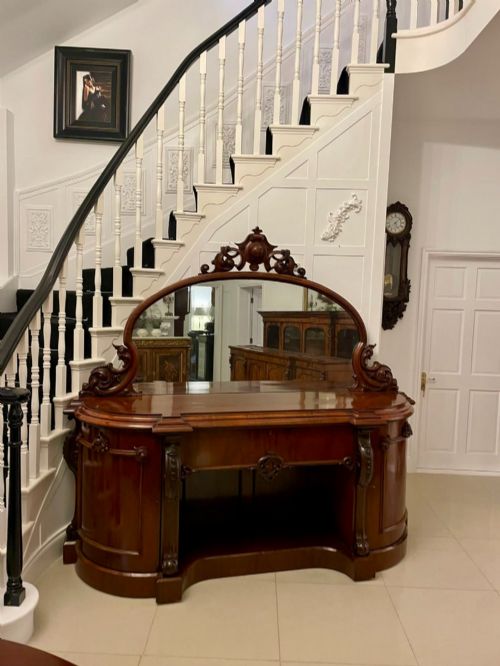
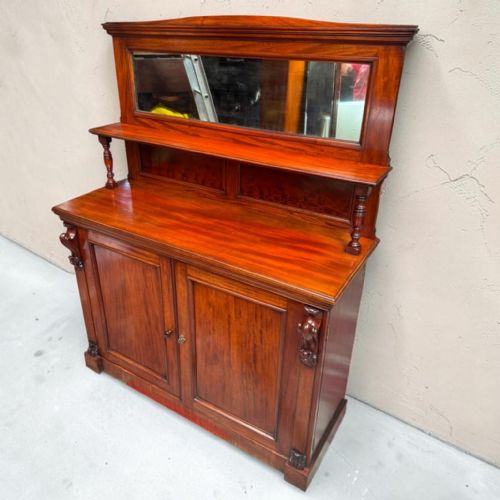
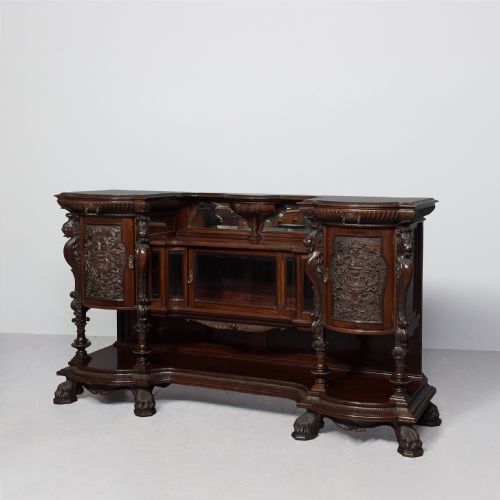


Dark Mahogany Mirror Chiffonier
These dark mahogany mirror chiffonier pieces combine a low storage base with an upright glass plate, offering a functional surface and a reflective panel for any room.
Dark Mahogany Mirror Chiffonier
A dark mahogany mirror chiffonier brings together enclosed cupboard space and an integrated mirror back, creating a functional piece of nineteenth and early twentieth century furniture. Buyers seeking this form will encounter examples spanning the Victorian and Edwardian eras, alongside related sideboards and display cabinets.
The selection ranges from mid-nineteenth century designs up to Edwardian revivals, incorporating stylistic influences such as Napoleon III, Regency, and Art Nouveau. Flame mahogany and standard mahogany predominate, frequently paired with mirror glass and occasional brass details.
Most items combine a lower timber cabinet with an upper mirror section, serving as both a sideboard and a decorative focal point. The proportion between the base storage and the upper glass varies across the periods represented.
How they were made
Cabinet makers utilised dense timber stocks, notably flame mahogany and standard mahogany, sometimes enriched with satinwood stringing or marquetry inlay. Timber surfaces received hand-polished finishes to deepen the natural grain and colour.
Mirror glass plates were integrated into carved or moulded wooden superstructures, while structural joints relied on traditional cabinet making methods. Brass hardware such as handles and hinges completed the construction of the cupboards and drawers.
Dark Mahogany Mirror Chiffonier Retail Price Guide 2026
Typical asking prices for dark mahogany mirror chiffonier among the pieces listed under this phrase on Sellingantiques today, from the lower quarter to the upper quarter. They describe what is for sale here now, not the wider market.
Listings feature mahogany, mirror glass, brass, and satinwood across Victorian, Edwardian, and Regency periods.
What varies in quality
The standard of carving and timber selection separates finer examples from simpler production, particularly in the depth of moulded details and the choice of figured flame mahogany veneers. Higher grade pieces often feature refined inlay work and substantial brass mounts.
Construction methods and the clarity of the integrated mirror glass also determine the grade of the piece, with superior cabinet work showing precise joinery and well-balanced proportions between the base and the upper mirror.
Gillows
The Dark Mahogany Mirror Chiffonier Glossary
- Chiffonier
- A low sideboard or cabinet, typically featuring enclosed cupboards beneath a surface and frequently surmounted by a mirror back. This form developed during the nineteenth century for dining and drawing rooms.
- Flame mahogany
- A timber veneer displaying a rippled, flame-like grain pattern prized by cabinet makers for its decorative visual impact. It was frequently applied to the primary doors and drawer fronts of better pieces.
- Marquetry
- Decorative woodwork in which small pieces of various coloured woods are fitted into a veneer to form geometric or floral patterns. It appears on the surfaces of select cabinets and sideboards.
- Satinwood
- A durable, yellowish timber often utilised for contrasting stringing, banding, and inlay details against darker mahogany surfaces. It adds subtle linear definition to cabinet doors and cornices.
- Napoleon III
- A nineteenth-century French revival style incorporating eclectic decorative elements and rich dark woods. Pieces from this aesthetic display ornate detailing and polished finishes.
Dark Mahogany Mirror Chiffonier: Frequently Asked Questions
What is a dark mahogany mirror chiffonier?
A dark mahogany mirror chiffonier is a low cabinet featuring a lower storage section enclosed by doors and an upper structure holding a mirror glass plate. These pieces functioned as sideboards and display units in Victorian and Edwardian interiors.
The combination of timber storage and reflective glass served to brighten rooms while keeping dining or parlour items close to hand. They remain practical focal points for modern hallways and living spaces.
How do I date a chiffonier?
Dating relies on observing stylistic markers such as Victorian carved mouldings, Edwardian proportions, or Regency influences. The presence of specific woods like flame mahogany or satinwood inlay also points toward particular decades.
Construction details, including the thickness of the timber and the character of the mirror glass, help distinguish mid-nineteenth century items from later Edwardian revival pieces.
Where were these pieces used?
These cabinets were traditionally placed in dining rooms, drawing rooms, or parlours to store tableware, linens, or books. The surface provided space for decorative objects, while the mirror reflected light back into the room.
Today, they function well in similar domestic settings as sideboard storage units or as accent furniture in larger entrance halls.
How should I care for mahogany?
Maintaining dark mahogany involves keeping the timber away from direct sunlight and sustained moisture fluctuations. Regular dusting with a soft, dry cloth preserves the polished finish.
Avoid harsh chemical cleaners, utilising traditional beeswax formulations sparingly if the wood appears dry or dull over time.