




Dark Mahogany Magazine Rack
A dark mahogany magazine rack brings structured order to periodicals, taking the form of traditional canterburys and folio stands.
Dark Mahogany Magazine Rack
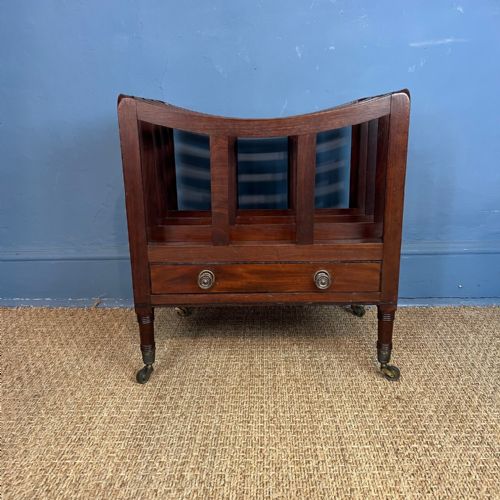
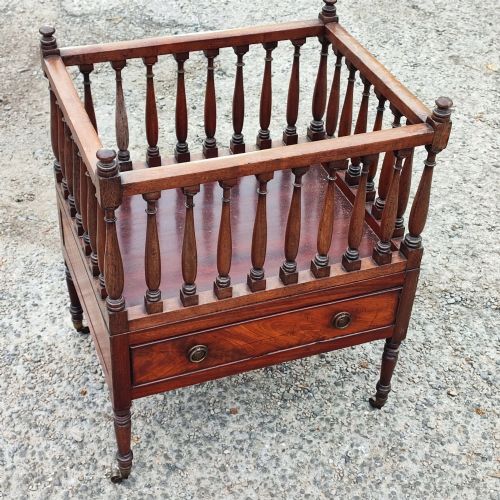
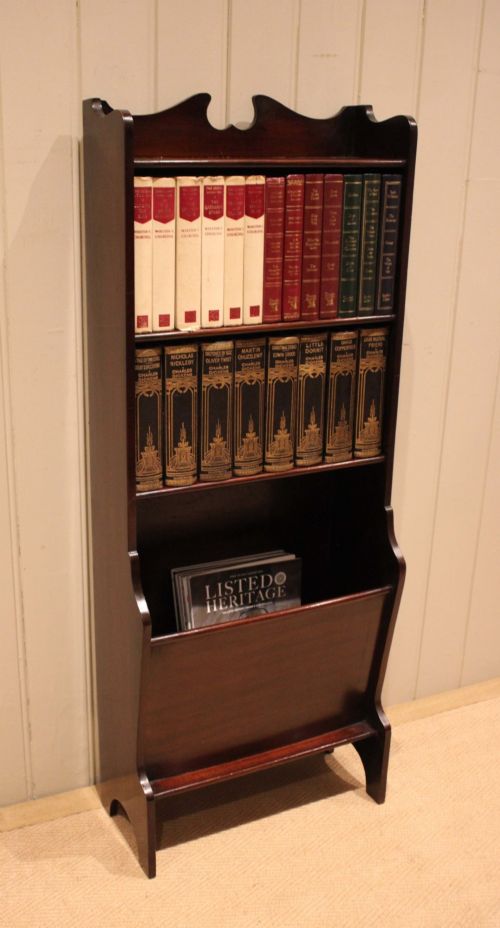
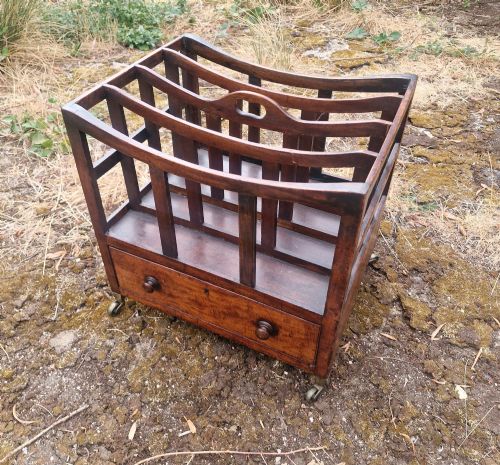
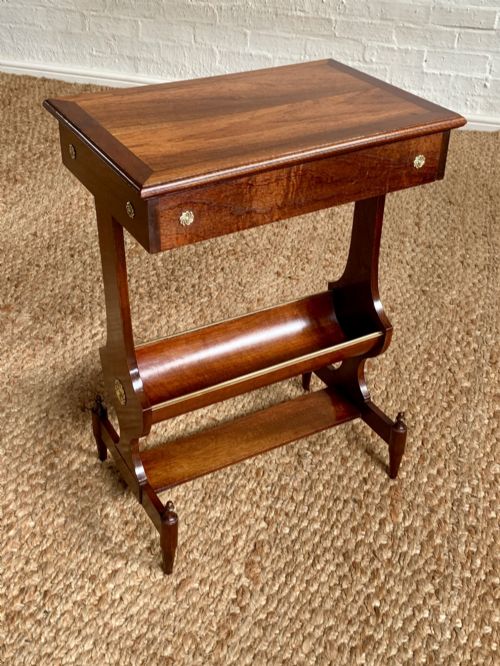
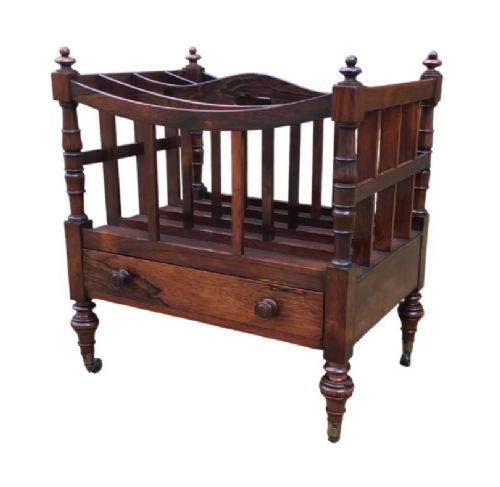
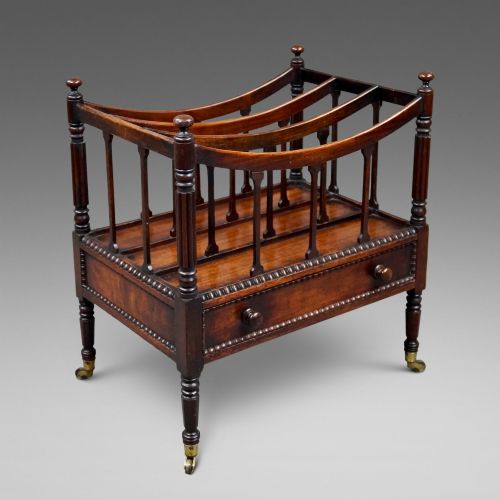
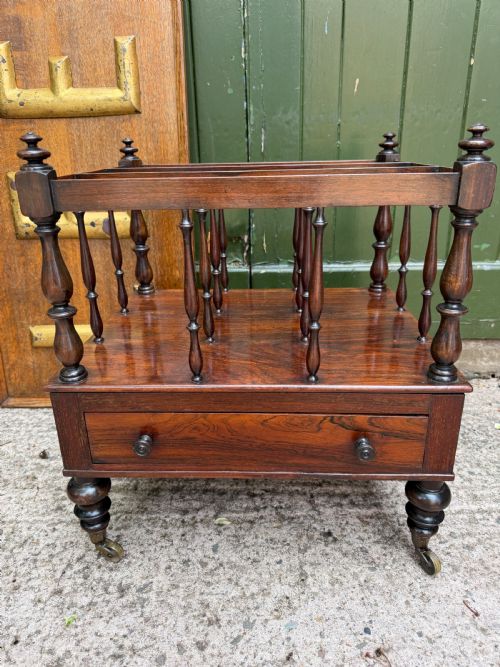
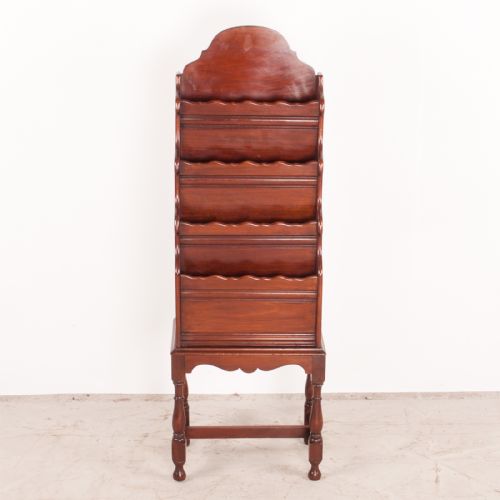
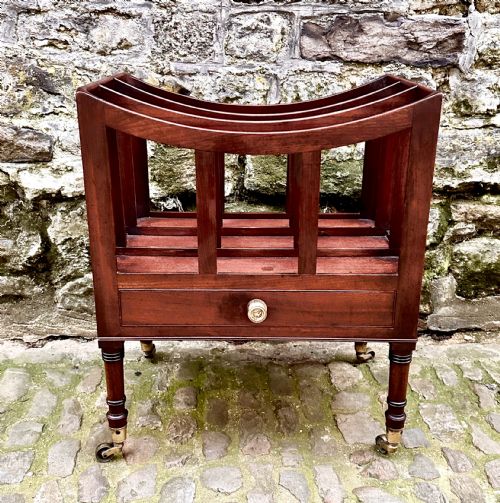
A dark mahogany magazine rack typically manifests as a traditional Canterbury or a folio stand, serving to hold newspapers, periodicals, and sheet music. These pieces originate from periods spanning the eighteenth, nineteenth, and early twentieth centuries, including Georgian, Regency, William IV, Victorian, and Edwardian eras.
The version most commonly met on this page is the Canterbury, which frequently incorporates tiered slatted divisions above a low drawer. Examples range from boat-shaped designs to larger freestanding library book troughs and music stands constructed in rich timbers.
Materials and Construction
Makers utilised solid mahogany, often selecting Cuban mahogany and flame mahogany variations to achieve rich grain patterns and deep colour. Secondary woods and decorative details such as brass castors, ebony banding, and intricate inlay frequently complement the primary timber.
Structural methods involve joining slatted or pierced scroll divisions to sturdy bases, sometimes integrating a single drawer beneath the compartment section. Turned legs and brass mounts support the heavier boat-shaped and grand-scale pieces.
Dark Mahogany Magazine Rack Retail Price Guide 2026
Typical asking prices for dark mahogany magazine rack among the pieces listed under this phrase on Sellingantiques today, from the lower quarter to the upper quarter. They describe what is for sale here now, not the wider market.
Object forms include standard Canterburys, music racks, and folio stands alongside lawyer book troughs.
Distinctions in Standard
Quality separates through the selection of timber, distinguishing plain surfaces from highly figured Cuban or flame mahogany variants with deliberate ebony banding and brass fittings. The precision of the joinery in the pierced scroll or slatted divisions marks the level of craftsmanship.
Proportion and scale dictate the tier of the piece, with grander Regency and George III examples displaying more refined architectural turning and integrated drawers compared to simpler twentieth-century utility items.
The Dark Mahogany Magazine Rack Glossary
- Folio Stand
- An adjustable or fixed upright rack designed to hold large books, prints, or unbound papers. These items appear in grand scale formats from the Regency period.
- Cuban Mahogany
- A dense, dark timber imported from the Caribbean used extensively in high-status furniture during the eighteenth and nineteenth centuries. It develops a deep patina over time.
- Flame Mahogany
- A veneer cut from the branch junction of the mahogany tree, displaying a characteristic flickering, flame-like grain pattern. Cabinet makers reserved this for prominent exterior surfaces.
- Inlay
- A decorative technique where contrasting materials such as ebony or lighter woods are inserted into recesses in the mahogany surface. This method defines specific geometric borders and banding.
Dark Mahogany Magazine Rack: Frequently Asked Questions
What is a Canterbury?
A Canterbury is a low stand traditionally used to store sheet music, newspapers, and periodicals within reach of a seating area. Most versions incorporate vertical wooden divisions to keep items upright and separated.
Many examples also include a shallow drawer positioned beneath the main compartment for smaller accessories.
How do I distinguish a Regency piece?
Regency pieces often display boat-shaped framing, sabre legs, and crisp brass detailing characteristic of the early nineteenth century. The proportions tend to balance architectural authority with decorative elegance.
Look for refined turning on the upright posts and distinctive scrolled or slatted compartment dividers.
Where should I place a folio stand?
A folio stand suits a study, library, or spacious sitting room where large books or periodicals require accessible storage. Their open design allows the volumes to remain visible as part of the room layout.
Position them away from direct heat sources to protect the polished mahogany and veneer surfaces.