





Dark Floral Painting
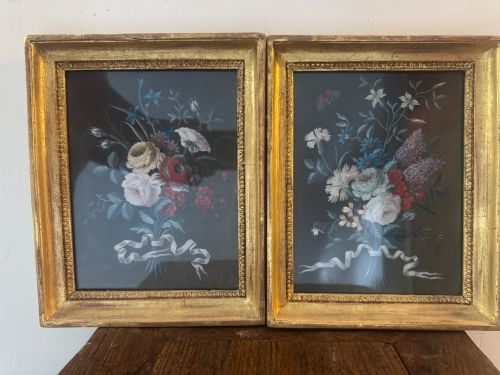
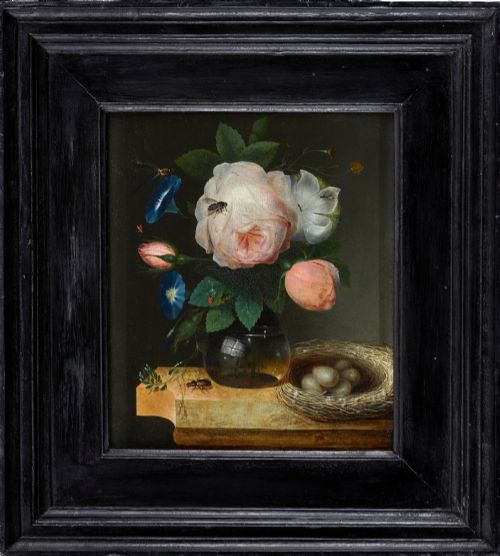
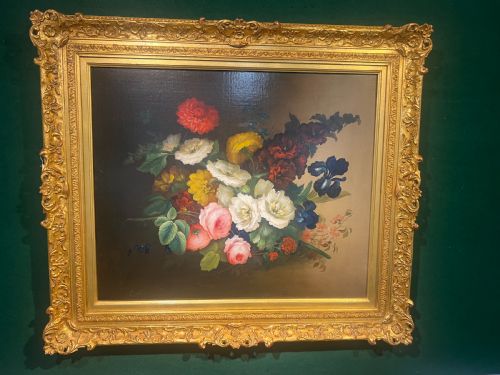
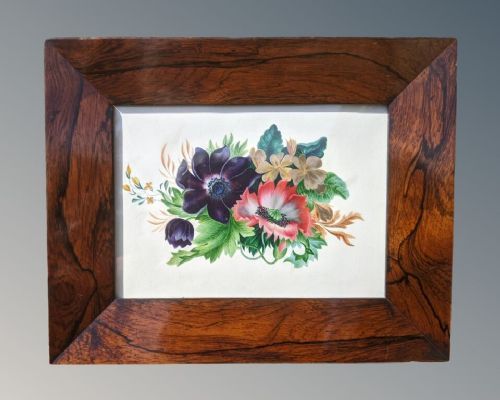
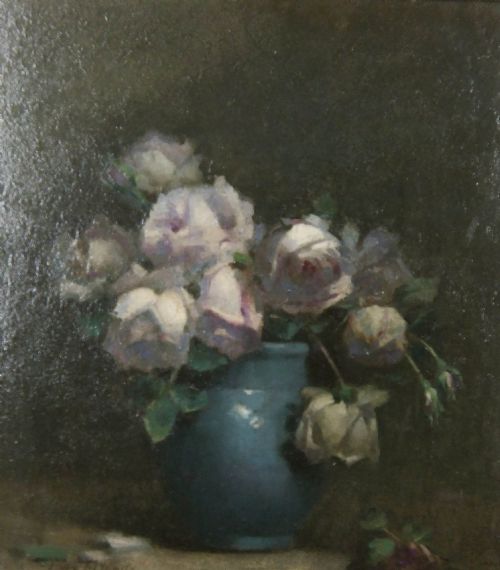
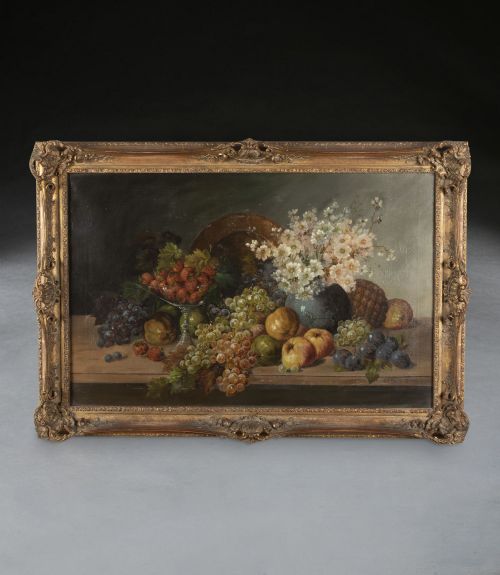
Dark floral painting brings botanical studies and still life works to interiors through oil on canvas, wood panels and gouache.
Dark Floral Painting
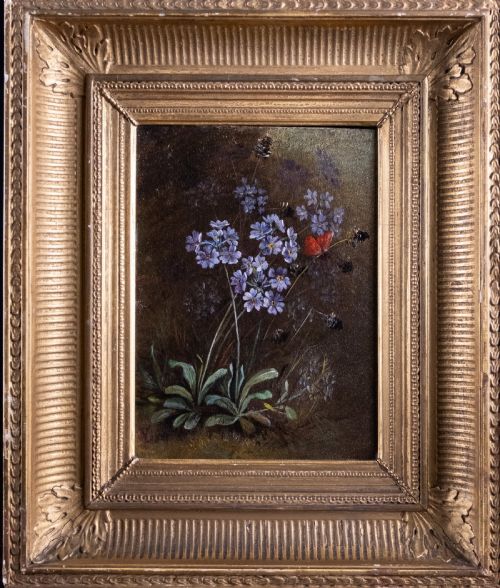
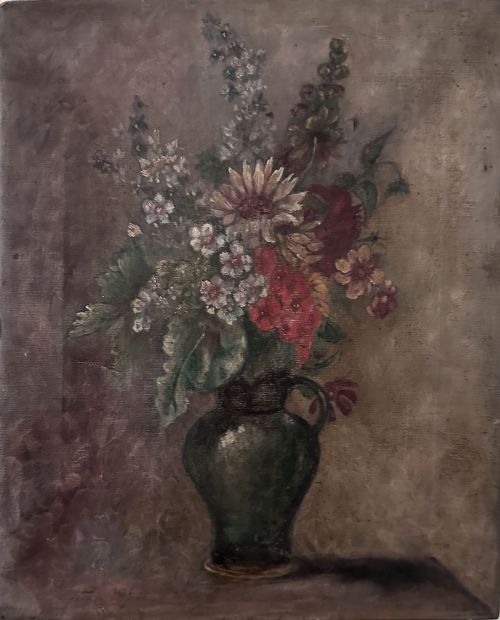
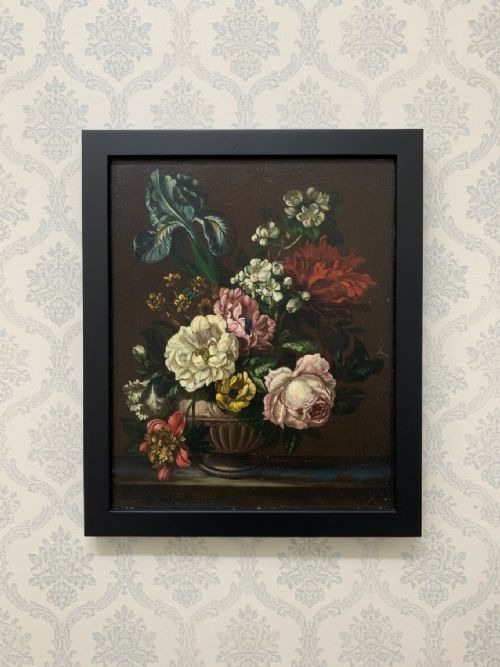
A dark floral painting presents blooms against deep, shadowy backgrounds, capturing botanical subjects with rich contrast. Buyers searching for dark floral painting encounter traditional oil on canvas works, watercolours and gouache pieces depicting roses, tulips and mixed floral arrangements.
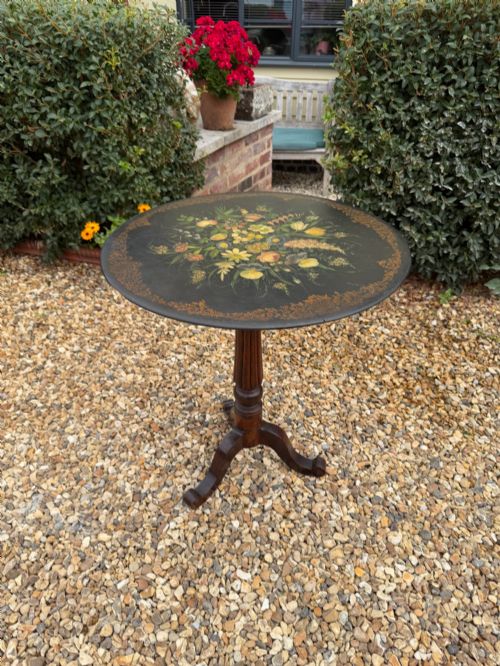
The selection includes examples from the eighteenth, nineteenth and early twentieth centuries, spanning Dutch School traditions, Victorian still lifes and British Impressionism. Alongside canvas works, the category encompasses painted decorative objects, panels and screens featuring botanical motifs.
Most pieces date from the nineteenth century, showing formal arrangements of cut flowers in vases, terracotta pots and glass vessels. These works demonstrate the enduring appeal of floral subjects rendered in sombre, moody palettes.
How they were made
Artists painted these works primarily using oil paint on stretched canvas or prepared wooden panels, applying pigments to build depth and shadow. Ground layers often utilised dark tones to create the characteristic moody backdrop against which bright petals emerge.
Support materials include oak panels, canvas and paper for gouache works, whilst secondary items incorporate pine, walnut and leather frames or surfaces. Gilding with gold leaf frequently highlights frames and decorative boxes, contrasting with the dark pictorial ground.
Techniques range from precise botanical illustration to looser impressionistic brushwork, depending on the period and the artist's school. Pigments were applied to capture the varied textures of rose petals, foliage and glass vases.
Dark Floral Painting Retail Price Guide 2026
Typical asking prices for dark floral painting among the pieces listed under this phrase on Sellingantiques today, from the lower quarter to the upper quarter. They describe what is for sale here now, not the wider market.
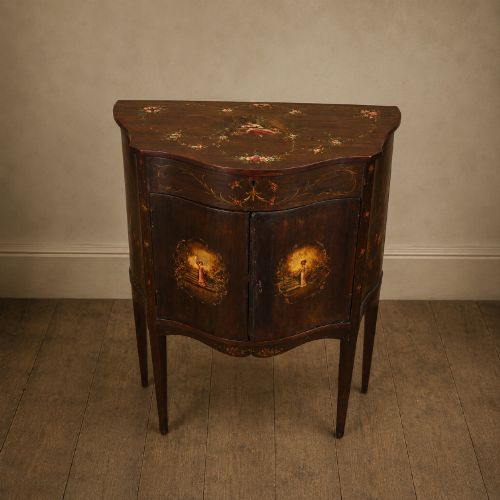
Object types range from traditional oil paintings and watercolours to painted side cabinets, screens and decorative boxes.
What varies in quality
Quality rests in the handling of light and shadow, where superior works achieve striking dimensional depth between the dark background and illuminated petals. Finer paintings display confident brushwork that defines the delicate structure of leaves and blossoms without heavy-handed outlining.
The integrity of the support material also differentiates examples, with stable panels and unlined canvases preserving the artist's original surface. Condition of the paint layer, minimal craquelure and legible signatures further distinguish notable pieces from decorative works of lesser execution.
Gaspar Peeter Verbruggen·Edwin Steele·William Thomas Wood·Owen Bowen·James Stuart Park·Margaret Evangeline Wilson·Melissa White·Pierre-Joseph Redouté
The Dark Floral Painting Glossary
- Still life
- A painting or drawing depicting inanimate subject matter, typically commonplace objects which may be either natural or man-made. In this category, the focus rests on floral arrangements and botanical specimens.
- Oil on canvas
- Pigments bound in a medium of drying oil applied to a woven fabric support. This technique allows for rich colour blending and deep tonal contrasts essential to sombre compositions.
- Gouache
- An opaque water-based paint consisting of pigment, water, and a binding agent such as gum arabic. It produces a matte surface finish well suited to detailed botanical studies on paper.
- Panel painting
- A painting executed on a flat panel of wood, such as oak or pine, rather than canvas. Wooden supports provide a rigid ground historically favoured by Dutch and Flemish painters.
- Dutch School
- The style of painting that flourished in the Netherlands from the early seventeenth century onwards. It is noted for meticulous detail, dark backgrounds and realistic depictions of flowers and fruit.
Dark Floral Painting: Frequently Asked Questions
How do I hang a dark floral painting?
Position the piece on a wall with balanced ambient light to prevent glare on varnished oil surfaces while allowing the dark background to recede effectively. Pairing the artwork with neutral or deeply coloured walls enhances the rich tones of the composition.
Ensure secure fixings matched to the weight of the frame and canvas or panel support. Avoid direct, intense sunlight to protect pigments from fading over time.
What periods do these paintings come from?
The selection spans from the seventeenth century through the eighteenth and nineteenth centuries up to the early twentieth century. Nineteenth-century Victorian works and early twentieth-century British Impressionism feature prominently among the available pieces.
Earlier Dutch School and Baroque examples offer traditional compositions, while later works introduce looser brushwork and varied botanical subjects.
Are these paintings signed by artists?
Many works bear artist signatures, attribution notes, or historical documentation linking them to specific painters and schools. Signed pieces provide clearer provenance and insight into the creator's background.
Unsigned works are attributed based on style, technique, material analysis and period characteristics common to particular regional schools.
How should I clean an antique painting?
Dust surfaces gently with a soft, dry brush or a clean microfibre cloth, taking care not to apply pressure to the painted canvas or panel. Avoid using water, liquid cleaners or household solvents on the paint layer.
Professional conservators should handle deeper cleaning, varnish removal or canvas repairs to prevent permanent damage to the delicate pigments and ground layers.