





Dark Bronze Venus Sculpture
A dark bronze venus sculpture brings classical myth into domestic spaces with rich patination and enduring sculptural form.
Dark Bronze Venus Sculpture
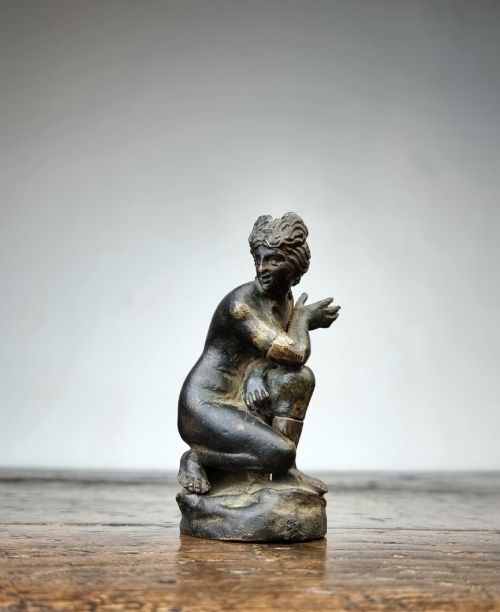
A dark bronze venus sculpture represents the classical goddess of love, beauty and fertility cast in metal with rich patinated surfaces. These pieces draw heavily on ancient Greek and Roman models, translating monumental marble antiquities into intimate cabinet bronzes and larger domestic statuary.
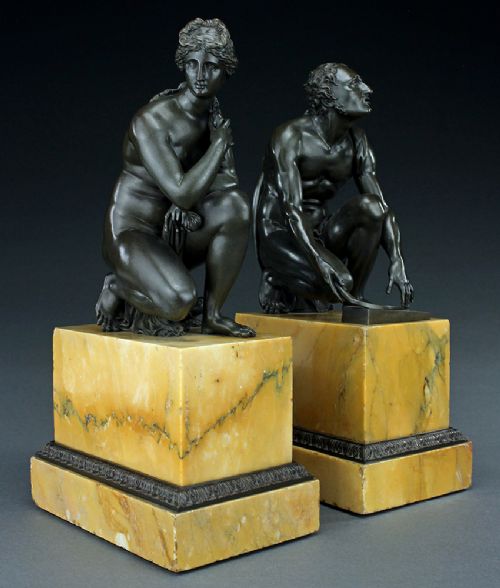
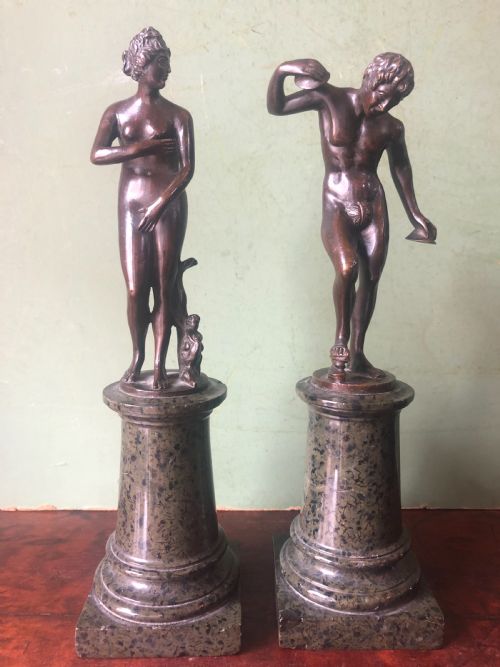
The versions most commonly found here originate from the nineteenth century, including Grand Tour souvenirs from France and Italy alongside French foundry productions. Makers and foundries such as Ferdinand Barbedienne and Ferdinando de Luca captured these iconic forms in bronze, frequently mounting smaller figures on Siena marble bases.
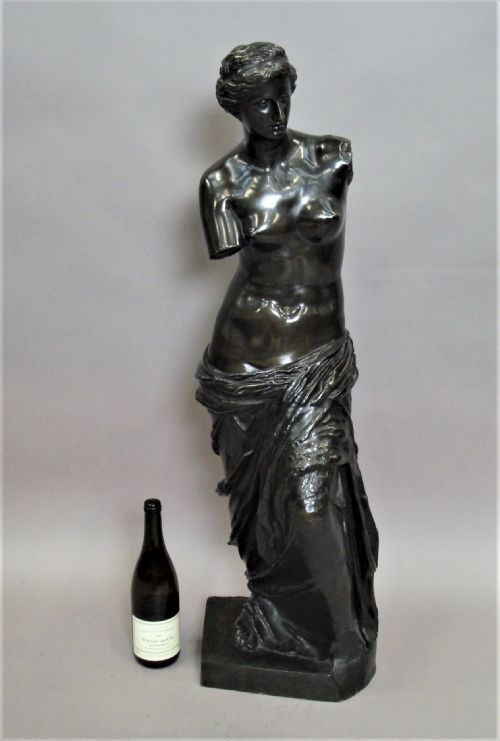
Earlier interpretations also appear, including seventeenth-century castings that approach the subject with a different handling of surface and proportion. Whether cast as the Venus de Milo, a crouching figure or Venus au Bain after Falconnet, each dark bronze venus sculpture demonstrates the nineteenth-century revival of neoclassical taste.
How they were made
Foundries typically employed the lost-wax method or sand casting to achieve the intricate detail seen in these figures. Molten bronze was poured into moulds taken from classical prototypes, capturing the soft musculature and flowing drapery of the original marbles.
After casting, artisans applied chemical patination to the metal surface to produce deep brown or near-black tones. Parcel-gilt highlights were occasionally added to accentuate specific details, whilst marble bases of varieties such as Siena were shaped and polished to support the heavier figures.
Dark Bronze Venus Sculpture Retail Price Guide 2026
Typical asking prices for dark bronze venus sculpture among the pieces listed under this phrase on Sellingantiques today, from the lower quarter to the upper quarter. They describe what is for sale here now, not the wider market.
What varies in quality
The quality of the material preparation and the fidelity to the classical prototype also distinguish superior examples. Foundries like Barbedienne maintained high standards in reduction casting, ensuring that scale and proportion remained faithful to the ancient originals whilst preserving crisp surface definition.
Ferdinand Barbedienne·Ferdinando de Luca
The Dark Bronze Venus Sculpture Glossary
- Patinated bronze
- Bronze that has been treated with chemical solutions to alter its surface colour, creating deep brown, green or black tones. This process protects the metal whilst enhancing the visual depth of the sculpture.
- Grand Tour
- A traditional journey through Europe undertaken by upper-class Europeans, particularly in the eighteenth and nineteenth centuries, to study classical art and antiquities. Souvenirs purchased on these trips included small bronze reductions of famous statues.
- Lost-wax casting
- A metalworking process where a molten metal is poured into a mould that has been created by means of a wax model. The wax is melted and drained away, allowing precise replication of complex forms.
- Parcel-gilt
- Partially gilded with gold leaf or gold paint, often applied to specific details of a bronze sculpture to create contrast against the dark patinated surface.
- Reduction
- A smaller copy of a larger sculpture, often achieved mechanically in the nineteenth century using a tracing pantograph to scale down the dimensions accurately.
Dark Bronze Venus Sculpture: Frequently Asked Questions
What is a Grand Tour bronze?
A Grand Tour bronze is a nineteenth-century souvenir cast in Italy or France for travellers visiting classical antiquities. These reductions allowed collectors to bring miniature versions of famous museum sculptures back to their homes.
Such pieces often feature distinctive marble bases and display the fine chasing characteristic of European foundry work from that era.
Who created the original Venus de Milo?
The original Venus de Milo is an ancient Greek marble sculpture created during the Hellenistic period, attributed to Alexandros of Antioch. It depicts the goddess of love and was discovered on the island of Melos.
Nineteenth-century founders frequently reproduced this iconic form in dark bronze and reduction sizes to satisfy collector demand.
How should I clean a bronze sculpture?
Cleaning requires only gentle dusting with a soft, dry cloth to remove surface particles. Avoid using water, polishes or chemical cleaners, as these can strip away the historic patina.
Occasional light application of microcrystalline wax can help protect the metal surface from atmospheric moisture.
Why are some bronzes mounted on marble?
Marble mounts provide physical stability to heavier bronze figures and elevate the visual presentation of the artwork. Siena marble was particularly favoured for its rich yellow and veined appearance during the nineteenth century.
This combination mirrors the classical association of stone and metal in ancient sculpture displays.