

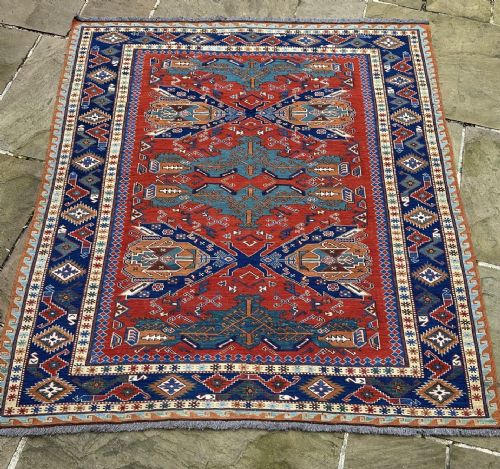
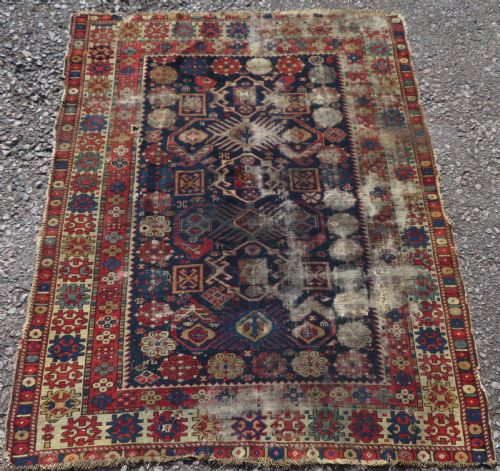
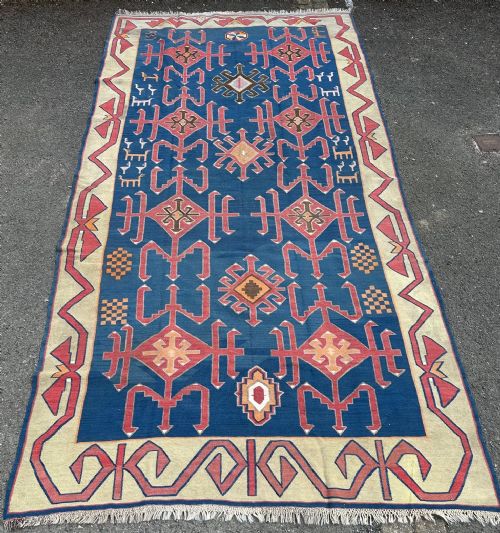
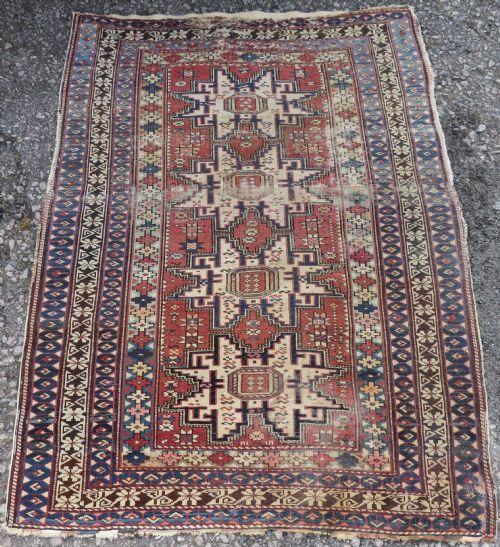

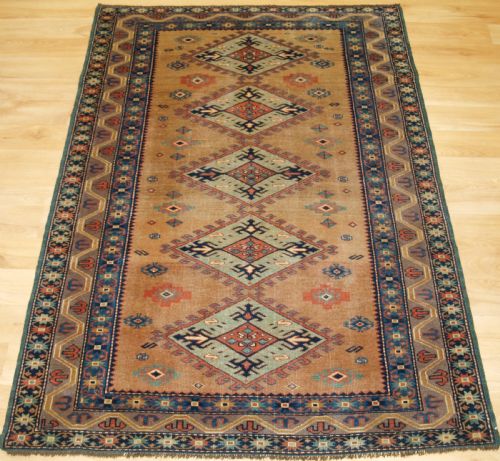


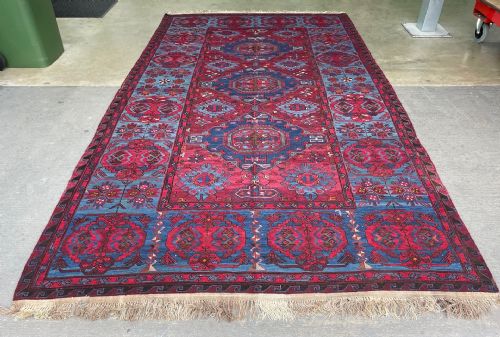
Daghestan Carpet
A daghestan carpet brings structured Caucasian geometry and rich natural dyes directly onto the floor, offering collectors remarkable tribal character.
Daghestan Carpet
A daghestan carpet represents a distinct weaving tradition originating from the Caucasus, encompassing specific regional forms like Soumak, flat-weave kilims, and pile rugs. The pieces found here span from the late nineteenth century through to the mid-twentieth century, capturing the traditional aesthetic of North-Eastern and Eastern Caucasus workshops.
Buyers encountering this search phrase will regularly find smaller area rugs, prayer rugs, and flat-weave carpets associated with tribes such as the Avar and specific localities like Davaghin, Kuba, and Lesghi. These textiles demonstrate the dense knotting and geometric discipline characteristic of Caucasian tribal weaving.
The available selection bridges formal Caucasian traditional designs with related regional styles, including Chichi patterns and Derbent structures. Each piece displays the distinct visual vocabulary developed across mountain communities during the Victorian era and subsequent decades.
Materials and construction
Every daghestan carpet in this collection is constructed from wool, utilising natural dyes to achieve deep and stable colour palettes that soften gracefully over time. The structural methods include both traditional pile knotting and flat-weave techniques such as Soumak work.
Weavers employed durable wool foundations and surface yarns, harnessing plant and mineral colour sources to build geometric fields and intricate borders. This combination of resilient animal fibres and botanical or mineral dyes accounts for the enduring physical survival of these nineteenth and twentieth-century textiles.
Daghestan Carpet Retail Price Guide 2026
Typical asking prices for daghestan carpet among the pieces listed under this phrase on Sellingantiques today, from the lower quarter to the upper quarter. They describe what is for sale here now, not the wider market.
Listings show pieces exclusively composed of wool and natural dyes, originating between the 1870s and the mid-twentieth century.
Qualities that distinguish the pieces
The distinction between standard examples and finer items rests in the tightness of the weave and the clarity of the geometric drawing. A softer handle and a more deliberate handling of natural dyes elevate certain carpets above simpler village output.
Surface preservation also shapes the standing of an individual piece, where minimal distortion of the original dimensions and intact borders maintain the integrity of the design. The complexity of the regional design attribution further influences how a textile is regarded by traditional collectors.
The Daghestan Carpet Glossary
- Soumak
- A flat-weave technique where coloured face yarns are wrapped around the warp threads before being carried across the back, producing a textured surface without a traditional cut pile.
- Prayer rug
- A small carpet featuring a mihrab or arch design at one end, traditionally laid down to indicate the direction of prayer during daily worship.
- Kilim
- A tapestry-woven carpet made without pile, resulting in a thin, flat textile that often displays sharp geometric motifs formed by slit-tapestry weaving.
- Natural dye
- Colouring matter derived from plants, insects, or minerals rather than synthetic chemical processes, yielding complex tones that age with subtle variation.
- Warp
- The stationary vertical threads stretched across a loom upon which the knots and horizontal weft threads are built to form the structural body of the carpet.
Daghestan Carpet: Frequently Asked Questions
What defines a daghestan carpet?
A daghestan carpet is a woven textile originating from the Daghestan region of the Caucasus, characterised by geometric motifs, tribal iconography, and strict regional layouts. These pieces reflect the specific cultural output of mountain weavers working in local traditions.
The materials rely strictly on wool and natural dyes, producing durable floor coverings that span pile rugs, flat-weaves, and Soumak structures from the nineteenth and twentieth centuries.
How do I care for a vintage rug?
Living with a vintage Caucasian rug requires gentle maintenance, primarily through regular light suction vacuuming without a beating brush roll. Keeping the textile away from direct, prolonged sunlight helps protect the natural dyes from fading.
Using a breathable underlay prevents slipping and cushions the wool fibres against hard flooring. Professional cleaning tailored to antique textiles should be employed when deep maintenance becomes necessary.
Are these carpets made with wool?
Yes, the construction of these items relies upon wool for both the structural foundation threads and the visible surface pile. This animal fibre provides natural resilience and elasticity to the textile.
Combined with traditional natural dyes, the wool ensures that the carpets withstand everyday use while maintaining their characteristic texture and structural integrity.
How are different regional styles told apart?
Distinguishing regional types involves examining the specific geometric vocabulary, border arrangements, and structural techniques employed by the weavers. Styles associated with the Lesghi, Chichi, or Avar groups each display characteristic colour distribution and motif organisation.
Additionally, the choice between pile knotting, flat-weaving, and Soumak wrapping points directly to the specific workshop traditions of the Eastern Caucasus.