





Cut Glass Shade Lamp
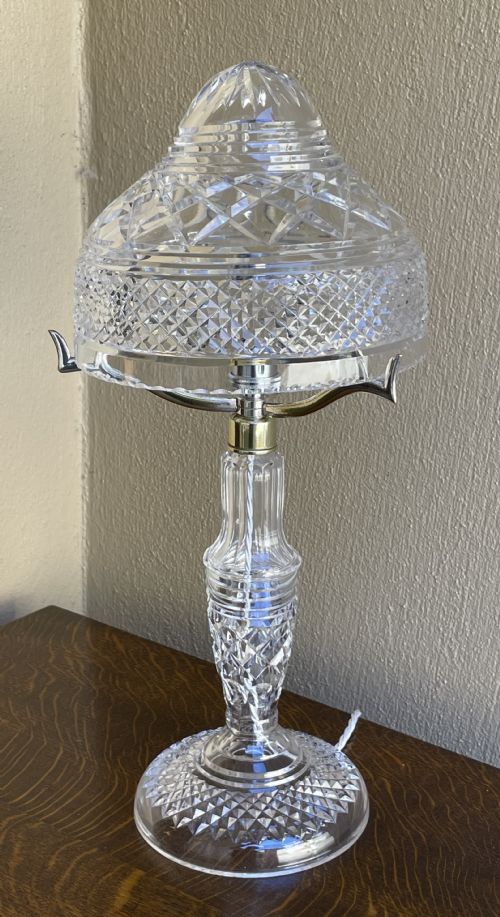
These cut glass shade lamp pieces combine heavy brass or silver plate with brilliant lead crystal to cast layered light across a room.
Cut Glass Shade Lamp
When searching for a cut glass shade lamp, buyers encounter lighting fixtures spanning the Victorian, Edwardian, and 1930 periods. These pieces appear as table lamps, oil lamps, pendant lights, chandeliers, and wall lights constructed primarily from glass and metal.
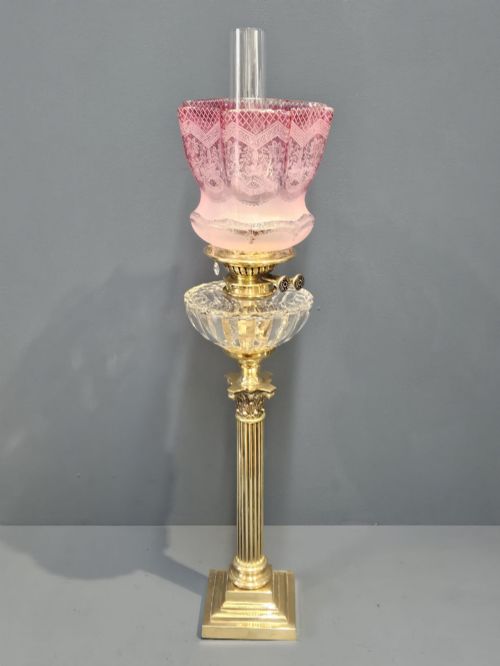
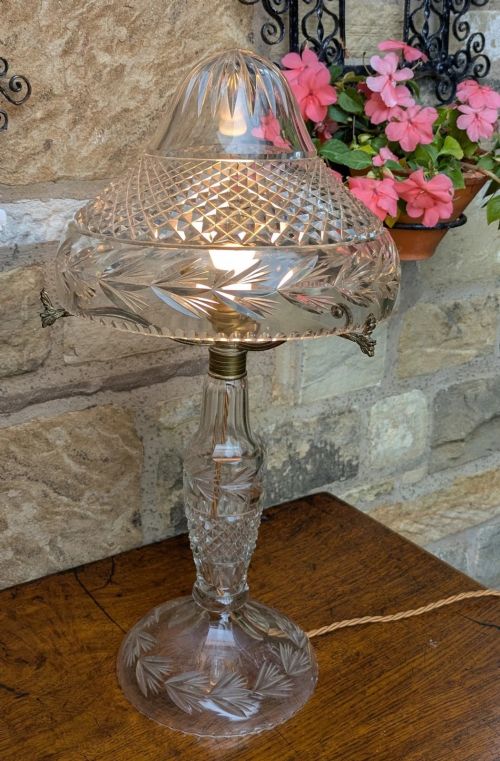
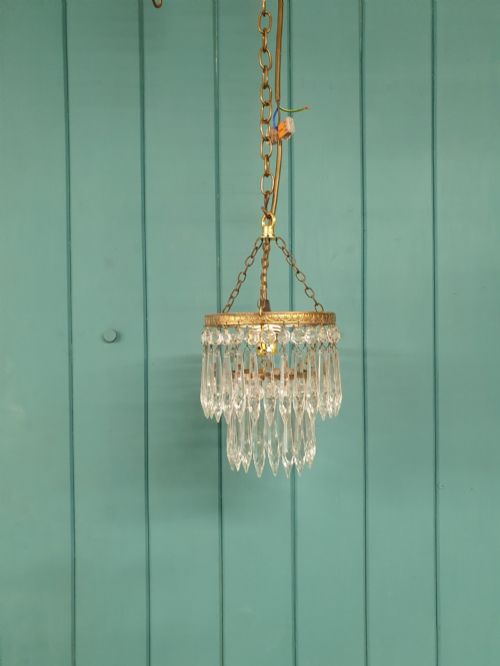
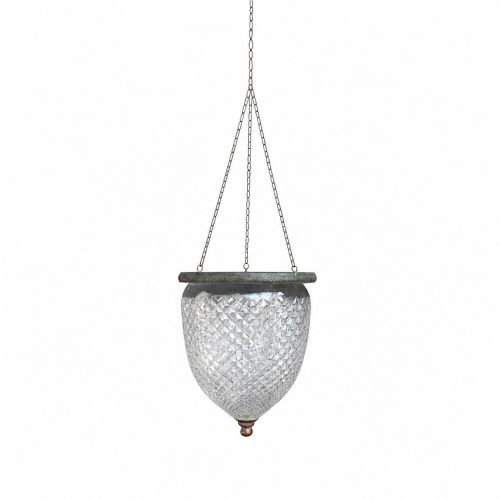
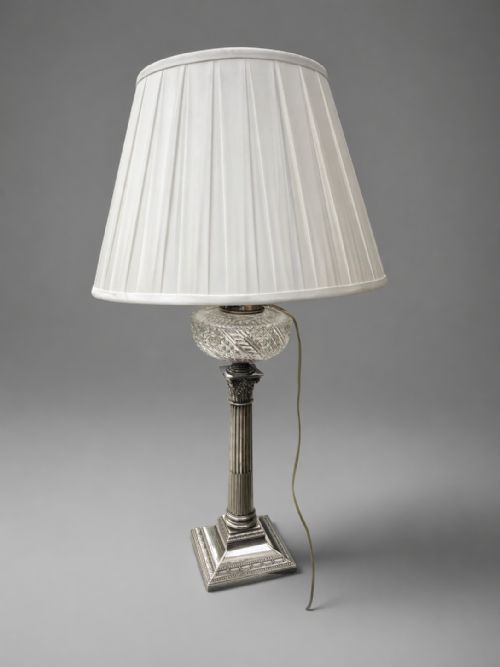
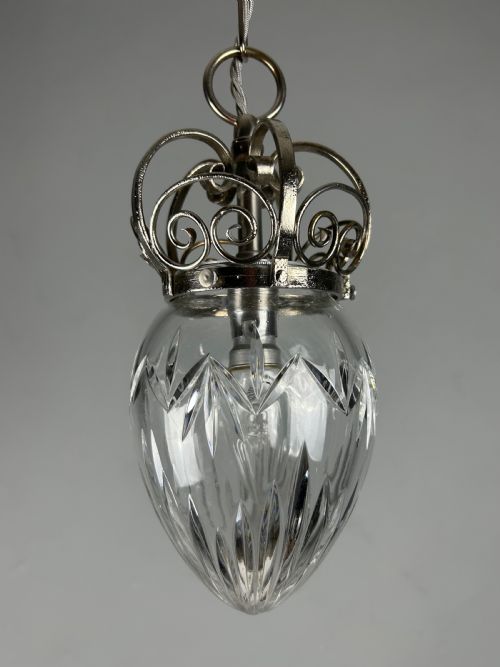
The most common forms on this page include mushroom table lamps, Corinthian column oil lamps with cranberry shades, and brass ceiling pendants featuring crystal spikes or acorn plafonniers. Origins lean heavily toward traditional English workshops and major retailers from the nineteenth and early twentieth centuries.
Makers such as Stuart Crystal, Messengers, Harrods, and F. & C. Osler appear in the lineage of these lighting forms, alongside many unmarked pieces from the Victorian and Art Deco eras.
How they were made
The construction of these lamps relies on the combination of cast or spun brass, silver plate, or ormolu with heavy cut glass, crystal, and lead crystal. Metal components provide structural support for columns, bases, and ceiling fixtures while glass elements form the shades, fonts, and prisms.
Glassmakers utilised deep wheel-cutting and moulding techniques to carve geometric, floral, and acorn patterns into the crystal surfaces, allowing the material to refract light effectively. Metal mounting involved securely seating glass shades and fonts into brass collars, often supplemented by bronze or gilt metal mounts.
Brass putti figures occasionally peer down from nineteenth-century ceilings, holding up heavy cut glass shades as if performing a lifelong acrobatic routine.
What varies in quality
The distinction between standard production and top-tier examples lies in the crispness of the glass cutting and the weight of the metal mounts. Superior pieces feature deep, sharp facets in lead crystal that catch ambient and internal light with high clarity, paired with substantial brass, bronze, or ormolu foundations.
Attribution also shifts the standing of a piece, as documented works associated with known makers like Stuart Crystal or F. & C. Osler command greater interest than anonymous workshop output. The integration of complex elements such as cranberry glass shades, Corinthian columns, and matched prism sets further separates ordinary lighting from exceptional specimens.
Stuart Crystal·F. & C. Osler·Messengers·Harrods
The Cut Glass Shade Lamp Glossary
- Lead crystal
- Glass containing lead oxide to increase weight, brilliance, and refractive index. This material allows deep, sharp facet cutting.
- Cranberry glass
- Transparent red glass coloured with gold chloride during production. It frequently appears in Victorian oil lamp shades.
- Plafonnier
- A ceiling-mounted bowl light or shallow shade that sits close to the surface. Early twentieth-century examples often utilise cut glass in acorn shapes.
- Ormolu
- Gilded bronze or brass used for decorative mounts on fine table lamps. It provides a rich gold-coloured finish.
- Prism
- A cut glass pendant hanging from a chandelier or wall light to refract illumination. These elements multiply the visual sparkle of the fixture.
Cut Glass Shade Lamp: Frequently Asked Questions
What periods do these lamps come from?
The lighting fixtures span the Victorian, Edwardian, and 1930 Art Deco eras, with pieces originating from the nineteenth and early twentieth centuries.
Designs transition from heavy brass oil lamps with cranberry shades to sleek crystal mushroom table lamps and polished chrome pendants.
How were oil lamps converted to electricity?
Many period oil lamps and pendant lights undergo professional rewiring to accommodate modern electrical standards while retaining their original brass and glass components.
Wiring updates typically include authentic corded flex and updated fittings while keeping the antique font and shade intact.
What is the difference between crystal and glass?
Crystal contains lead oxide, which adds substantial weight and increases the refractive index of the material. This higher density allows artisans to cut deeper, sharper facets that scatter light more brilliantly than standard glass.
Most high-end table lamps and chandeliers in this category utilise lead crystal for their shades and prisms.
How do I identify an Edwardian ceiling pendant?
Edwardian pendants and chandeliers often feature bright silver-plated mounts, delicate brass framing, and cut glass shades in acorn or globe shapes. Their aesthetic is lighter and less ornate than heavy Victorian brass oil lamps.
Many examples from this era are attributed to notable firms like F. & C. Osler.