



Cut Glass Pendant Lamp
A cut glass pendant lamp brings sharp, refractive light to a room, using faceted crystals and glass shades to scatter illumination widely.
Cut Glass Pendant Lamp
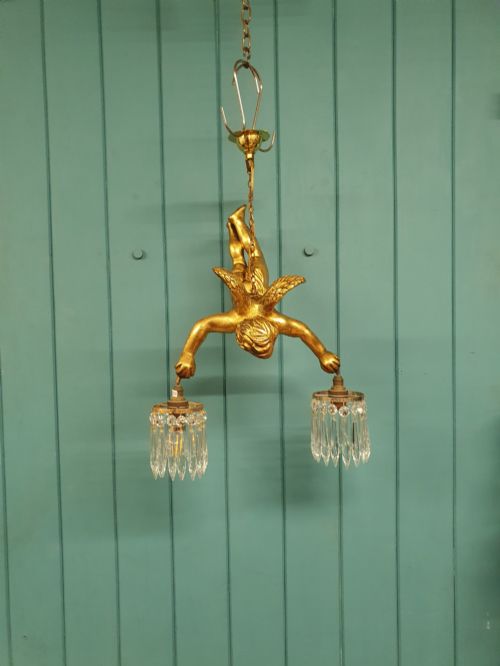
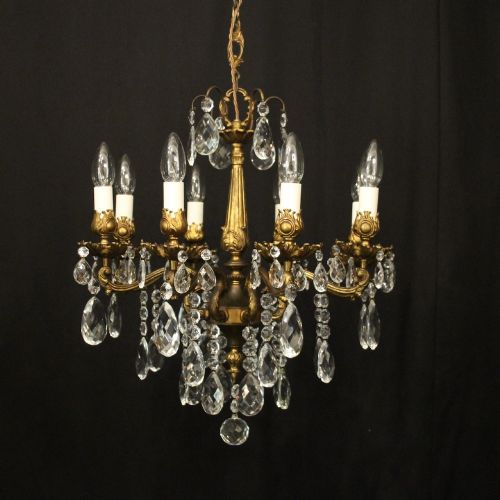
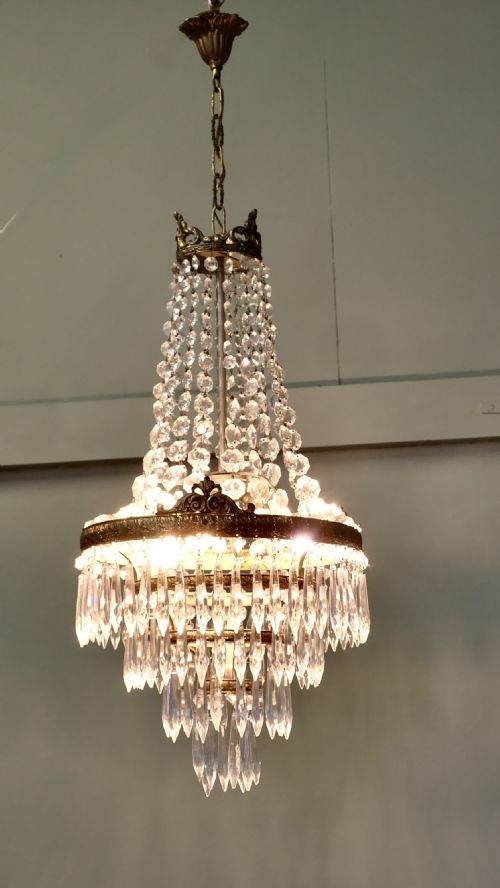
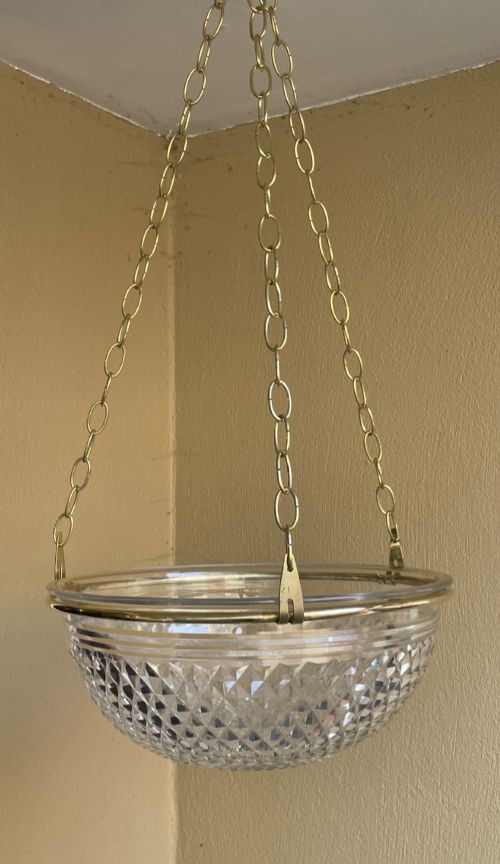
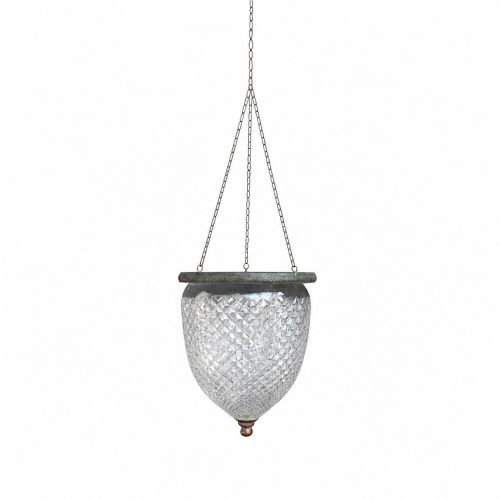
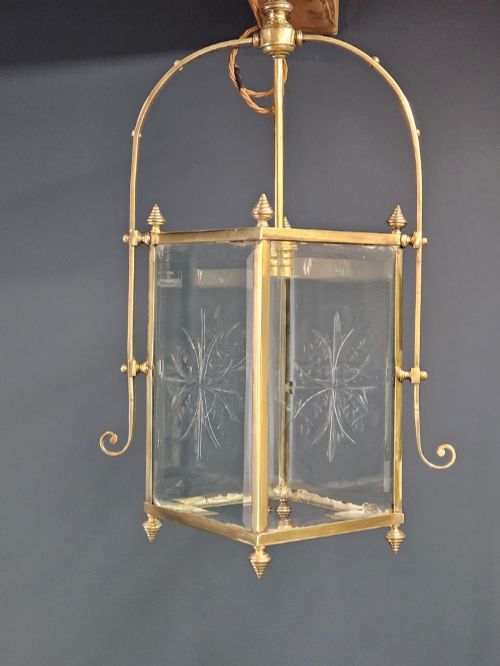
A cut glass pendant lamp encompasses hanging light fittings, plafonniers, lanterns and chandeliers from the Victorian, Edwardian and early twentieth century periods. You will encounter English acorn plafonniers, French Empire style fixtures, and brass framed hall lanterns alongside basket and tent-and-bag chandeliers.
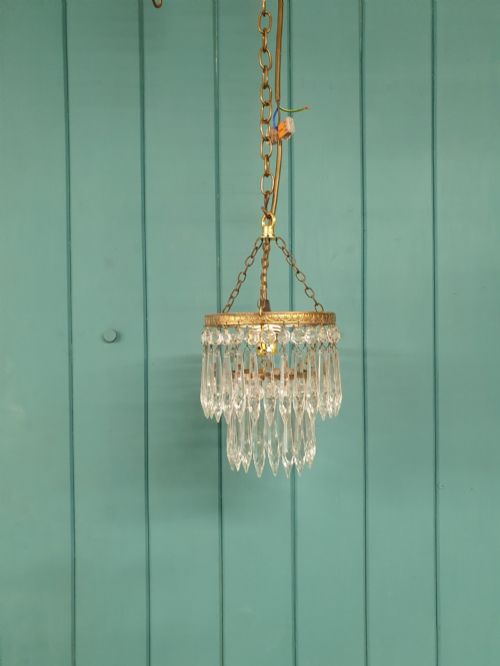
The objects span from the nineteenth century through to the nineteen-thirties, showing variety in scale from small six-inch crystal spike fixtures to large ballroom chandeliers. These pieces hang from ceilings to provide direct or diffused illumination using cut glass, crystal and prisms.
The most frequent examples on this page combine brass, bronze or silver plated mounts with glass bodies shaped as domes, bowls or cascading waterfalls. They draw on French Rococo, Art Nouveau and Regency styles to shape domestic and grand spaces alike.
Materials and construction
Makers built these lamps using brass, bronze, gilt bronze and silver plate to form the structural frames, bands and mounts that support the glass elements. Glass and crystal components were hand-cut with geometric patterns to maximise light refraction.
Individual drops, prisms and beads are linked with wire or pins to frames, while larger shades utilise domed or etched glass forms secured by metal galleries. Frames often incorporate cast spelter or ormolu ornamentation alongside the primary metalwork.
Materials span cut crystal, bronze, gilt brass and silver plate across pendants, plafonniers and dish lights.
Assessing quality
Quality rests in the crispness of the glass cutting and the clarity of the crystal, where deeper, sharper facets create superior light dispersion. The weight and finish of the brass or bronze framework also dictate the standard of the piece.
Better examples retain their original matching drops, integral mountings and unblemished metal patination without replacement parts. The structural integrity of the frame determines how securely it bears the weight of the glass.
F&C Osler·Baccarat
The Cut Glass Pendant Lamp Glossary
- Plafonnier
- A ceiling-mounted or close-hanging bowl light made of glass or crystal. It sits flush or close to the ceiling surface to diffuse light downwards.
- Tent and bag chandelier
- A lighting fixture featuring a conical upper section of crystal strands leading down to a bagged lower basket of drops. This form originated in the eighteenth century and persisted into later periods.
- Prism
- A triangular or multi-faceted piece of glass designed to refract light into spectral colours. These hang from frames to enrich the visual output of the lamp.
- Ormolu
- Gilded bronze or brass ornamentation applied to furniture and lighting fixtures. It provides a bright golden metallic contrast to the clear glass.
- Spelter
- A zinc alloy used as a less costly substitute for bronze in decorative castings. It is frequently plated or painted to resemble richer metals.
Cut Glass Pendant Lamp: Frequently Asked Questions
How do I hang a heavy cut glass pendant lamp?
These fixtures require direct suspension from a ceiling joist using an adequate metal hook and secure wiring box capable of taking the combined weight of the metal frame and glass.
Professional installation is necessary to ensure the weight is supported safely without placing strain on the electrical flex.
What is the difference between glass and crystal?
Crystal contains lead oxide, which increases the weight, refractive index and brilliance of the material compared to standard soda-lime glass. This high lead content allows for sharper facet cutting that scatters light more effectively.
Lamps described as crystal will typically display brighter prismatic colour separation when lit.
How do I clean a cut glass pendant lamp?
Maintenance involves removing dust with a soft brush and washing individual glass drops in warm water with a mild detergent. Metal frames should be wiped gently to preserve the historic patination without stripping surface finishes.
Many collectors take down detachable drops entirely for cleaning before rehanging them in their exact positions.
Were these lamps originally electrified?
Many nineteenth and early twentieth century examples were adapted from oil burning or gas lighting configurations to run on electricity. Rewiring is standard practice to meet current safety requirements while retaining the antique metalwork.
Original burners or gas keys are frequently replaced with modern bulb holders during conversion.