



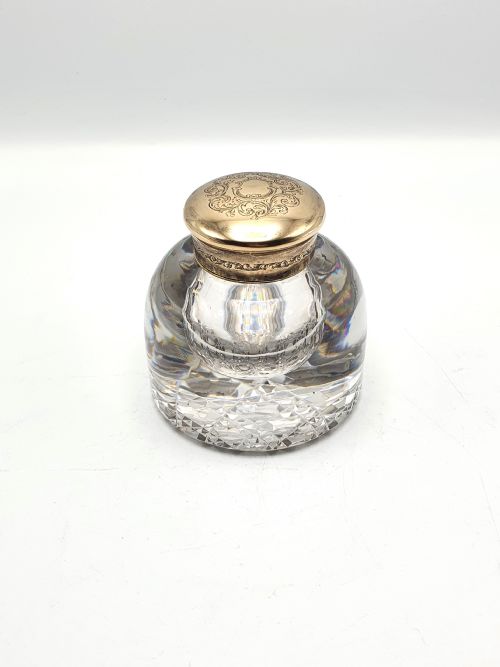


Cut Glass Desk Tidy
When you search for a cut glass desk tidy, you are looking for a practical Victorian or Edwardian inkwell and desk accessory that keeps a writing table orderly.
Cut Glass Desk Tidy
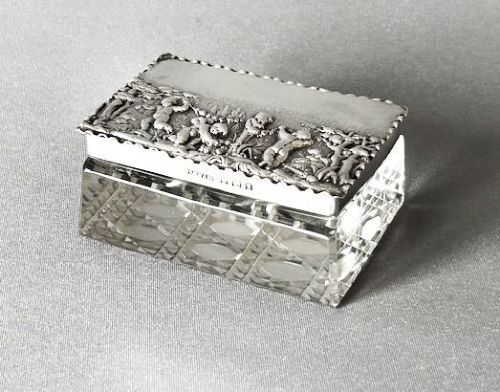
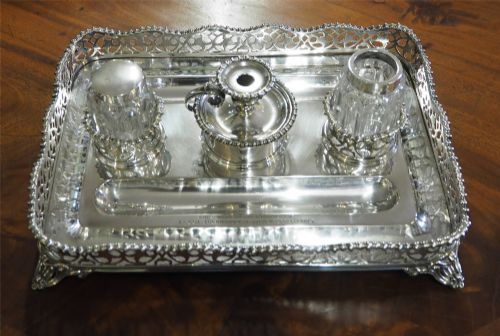
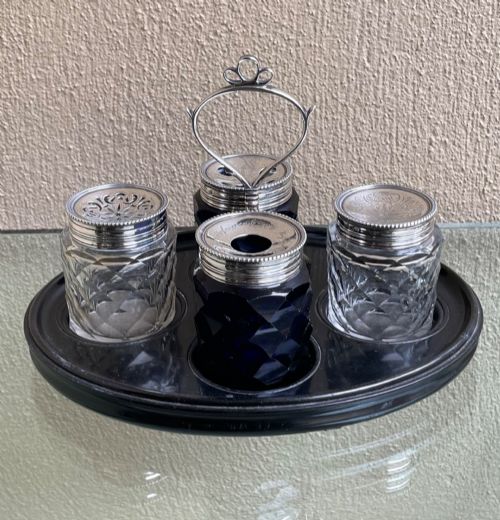
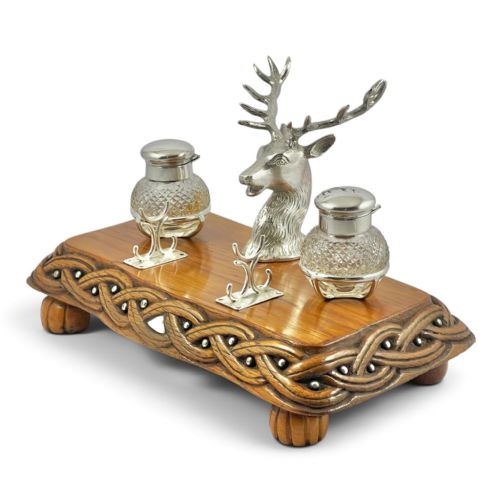
A cut glass desk tidy serves as a receptacle for ink, stamps, and pens on a writing desk, appearing primarily in Victorian and Edwardian iterations alongside Georgian examples. These desk accessories range from single ink pots to substantial stands fitted with silver-mounted bottles.
The objects on this page incorporate media such as oak, coromandel-wood, and silver plate to house heavy glass reservoirs. Many incorporate specific compartments for stamps or pens alongside the central inkwell.
Most examples originate from the nineteenth and early twentieth centuries, spanning the Georgian, Victorian, and Edwardian eras. Buyers encounter everything from simple cut glass ink pots to elaborate stands adorned with brass or sterling silver.
How they were made
Cut glass forms the primary transparent element, shaped into heavy inkwells and bottles that catch the light on a desk. Artisans combined this heavy glass with fitted mounts in brass, silver plate, or sterling silver.
Wooden bases utilise timbers such as oak, walnut, coromandel-wood, and ebony, frequently joined with metal hardware and inlaid brass. Silver components often carry hallmarks indicating London, Sheffield, or provincial towns.
Cut Glass Desk Tidy Retail Price Guide 2026
Typical asking prices for cut glass desk tidy among the pieces listed under this phrase on Sellingantiques today, from the lower quarter to the upper quarter. They describe what is for sale here now, not the wider market.
Listings feature oak, coromandel-wood, and walnut desk stands fitted with cut glass and silver mounts across the Victorian and Edwardian eras.
What varies in quality
Quality rests on the crispness of the glass cutting and the weight of the metal mounts, where heavier silver plating and solid sterling elements distinguish better pieces. The choice of timber also dictates the tier, with figured coromandel-wood and ebony sitting above standard utility oak.
Design complexity separates basic utilitarian ink pots from ornate desk sets featuring multiple bottles and dedicated stamp boxes. The integration of maker marks or provincial hallmarks adds weight to an individual piece.
Elkington·Daniel Holy of Sheffield·W M F
The Cut Glass Desk Tidy Glossary
- Cut glass
- Glass decorated by cutting facets or patterns into the surface using a wheel. This technique creates sharp edges and heavy, light-reflecting vessels suited for daily desk use.
- Inkstand
- A portable tray or stand holding inkwells, pen grooves, and sometimes stamp boxes or sanders. These pieces kept writing equipment organised on a desktop.
- Silver plate
- A base metal coated with a thin layer of silver. Many nineteenth-century desk accessories utilise this method to achieve a bright finish without solid silver costs.
- Hallmark
- An official stamp applied to precious metals indicating purity, maker, and assay office. British silver items frequently carry these marks to verify their origin.
- Coromandel-wood
- A dense, dark exotic timber with contrasting light stripes, imported from Asia. Cabinetmakers favoured it for luxury nineteenth-century desk stands and boxes.
Cut Glass Desk Tidy: Frequently Asked Questions
What is a cut glass desk tidy?
A cut glass desk tidy is a collective term for nineteenth-century desk stands, inkwells, and stamp boxes featuring heavy glass components. They were designed to hold writing fluids and small stationery items securely on a desk.
These pieces combine functional glass reservoirs with fitted bases made from wood or metal, reflecting the desk accessory styles of the Victorian and Edwardian periods.
How were desk stands used?
Desk stands held the necessary implements for correspondence before the widespread use of ballpoint pens. They provided a stable base for ink bottles so writers could dip their nibs without spilling.
Compartments on the stands kept stamps, wafers, and nibs close at hand, maintaining order on a Victorian or Edwardian writing table.
How do I date a desk stand?
Dating relies on the hallmarks found on silver mounts, the wood species used for the base, and the overall stylistic period. Georgian pieces tend to show restrained lines, while Victorian and Edwardian examples often feature heavier ornamentation.
Cut glass patterns also shift across decades, with sharper, deeper facets appearing on late nineteenth-century vessels.
Can I still use an antique inkwell?
Many antique inkwells remain fully functional for holding ink, provided the glass bottle and its lid are intact. Modern users often place a small plastic insert inside old glass wells to protect the antique material from staining.
Care should be taken with metal hinges and silver-plated mounts during regular cleaning.