


Cut Glass Desk Light
These cut glass desk light pieces combine heavy optical metal and faceted crystal to bring functional task illumination and brilliant light play to a traditional desk.
Cut Glass Desk Light
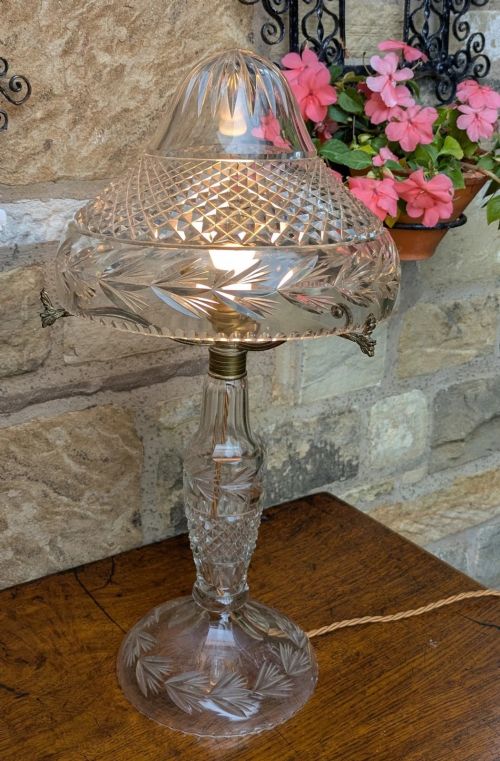
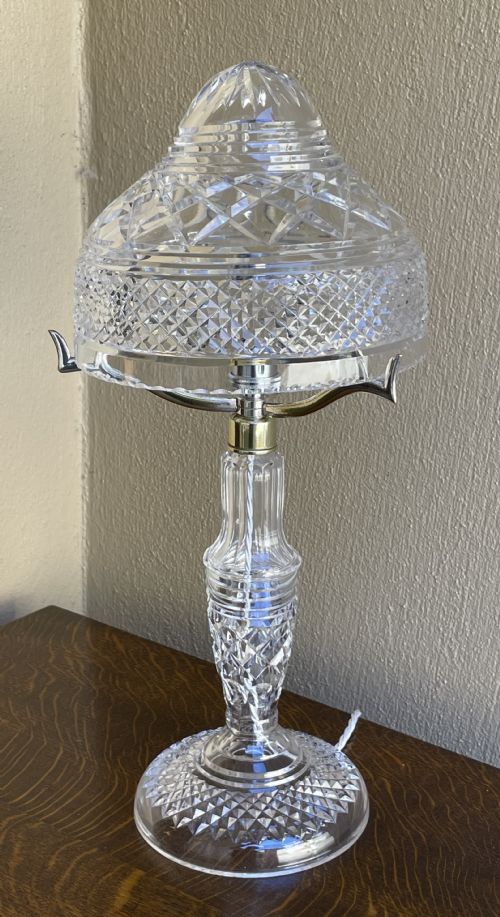
When you search for a cut glass desk light, you encounter a variety of forms that span the Victorian era, the Edwardian period, and the 1930s. The selection includes table lamps, oil lamps converted for electric use, and mushroom lamps.
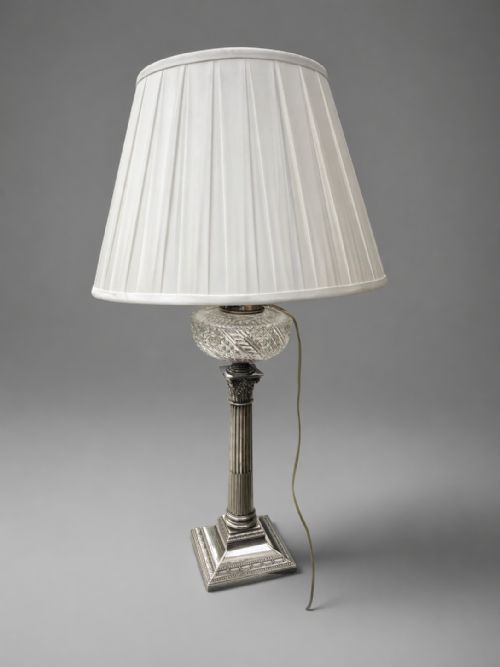
Most examples merge a cut glass or crystal body with brass, silver plate, or gilt metal mountings. These pieces bridge the gap between heavy Victorian oil containers and early twentieth century electrical lighting.
How they were made
Makers shaped heavy lead crystal and glass through deep cutting and faceting to catch and refract light from every angle. This glass work was then mounted onto cast brass, gilt metal, or silver plated frames.
Many structural components involved classical column designs such as the Corinthian order, alongside mushroom domes and detailed reservoirs. Artisans secured the glass components using threaded brass spindles and metal collars.
Victorian oil lamps often retain a faint whiff of paraffin after a century, lingering quietly inside the hollow brass reservoir.
What varies in quality
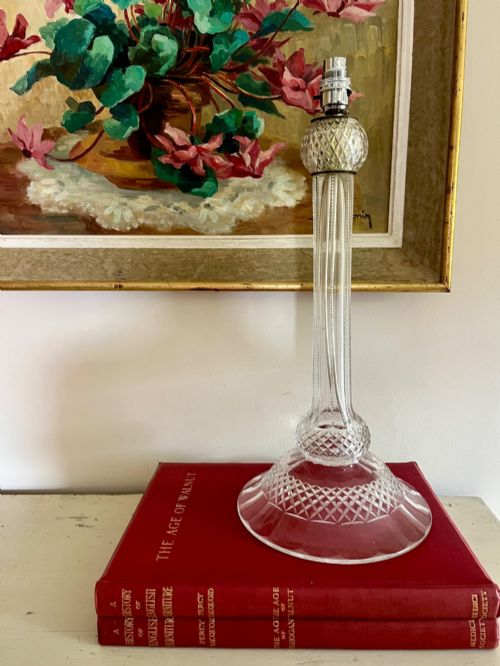
The standard of a cut glass desk light rests on the depth and crispness of the glass faceting, alongside the weight and detail of the brass or silver plated mounts. Sharp, clean incisions in the crystal create superior brilliance compared to shallow or moulded imitations.
Proportion and material integrity distinguish finer specimens. Solid brass castings and heavy lead crystal demonstrate superior craftsmanship over lighter base metals and standard pressed glass.
Stuart Crystal·Osler
The Cut Glass Desk Light Glossary
- Lead crystal
- Glass containing a high proportion of lead oxide, which increases weight, clarity, and the refractive index for deeper brilliance.
- Corinthian column
- An architectural column style featuring an ornate capital decorated with acanthus leaves, frequently utilised for lamp standards.
- Ormolu
- Gilt bronze or brass mounts applied to furniture and lighting fixtures to provide decorative metallic contrast against the glass body.
- Reservoir
- The container section of an oil or paraffin lamp, which in many surviving examples has been adapted to hold electrical fittings.
- Silver plate
- A thin layer of silver fused over a base metal such as brass or copper to give the appearance of solid silver hardware.
Cut Glass Desk Light: Frequently Asked Questions
Can I use modern bulbs?
Most converted antique lamps accept standard modern screw or bayonet bulbs once the interior wiring has been updated by a qualified electrician to meet current safety standards.
It is advisable to check the maximum wattage limits with your electrician to protect the older glass and brass components from excess heat.
How do I clean cut glass?
Wash the glass elements gently in warm soapy water using a soft cloth, avoiding harsh chemical cleaners that might damage adjacent brass or silver plated surfaces.
Dry the pieces thoroughly with a lint-free cloth to restore the sparkle of the faceted crystal cuts.
Were these originally electric?
Many examples from the Victorian and Edwardian periods began life as oil or paraffin lamps before being professionally converted for electrical use in later decades.
Conversion typically involves running a cord through the centre and replacing the burner mechanism with a modern lamp holder.
How do I identify a Corinthian column?
Look for the distinctive capital at the top of the metal shaft, which is carved with stylised acanthus leaves and scrolls modelled on classical Greek architecture.
This architectural motif appeared frequently on formal table and desk lamps throughout the late nineteenth and early twentieth centuries.