



Cut Glass Ceiling Lamp
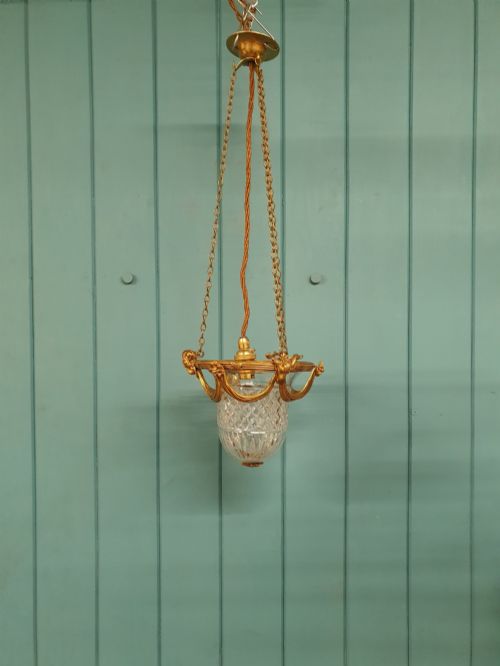
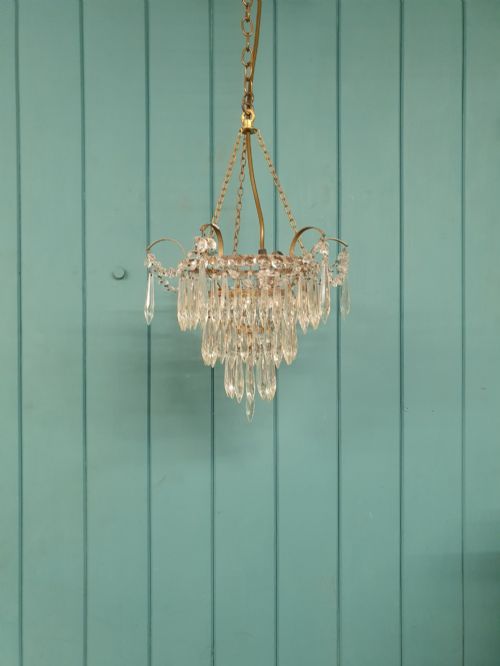
A cut glass ceiling lamp brings a brilliant sparkle to a room through faceted drops, polished prisms and elaborate metal mounts.
Cut Glass Ceiling Lamp
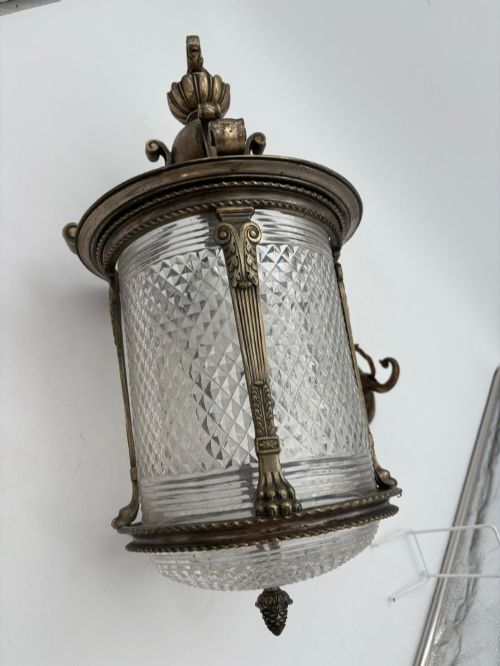
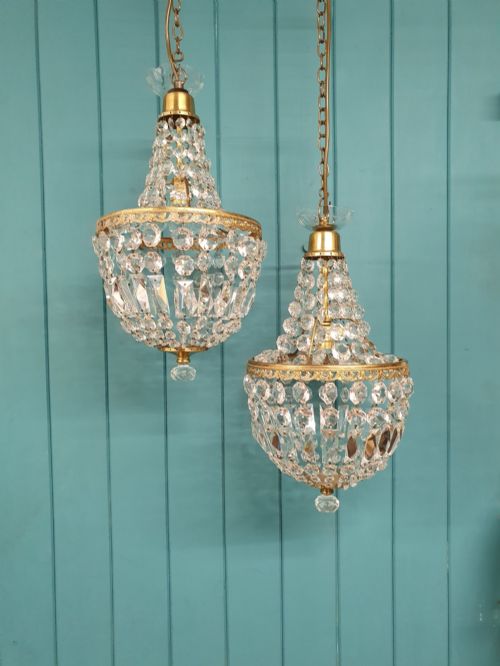
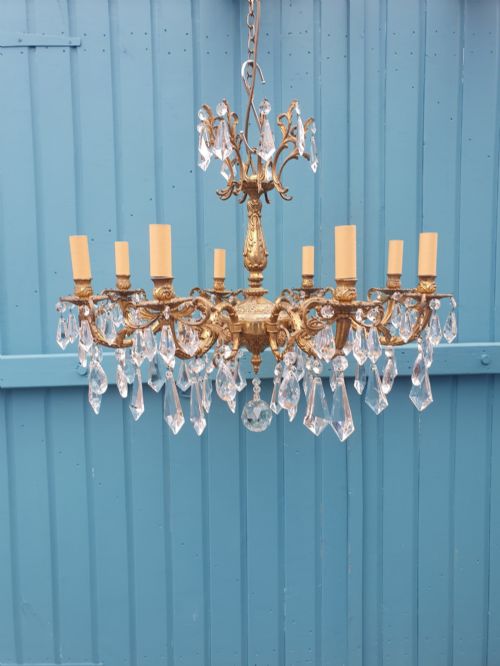
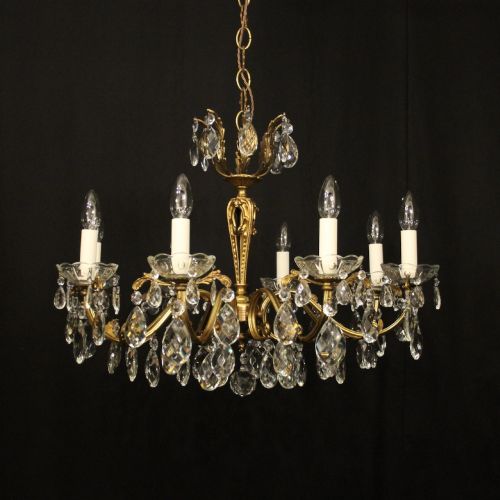
A cut glass ceiling lamp encompasses chandeliers, pendant lights, hanging lanterns and flush plafonniers designed to suspend overhead and distribute light through refractive surfaces. Buyers seek these pieces to introduce architectural presence and diffused illumination into a hallway, drawing room or reception space.
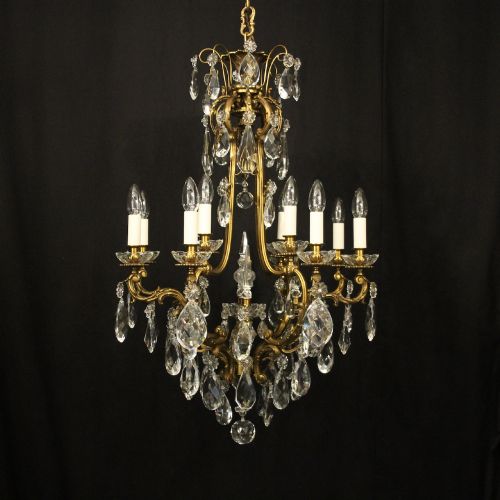
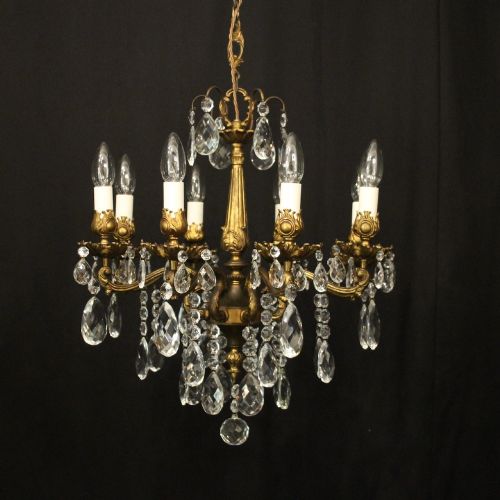
The selections span from the late nineteenth century through the Edwardian era and into the 1920s and 1930s. The most common forms met here include French gilded or brass-framed chandeliers adorned with crystal drops, alongside simpler English pendant lights and hall lanterns.
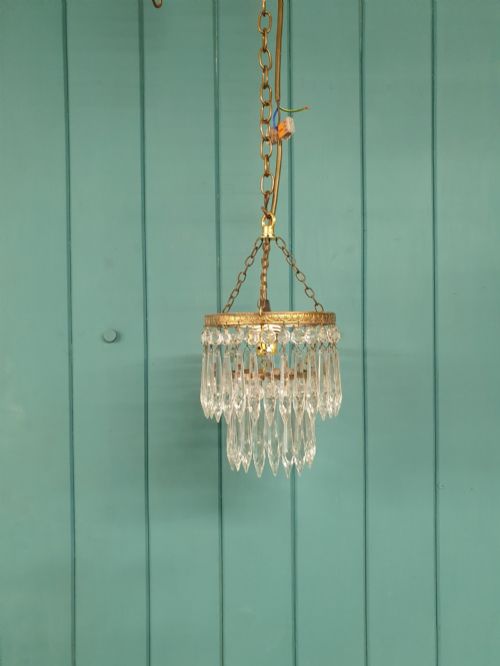
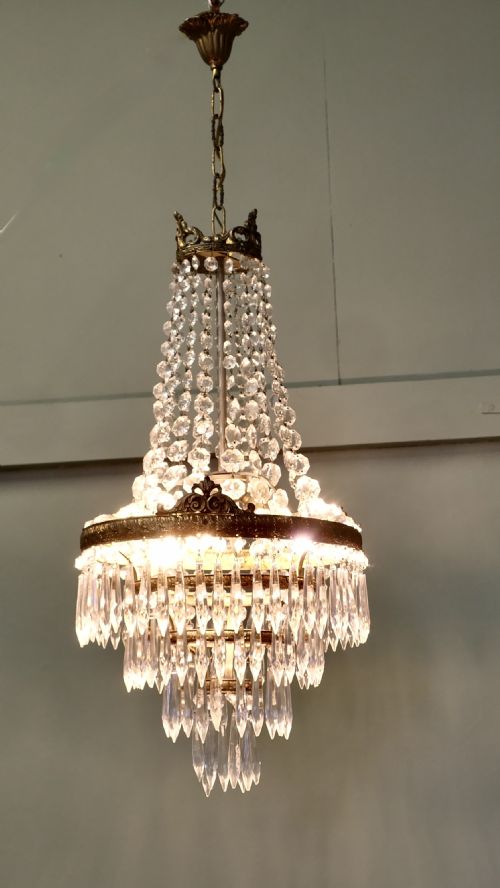
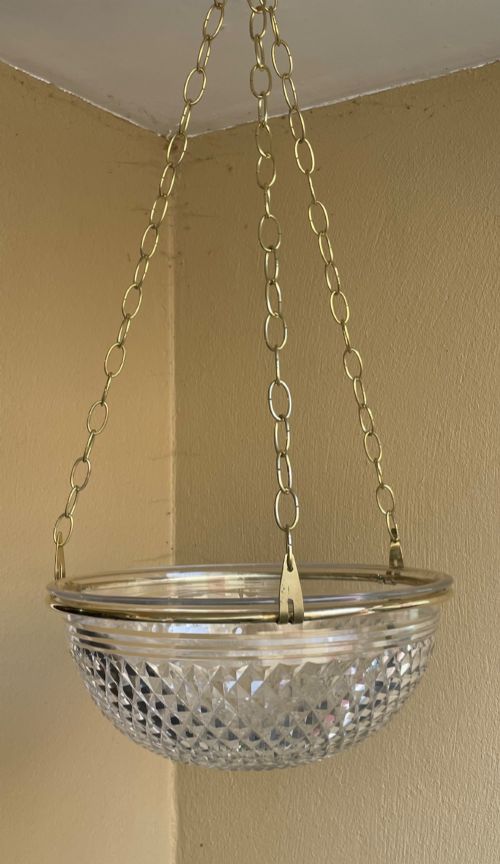
Periods represented range from Victorian and Edwardian examples to later Art Deco and French Empire style interpretations. Many feature tent and bag configurations, waterfall cascades or single-bowl designs suspended on metal chains and arms.
How they were made
Makers constructed the structural frames from cast brass, gilt bronze, copper, silver plate or ormolu, shaping them into arms, bands and decorative mounts that support the glass elements. These metal components hold the weight of the assembly and provide secure channels for internal wiring.
The reflective portions consist of cut glass, crystal, prisms and moulded glass drops held together by wire pins or chains. Artisans faceted the glass by hand or on wheels to maximise light refraction, pairing the pendants with etched glass shades, domes or bowl forms.
Cut Glass Ceiling Lamp Retail Price Guide 2026
Typical asking prices for cut glass ceiling lamp among the pieces listed under this phrase on Sellingantiques today, from the lower quarter to the upper quarter. They describe what is for sale here now, not the wider market.
Flying cherubs occasionally join the illumination, holding crystal spike chandeliers aloft as if assisting with the room's decor.
What varies in quality
The distinction between tiers rests upon the clarity of the crystal, the precision of the hand-cut facets and the weight of the metal framework. Superior examples display crisp geometric cuts on every drop that catch and scatter light cleanly, whereas simpler pieces utilise pressed glass with softer edges.
Metalwork execution similarly separates the output, with heavy cast bronze, finely chased ormolu and substantial brass mounts indicating higher ambition than thin spun metal or basic plated alternatives. The complexity of the assembly, such as intricate tent and bag arrangements or multiple tiers of beaded arms, commands greater regard.
F&C Osler
The Cut Glass Ceiling Lamp Glossary
- Plafonnier
- A ceiling light fitted flush or close to the ceiling surface rather than suspended on a long chain. These fixtures suit rooms with lower ceiling heights while maintaining decorative glass bowls or frames.
- Tent and bag chandelier
- A lighting form featuring an upper conical arrangement of strings of beads resembling a tent, dropping down into a gathered mesh bag of glass prisms below. This style creates a dense cascade of faceted light.
- Prism
- A cut glass pendant designed to refract white light into spectral colours. Prisms hang from the arms and tiers of chandeliers to enhance visual brilliance.
- Ormolu
- Finely chopped high-karat gold applied to a bronze base using a mercury amalgamation process. This technique gives metal mounts a rich, durable golden sheen.
- Waterfall chandelier
- A lighting design where rows of glass drops cascade downward in overlapping tiers, resembling falling water. The arrangement multiplies the reflective surfaces visible from below.
Cut Glass Ceiling Lamp: Frequently Asked Questions
How do I hang a heavy cut glass ceiling lamp?
Suspension requires fixing the ceiling rose directly into a joist or using a heavy-duty toggle bolt capable of supporting the combined weight of the metal frame and glass components. Professional installation ensures the electrical wiring and load-bearing fixings meet safety standards.
Most fixtures connect to a standard ceiling drop, though larger chandeliers benefit from an internal steel cable taking the physical strain while the flex handles the power supply.
Can I clean the glass drops without taking them down?
Spot cleaning in situ works well for routine maintenance using a specialist glass spray applied to a soft cloth, wiping each pendant carefully to avoid pulling the connecting wire pins. Care must be taken not to twist the delicate arms or stress the antique metal mountings.
For a thorough restoration, each drop unhooks individually and bathes in warm soapy water before drying on a towel. Rehanging requires methodical placement to match the original symmetry of the fixture.
How do Edwardian cut glass lamps differ from Victorian ones?
Victorian designs tend to employ heavier gilded brass, robust frames and ornate casting that lean towards formal grandeur. The glass elements on these earlier pieces often feature deep, hand-cut facets and substantial droplet forms.
Edwardian lighting introduces a lighter touch, favouring slender brass frames, refined silver plating and more restrained neoclassical or neoclassical revival motifs. These later Edwardian pieces often integrate cleaner lines while retaining traditional crystal drop configurations.
Are these lamps rewired for modern use?
Many vintage and antique fixtures arrive with modern electrical wiring installed to comply with contemporary safety regulations. It remains prudent to inspect the internal lampholders and flex during installation to confirm suitability for current bulb types.
Original brass or copper frames often accommodate standard modern SES or BCE lamp fittings discreetly hidden behind the glass components. Rewiring preserves the historic exterior while ensuring safe daily operation.