

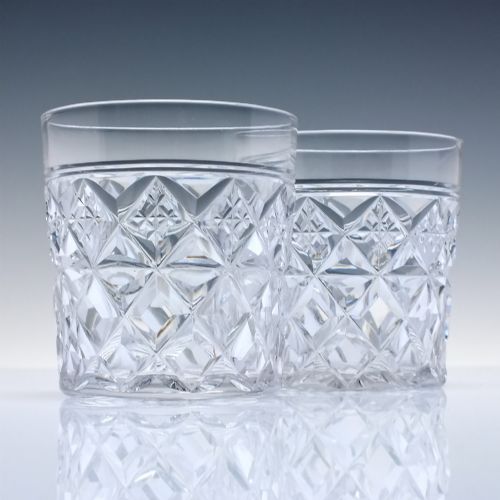
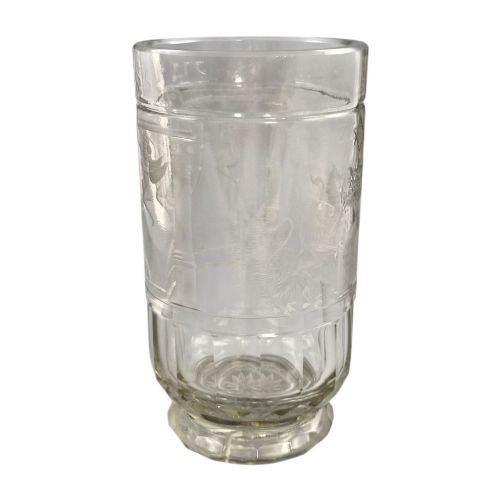
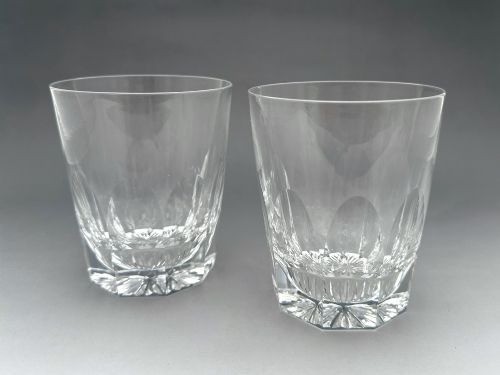
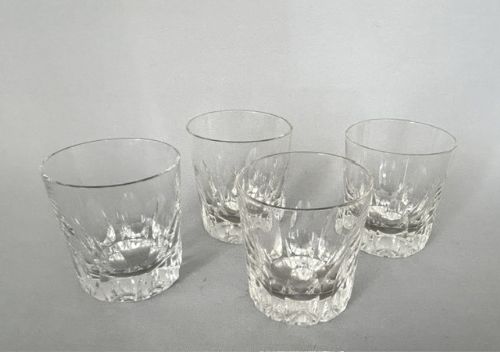
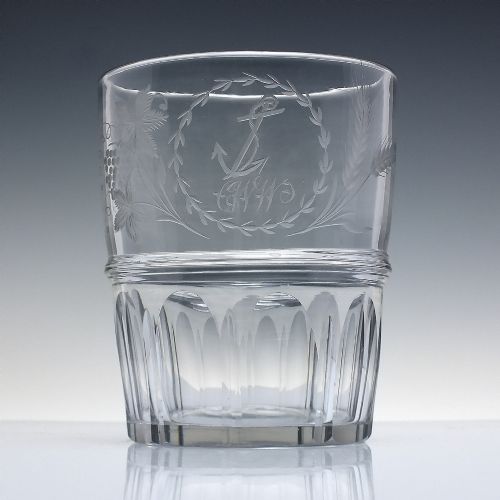
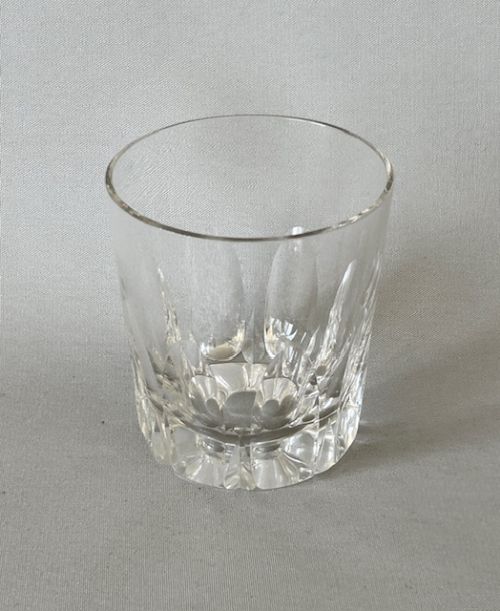
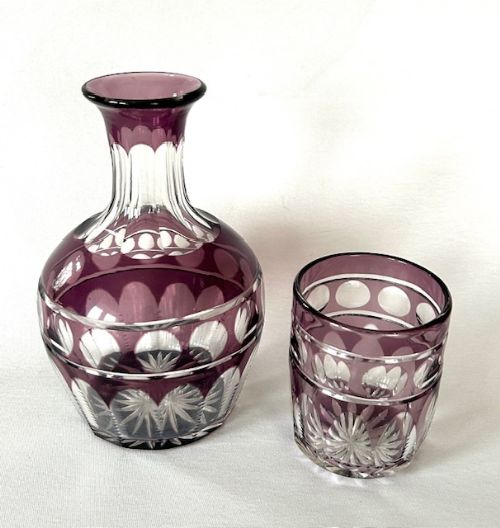


Cut Crystal Tumbler Glass
These cut crystal tumbler glass pieces combine weight and brilliance, offering collectors solid drinking vessels shaped across the Georgian, Victorian, and Edwardian eras.
Cut Crystal Tumbler Glass
A cut crystal tumbler glass represents a heavy drinking vessel designed for spirits and water, appearing frequently in English and Bohemian manufacture. When exploring cut crystal tumbler glass options, buyers encounter everything from single historic examples to matched sets of six or eight.
The selections span from Georgian Regency flip glasses to early 20th century Edwardian and Art Deco drinking sets. Makers produced these vessels for functional use at the table, encompassing small whisky tumblers, larger cordial glasses, and ceremonial beakers.
Origin points centre primarily on English workshops alongside continental Bohemian centres known for coloured glass production. Forms range from simple cylindrical beakers to heavily faceted vessels intended to catch the candlelight.
How they were made
Craftsmen utilised lead crystal, clear glass, and coloured variants such as amethyst and ruby glass, shaped through blowing and heavy moulding. Artisans then applied wheel engraving, acid etching, and blaze cutting to achieve deeply faceted geometric patterns.
Techniques relied upon skilled hand-polishing to bring high clarity to the lead crystal and highlight the precision of the wheel-cut motifs.
Cut Crystal Tumbler Glass Retail Price Guide 2026
Typical asking prices for cut crystal tumbler glass among the pieces listed under this phrase on Sellingantiques today, from the lower quarter to the upper quarter. They describe what is for sale here now, not the wider market.
What varies in quality
Quality rests in the crispness of the wheel cutting and the depth of the facets, where sharper angles produce superior light refraction. Weight distribution and glass clarity distinguish standard utility vessels from finely finished ceremonial or presentation pieces.
The complexity of the surface decoration, ranging from simple panels to intricate wheel-engraved figural scenes, separates standard production from exceptional work.
The Cut Crystal Tumbler Glass Glossary
- Lead crystal
- Glass containing metal oxides that increase weight, brilliance, and the softness required for deep wheel cutting. This material allows the artisan to achieve sharper facets than standard soda-lime glass.
- Blaze cut
- A form of wide, flat facet cutting that creates broad planes to reflect light across the surface of the vessel. It appears frequently on Georgian and Regency drinking glasses.
- Wheel engraving
- A technique where a glassblower holds the vessel against rotating small metal or stone wheels to carve detailed imagery. This method produces precise lines and figures on the exterior.
- Flip glass
- A tall, tapered Georgian drinking glass featuring a heavy flat base and engraved body. These vessels were historically used for serving beer or mixed drinks.
- Acid etching
- A decorative process using acid to eat away exposed areas of the glass surface through a resist. This technique produces frosted designs contrasted against clear or cut panels.
Cut Crystal Tumbler Glass: Frequently Asked Questions
Were these glasses meant for daily use?
Victorian and Edwardian service pieces were built with thick lead crystal walls specifically designed for regular dining room and sideboard use. Their substantial weight helped prevent tipping during spirited gatherings.
While robust enough for occasional modern use, many collectors prefer to handle them with care to preserve the hand-cut surfaces and historical integrity.
What is the difference between lead crystal and regular glass?
Lead crystal contains added mineral oxides that increase the density, refractive index, and overall weight of the material. This composition permits deeper, sharper facet cutting without fracturing the vessel.
Regular glass lacks this specific content, resulting in a lighter weight and less intense light dispersion when turned under a light source.
How can I tell a Georgian glass from a Victorian one?
Georgian examples often display hand-blown irregularities, deeper pontil marks on the base, and distinctive blaze cutting associated with Regency forms. Victorian pieces tend toward heavier, more uniform pressed and cut production with varied coloured glass additions.
Examining the weight, engraving style, and silhouette helps place the vessel within its correct nineteenth-century manufacturing period.