




Cut Crystal Shade Lamp
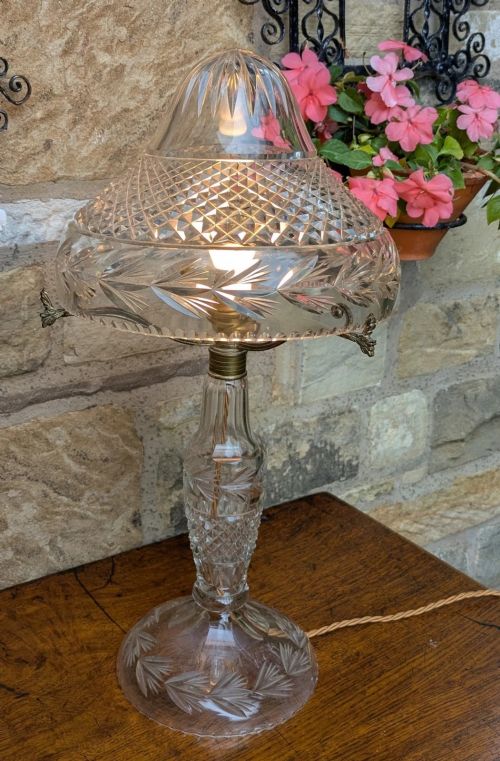
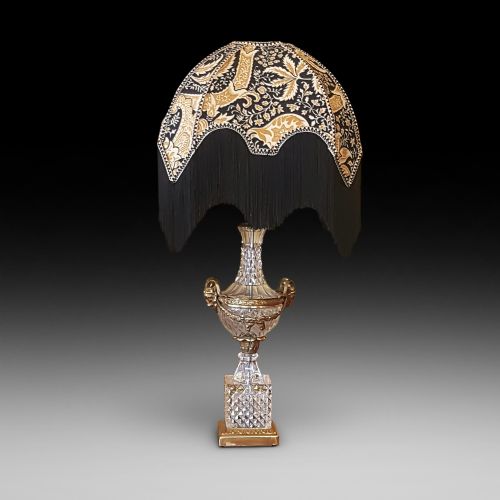
These cut crystal shade lamp examples combine heavy refractive glass with polished brass, chrome, or gilt metal to scatter light across a room.
Cut Crystal Shade Lamp
When you search for a cut crystal shade lamp, you are looking at domestic lighting fixtures that utilise heavily faceted glass to catch and diffuse illumination. The inventory on this page spans the Victorian, Edwardian, 1910, 1920, and 1930 periods.
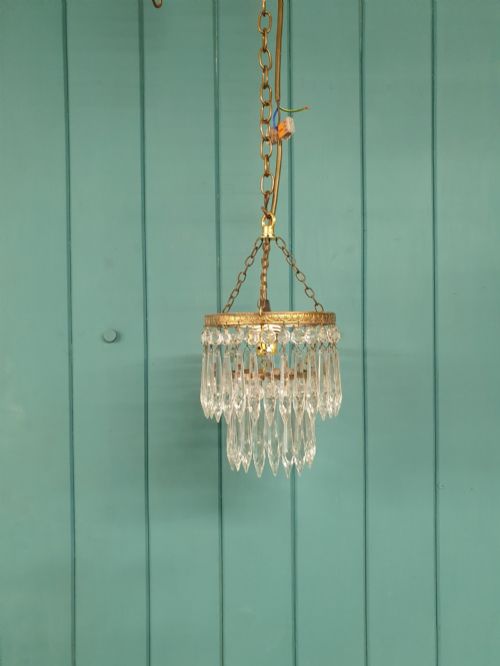
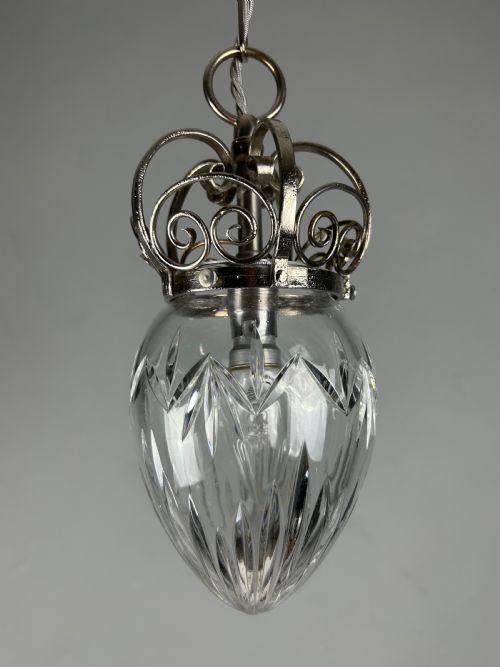
The objects take several forms beyond standard table lamps, including chandeliers, pendant lights, wall lights, oil lamps, and candlesticks with lustres. You are most likely to encounter Edwardian and 1930 examples featuring table lamp and pendant formats.
Makers and designers represented in the broader range include Stuart Crystal, alongside pieces attributed in style to F. & C. Osler. These items bridge functional illumination and decorative glasswork from the late nineteenth and early twentieth centuries.
Materials and construction
Makers formed these pieces using cut glass, crystal, and lead crystal mounted in brass, chrome, metal, and gilt metal frames. Fabric elements also appear alongside silver plated components on specific pendant lights.
Glass components were hand cut with precise geometric facets to maximise light refraction. Metal mountings were cast and polished to secure the heavy crystal shades and prisms safely.
Cut Crystal Shade Lamp Retail Price Guide 2026
Typical asking prices for cut crystal shade lamp among the pieces listed under this phrase on Sellingantiques today, from the lower quarter to the upper quarter. They describe what is for sale here now, not the wider market.
Victorian households relied on paraffin lamps to keep evenings bright long before the national grid reached the parlour.
Variations in quality
Quality rests upon the depth and crispness of the glass cutting, where sharper facets produce superior light dispersion. The weight and purity of the crystal or lead crystal determine the brilliance of the object.
The structural integrity of the metal mounts, whether brass, chrome, or gilt metal, separates robust work from lighter commercial output. Superior pieces retain tightly fitted prisms and securely seated shades without loose joints.
Stuart Crystal·F. & C. Osler
The Cut Crystal Shade Lamp Glossary
- Cut glass
- Glass decorated by grinding facets or patterns into the surface using a rotating wheel. This technique creates sharp edges that refract light intensely.
- Lead crystal
- Glass containing metallic lead oxide, which increases weight, clarity, and refractive index. It allows for deeper and sharper cutting than standard glass.
- Prism
- A small, cut glass pendant suspended from a chandelier or wall light to scatter light. These elements hang in series to enhance illumination.
- Lustre
- A decorative tabletop ornament featuring hanging glass prisms attached to a central stem. Victorian examples frequently paired these with storm shades.
- Gilt metal
- Base metal treated with a thin layer of gold or gold coloured finish to simulate solid gold mountings. This material provides a decorative frame for glass shades.
Cut Crystal Shade Lamp: Frequently Asked Questions
How do I wire an old lamp?
Older lamps require professional rewiring to meet current electrical safety standards while preserving original metal components. A qualified electrician can thread modern flex through historical brass or chrome bodies.
Original brass and metal holders are often replaced with modern British standard lamp holders during rewiring. This ensures the fixture is safe for daily domestic use.
What periods do these lamps cover?
The available selection spans the Victorian, Edwardian, and 1930 eras. Each period brings distinct metalwork styles and cutting patterns to the lamps.
Victorian and Edwardian pieces frequently employ brass mounts and traditional forms, while 1930 examples introduce chrome and streamlined pendant designs.
How are pendant lights supported?
Pendant lights rely on metal chains, rods, or flexible cords attached to ceiling roses. The weight of the cut crystal shade dictates the strength of the required suspension hardware.
Heavier lead crystal bowls and spike chandeliers need secure fixing to ceiling joists rather than plaster alone. Professional installation prevents strain on the historical metal fittings.
Are table lamps and oil lamps different?
Table lamps are designed from the outset for electric illumination, whereas historical oil lamps were converted from paraffin burners. Victorian oil lamps feature reservoirs specifically designed to hold fuel before conversion.
Converted oil lamps retain distinct burners and collars that give them a taller, more industrial silhouette compared to purpose-built electric table lamps.