




Cut Amethyst Glass
Cut amethyst glass brings a rich purple hue to scent bottles, carafes and vanity jars.
Cut Amethyst Glass
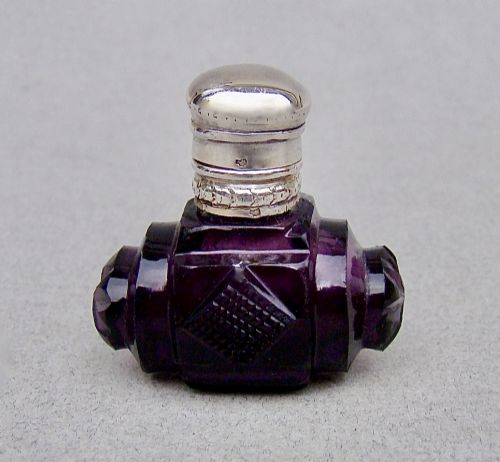
Cut amethyst glass pieces are decorative and personal items produced in deep purple shades during the nineteenth and early twentieth centuries. When you search for cut amethyst glass, you encounter items shaped into carafes, decanters, scent bottles, vinaigrettes and vanity jars.
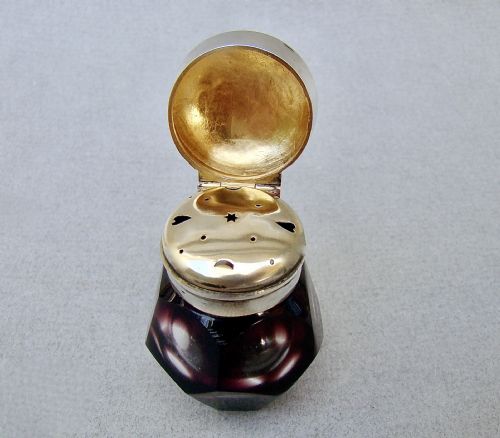
The objects stem from Victorian, Art Deco and French nineteenth-century traditions, often combining coloured glass with silver, gold or paste mounts. Scent bottles and small jars dominate the selections, frequently paired with fitted metal collars or hinged lids.
Makers and workshops across England and France produced these items using overlay techniques and hand-cut facets. The resulting wares balance utility with display, serving dressing tables and cabinets alike.
How they were made
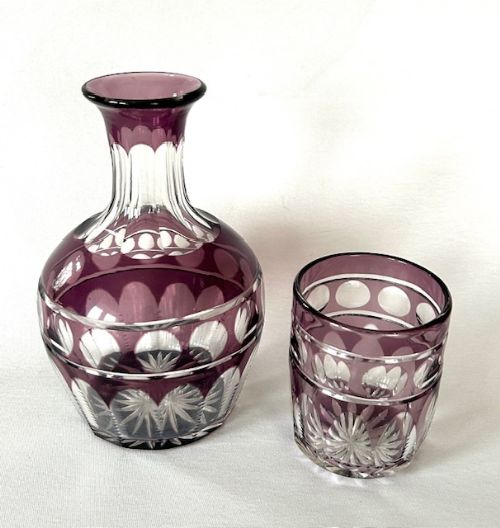
Glassmakers formed these pieces using amethyst-tinted glass, sometimes applying an overlay layer that was subsequently cut away to reveal contrasting depths. Craftsmen then polished the facets by hand to catch the light across the surface of scent bottles and carafes.
Metalworkers added mounts, collars and closures in silver and yellow gold, while some items incorporated paste stones and pearls. Workshops in Birmingham and France stamped or mounted these precious metals directly onto the glass bodies.
Cut Amethyst Glass Retail Price Guide 2026
Typical asking prices for cut amethyst glass among the pieces listed under this phrase on Sellingantiques today, from the lower quarter to the upper quarter. They describe what is for sale here now, not the wider market.
Listings span the Victorian era, the nineteenth century, and the Art Deco period, incorporating silver, gold, and paste glass.
What varies in quality
Quality rests upon the crispness of the glass cutting and the depth of the purple colour. Sharp, clean facets on overlay glass reflect superior workmanship compared to soft or rounded edges.
The integration of the metal mounts dictates the refinement of the piece. Secure silver or gold mountings that complement the proportions of the glass indicate higher production standards.
La Maison Bagues
The Cut Amethyst Glass Glossary
- Amethyst glass
- Coloured glass produced using manganese or other agents to achieve a purple tone. This material forms the primary body of Victorian scent bottles and carafes.
- Overlay glass
- A technique where a layer of coloured glass is cased over a clear or contrasting glass body before being cut through. This method creates geometric patterns in deep purple.
- Vinaigrette
- A small hinged box containing a perforated grille, used to hold a sponge soaked in aromatic vinegar. These containers frequently feature silver mounts paired with glass bases.
- Paste glass
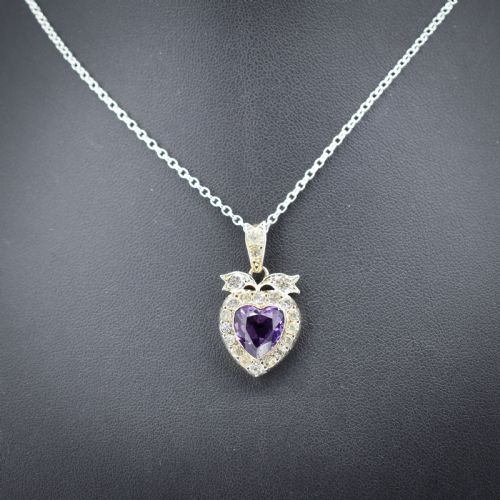
- Faceted lead glass cut and polished to imitate gemstones. It appears alongside silver settings in pendants and charms.
Cut Amethyst Glass: Frequently Asked Questions
What is cut amethyst glass?
Cut amethyst glass refers to purple-tinted glassware shaped and faceted by hand during the nineteenth and early twentieth centuries.
Items range from scent bottles and carafes to vanity jars, often enhanced with silver or gold mounts.
How were scent bottles used?
Victorian scent bottles held liquid perfumes for personal use on dressing tables or carried in reticules.
They featured secure stoppers or hinged silver caps to prevent evaporation of the contents.
How do I date these pieces?
Dating relies on stylistic markers such as Victorian, French nineteenth-century, or Art Deco designs, alongside metal hallmarks.
Silver mounts often bear assay office marks and date letters that pinpoint the year of manufacture.
How should I clean my glass?
Cleaning requires warm soapy water and a soft cloth, avoiding abrasive pads that might scratch the surface.
Care must be taken around silver mounts and paste stones to prevent moisture damage to the settings.