




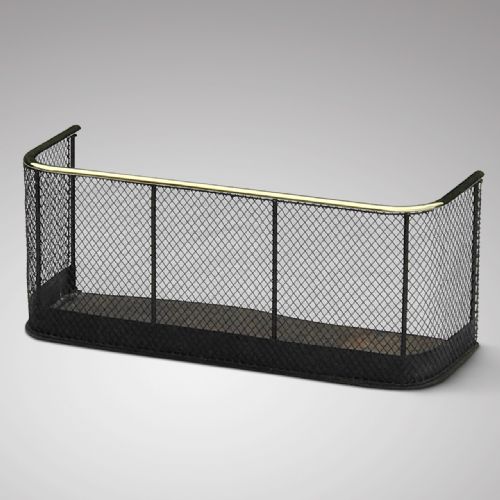
Curved Wire Fire Screen
A curved wire fire screen guards a hearth with a fine mesh barrier framed in polished brass or iron, keeping hearth sparks safely contained.
Curved Wire Fire Screen
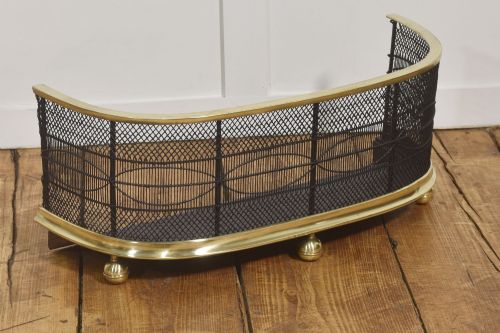
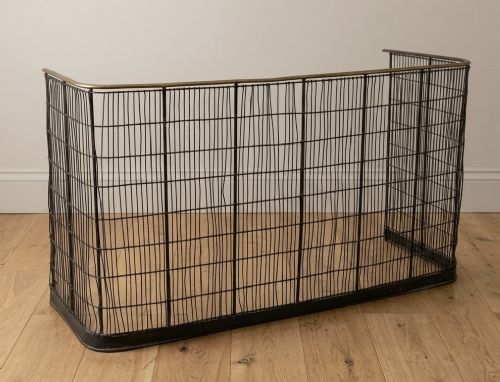
A curved wire fire screen stands before an active fireplace to catch stray sparks and embers while keeping the warmth flowing into the room. These pieces appear in forms such as nursery fenders, spark guards, and bowed screens designed to sit neatly on the hearth.
The versions most commonly met on this page date from the Victorian and Edwardian eras, alongside pieces from the Regency period and the wider nineteenth century. They combine protective wire mesh with sturdy metal frames, often finished with a polished brass top rail.
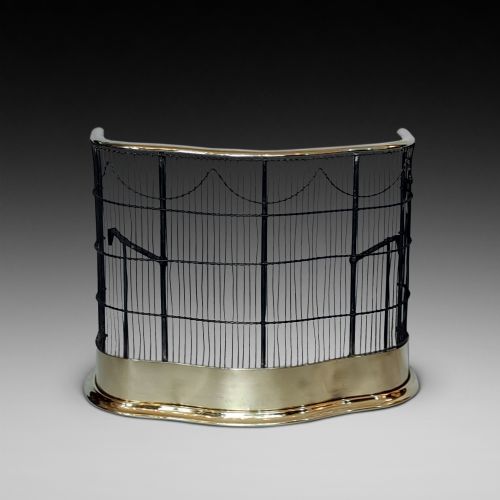
Makers shaped these guards with curved, bowed, or serpentine profiles to follow the contour of the hearth or project outward into the room. They serve as practical fireplace accessories that combine utility with traditional metalwork.
How they were made
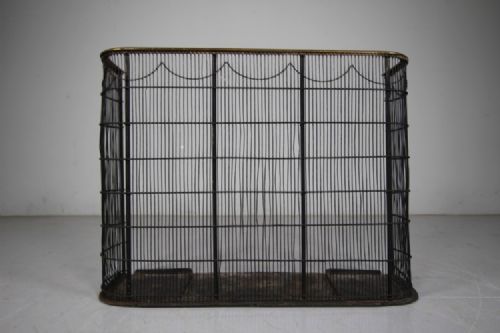
Makers constructed these screens using woven iron wire, steel wire, or fine wire mesh stretched across rigid frames of brass, iron, or wrought iron. The wirework was securely attached to the surrounding metal structure to form a resilient barrier against heat and sparks.
Top rails in polished brass provide a clean finished edge and a convenient handle for moving the guard. Frames frequently feature curved, bowed, or serpentine lines shaped by hand to fit specific hearth configurations.
Materials seen across these listings include brass, iron, wire mesh, wrought iron, and steel wire.
What varies in quality
Quality rests in the weight and gauge of the wire mesh and the solidity of the supporting frame. Heavier gauge wire and robust brass top rails distinguish sturdier examples from lighter, more utilitarian pieces.
The precision of the metal shaping, particularly in serpentine and bowed profiles, defines the visual execution. Clean joints and uniform wire tension separate finer workshop production from standard utility items.
The Curved Wire Fire Screen Glossary
- Nursery fender
- A low protective guard placed around a fireplace to keep children at a safe distance from the fire. These guards often feature a solid brass top rail above a fine wire mesh enclosure.
- Spark guard
- A mesh screen designed specifically to intercept flying embers from an open fire. They sit directly on the hearth to protect flooring and furnishings.
- Serpentine
- A gentle undulating curve shaped into the front profile of the guard. This design allows the screen to follow the projection of the hearth.
- Wrought iron
- Iron heated and hammered into shape by a blacksmith to form strong structural frames. It provides durability and a distinct hand-worked texture.
Curved Wire Fire Screen: Frequently Asked Questions
What is a curved wire fire screen used for?
A curved wire fire screen provides a physical barrier between an open hearth and the room, stopping sparks and embers from reaching carpets or furniture.
They also offer a protective enclosure around the fire, which historically kept children and pets at a safe distance from the flames.
How do I date a wire fire screen?
Dating relies on examining the materials, construction methods, and overall style visible in the frame and wirework.
Pieces from the Regency period, the nineteenth century, the Victorian era, and the Edwardian period each display distinct proportions and brass detailing characteristic of their time.
Are all fire screens curved?
No, while many examples feature bowed, curved, or serpentine profiles to project over the hearth, others are flat or three-sided nursery fenders.
The curved versions are specifically shaped to fit neatly around the hearthstone.
What metals were used to make them?
The frames and top rails are typically made from brass, iron, or wrought iron, while the protective barrier uses steel wire, iron wire, or fine wire mesh.
Brass was frequently utilised for top rails and frames to provide a bright decorative contrast against the dark wire.