



Curved Nursery Fireguard
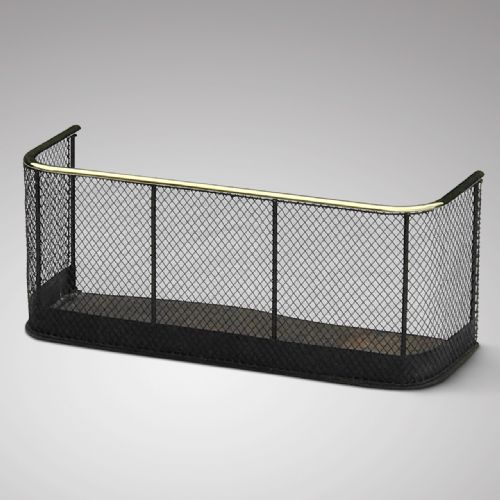
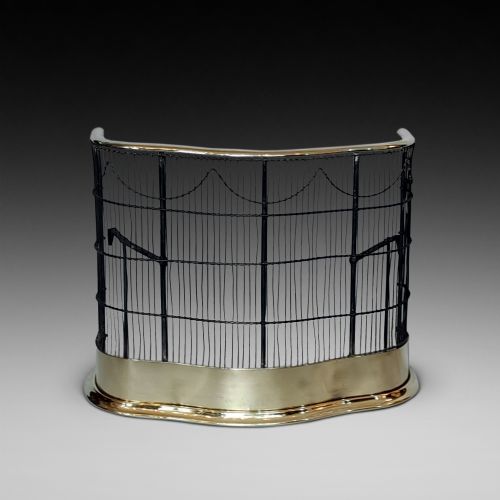
A curved nursery fireguard offers essential hearth safety for children while bringing period brass and wire mesh craftsmanship into the room.
Curved Nursery Fireguard
A curved nursery fireguard provides a protective barrier around an open hearth to keep children and pets safe from sparks and hot grates. These pieces typically curve outward from the fireplace opening, creating a safe perimeter on the floor.
The selections available here range across the nineteenth century, the Victorian era, and the Edwardian period. Buyers encounter forms such as bowed brass nursery fire guards, serpentine wire mesh guards, and large nineteenth century nursery fenders with brass top rails.
How they were made
Maker construction combines sturdy structural frames with fine protective screening. Artisans utilise brass for top rails and frames, pairing them with wire mesh, steel wire, or wrought iron.
Frames take on bowed or serpentine curves to fit neatly around the hearth. Brass rims and top rails give these guards a finished edge, while welded or woven wire mesh forms the protective body.
Curved Nursery Fireguard Retail Price Guide 2026
Typical asking prices for curved nursery fireguard among the pieces listed under this phrase on Sellingantiques today, from the lower quarter to the upper quarter. They describe what is for sale here now, not the wider market.
Listings span the nineteenth century, Victorian era, and Edwardian period, constructed from brass, iron, wire mesh, and wrought iron.
What varies in quality
Quality separates simple utility items from pieces with finer decorative presence and heavier metalwork. Substantial brass top rails and robust wrought iron or steel frames indicate superior construction.
The fineness of the wire mesh and the precision of the curved frame shape distinguish better examples. Uniformity in the brass framing and secure attachment of the mesh indicate careful period workmanship.
The Curved Nursery Fireguard Glossary
- Fireguard
- A protective barrier placed in front of an open fire. These objects keep stray sparks from reaching carpets and clothing.
- Fender
- A low metal guard that sits on the floor around a hearth. Many examples incorporate a raised top rail specifically designed to stop children getting too close to the fire.
- Wire mesh
- A network of metal wire woven or welded together. This material provides clear visibility of the flames while stopping hot embers.
- Serpentine
- A gentle curving shape that snakes inward and outward. This contour adds elegance to nineteenth century hearth protection.
Curved Nursery Fireguard: Frequently Asked Questions
What is a curved nursery fireguard?
A curved nursery fireguard is a protective metal barrier designed to enclose an open hearth. It prevents young children from coming into direct contact with flames and hot grates.
These pieces feature a rounded shape that extends outward into the room. They combine functional wire mesh with decorative brass framing.
How do I measure for a fireguard?
Measure the width and depth of your hearth area to ensure the curved guard sits comfortably around the fireplace surround. Account for the projection of the bow or serpentine shape into the room.
Check the height of the guard against your fireplace opening. A taller frame provides greater coverage for standard nineteenth century hearths.
What materials are used?
Period fireguards combine brass frames and top rails with wire mesh bodies. Wrought iron and steel wire also appear frequently in nineteenth century examples.
Brass provides a bright decorative trim along the top edge. Wire mesh forms the transparent barrier that stops sparks.
How do I date a fireguard?
Dating relies on stylistic clues and construction materials typical of the nineteenth century, Victorian era, or Edwardian period. Bowed brass frames and serpentine wire mesh point directly to Victorian and Edwardian manufacturing styles.
Examine the construction of the wire mesh and the assembly of the brass top rail. Earlier nineteenth century pieces often feature heavier wrought iron elements alongside brass trim.