

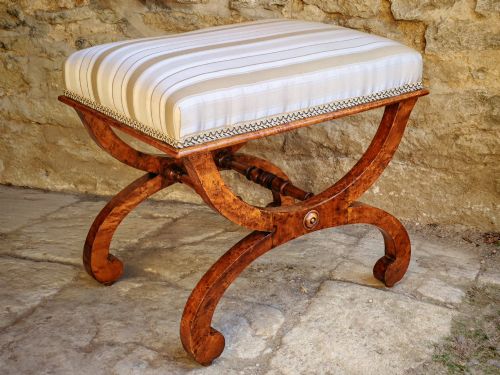
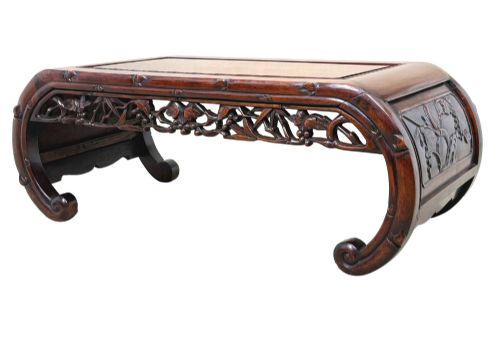
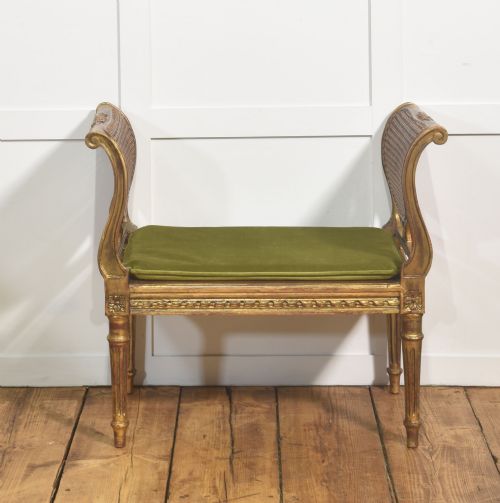


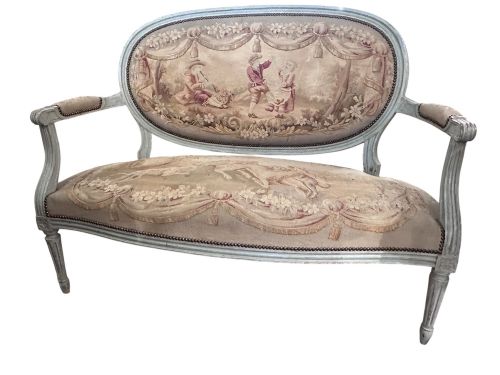


Curved Leg Bench
These curved leg bench pieces bring period seating into a room, offering low profiles and defined forms that anchor a seating arrangement.
Curved Leg Bench
A curved leg bench encompasses a range of seating forms including window seats, small settees, and stools found across periods from the Georgian era through the Edwardian years and into the 1930s. Buyers searching for a curved leg bench encounter diverse stylistic influences, notably French Louis XVI designs alongside Regency, Edwardian, and Art Deco interpretations.
The objects listed display varied functions from end-of-bed seating and dressing stools to window seats and daybeds. These forms serve as versatile accent pieces that integrate into both traditional and eclectic interiors.
Materials and construction
Makers utilised traditional timbers such as mahogany, walnut, satinwood, and beech to build the structural frames, often finishing them with giltwood or simulated rosewood. Joinery techniques varied according to the period, supporting carved details and fluted legs.
Upholstery methods incorporated cane work alongside fabric upholstery and Aubusson tapestry coverings. These surface treatments complemented exposed wood elements like burr maple veneers and inlaid details.
Curved Leg Bench Retail Price Guide 2026
Typical asking prices for curved leg bench among the pieces listed under this phrase on Sellingantiques today, from the lower quarter to the upper quarter. They describe what is for sale here now, not the wider market.
Listings feature frames built from mahogany, walnut, beech, and satinwood, alongside cane and fabric upholstery.
Assessing quality and execution
Distinction in quality rests upon the crispness of carved details on the frame and the integration of stylistic elements such as fluted legs or giltwood finishes. Higher-grade examples demonstrate careful proportion in the curve of the support and harmony between the timber and upholstery.
The refinement of secondary materials, including the tightness of caning or the fidelity of period revival details, separates standard production from superior workshop output.
Harry & Lou Epstein
The Curved Leg Bench Glossary
- Cané
- Woven cane panelling utilised for seat bases and backs, providing a lightweight yet sturdy structural surface.
- Giltwood
- Timber treated with gold leaf or gilt finish to create a decorative, reflective surface on decorative frames.
- Fluted
- Carved vertical grooves adorning furniture legs or pillars, typical of classical revival designs.
- Aubusson
- Tapestry woven in the French tradition, frequently employed for period seat upholstery and covers.
Curved Leg Bench: Frequently Asked Questions
What periods do these benches cover?
The listings span several distinct periods including the Georgian and Regency eras, the 19th century, Edwardian times, and the 1930s. Each era imparts specific stylistic traits to the framework and upholstery.
Design influences range from classical French Louis XVI revivals to Art Deco creations, reflecting the shifting tastes of makers over two centuries.
How were window seats used?
Window seats were placed within bay windows or recessed openings to provide a dedicated spot for reading or viewing the exterior landscape. Their compact proportions suited these architectural spaces.
Over time, similar low seating forms transitioned to end-of-bed positions or dressing rooms, adapting to modern domestic layouts while retaining their decorative utility.
What woods appear most often?
Makers frequently selected hardwoods such as mahogany, walnut, beech, and satinwood for their strength and suitability for carving. Exotic grains like burr maple also feature in select pieces.
Surfaces were occasionally painted, gilded as giltwood, or finished to simulate rosewood, depending on the prevailing aesthetic of the workshop.