




Curved Glass Frame
These curved glass frame pieces combine optical trickery and grand framing, giving any room a striking focal point.
Curved Glass Frame
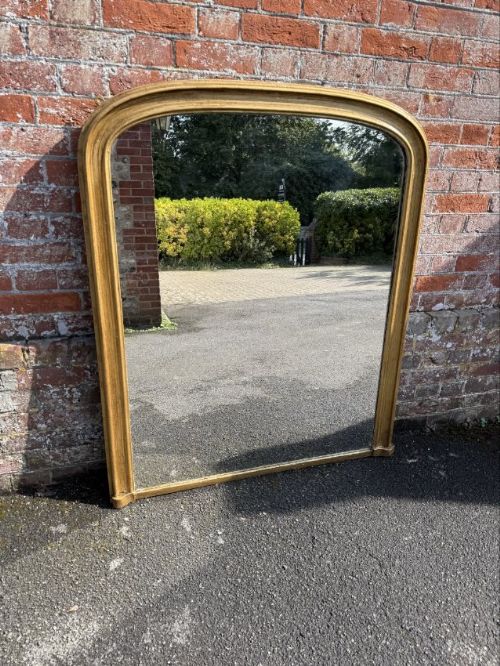
When you search for a curved glass frame, you are looking at items that bend reflections or enclose objects behind bowed panes, spanning functional mirrors and display furniture. The examples you are most likely to meet on this page include Victorian overmantle mirrors, fairground distortion mirrors, and mahogany bijouterie tables.
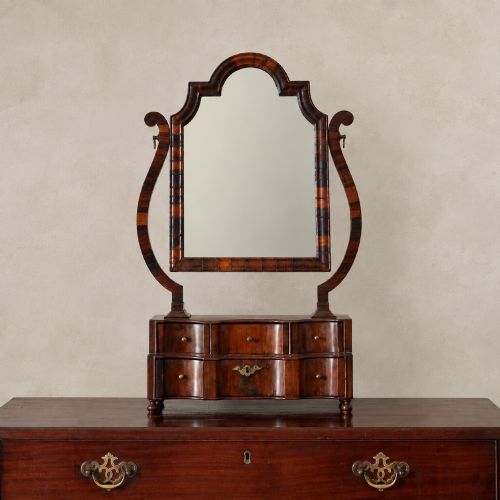
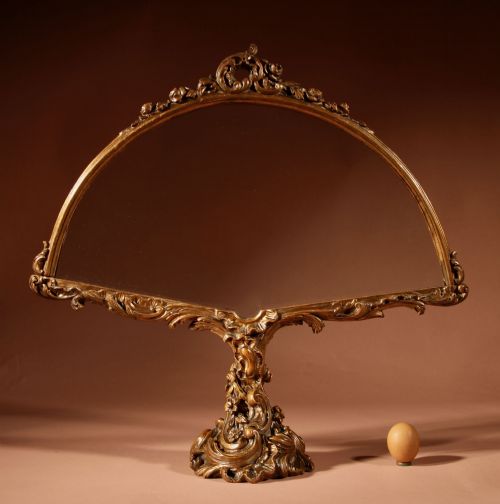
The periods represented stretch from the eighteenth century through to the 1930s, taking in styles such as Queen Anne, French Rococo, and Art Deco. Forms range from wall mirrors and toilet mirrors to display counters and fun house mirrors.
Origin and purpose differ widely across these categories, moving from domestic dressing tables to fairground attractions and commercial display counters. Each piece uses its curved glass or frame shape to alter perception or showcase contents.
How they were made
Makers constructed these frames using timber such as mahogany, walnut, oak, and laburnum, frequently applying gesso, gold leaf, or paint to wooden surfaces. Aluminium also appears in twentieth-century commercial display counters.
Glass is manipulated to create convex, concave, or arched surfaces, sometimes paired with velvet linings inside display cases. Giltwood and parcel-gilt details are shaped through traditional carving and plaster work.
Curved Glass Frame Retail Price Guide 2026
Typical asking prices for curved glass frame among the pieces listed under this phrase on Sellingantiques today, from the lower quarter to the upper quarter. They describe what is for sale here now, not the wider market.
Some fairground mirrors were built solely to induce mild panic by stretching your reflection into improbable shapes.
What varies in quality
The standard of carving and the application of gold leaf or gesso mark the difference between standard production and finer craftsmanship. Heavier wooden frames with intricate detailing command attention through the depth of their execution.
The clarity and uniformity of the curved glass itself, alongside the preservation of original backing materials and velvet linings, separate well-maintained examples from altered pieces.
The Curved Glass Frame Glossary
- Overmantle mirror
- A large mirror designed to sit above a fireplace mantel. These often feature arched tops and elaborate wooden frames.
- Bijouterie table
- A glass-topped display table used for small valuables and curiosities. They typically feature hinged lids and wooden frames.
- Convex mirror
- A spherical mirror that bulges outward to reflect a wide, distorted field of vision. They are sometimes called sorcerer mirrors.
- Gesso
- A plaster-like mixture applied to wood as a base for gilding or painting. It allows craftsmen to carve intricate relief details.
- Fairground mirror
- A distorting mirror designed for amusement parks and fun houses. These use curved glass to alter human proportions.
Curved Glass Frame: Frequently Asked Questions
What is a curved glass frame used for?
These items serve various functions depending on whether they are mirrors or display furniture. Overmantle and convex mirrors alter spatial perception and light in a room.
Display tables and counters protect and showcase small objects behind bowed glass panes.
Where should I place a convex mirror?
Convex mirrors project a wide-angle view of an interior space, making them effective opposite windows or in hallways. Their curved glass gathers light from multiple directions to brighten darker corners.
They need to be hung securely due to the weight of their wooden and gilt frames.
What is a fairground mirror?
Fairground and fun house mirrors use specially shaped glass to create humorous distortions of the human body. They date primarily from the nineteenth and early twentieth centuries.
These pieces were built for public entertainment rather than domestic use.