

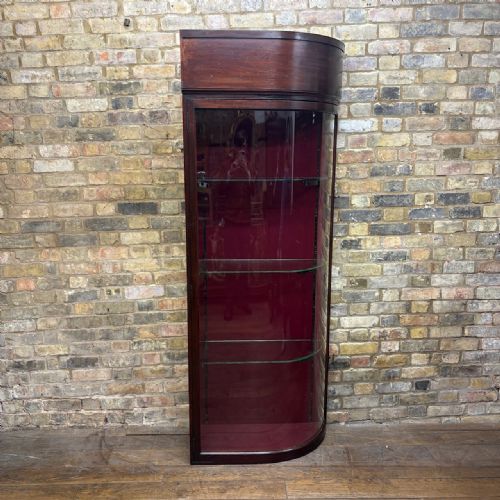
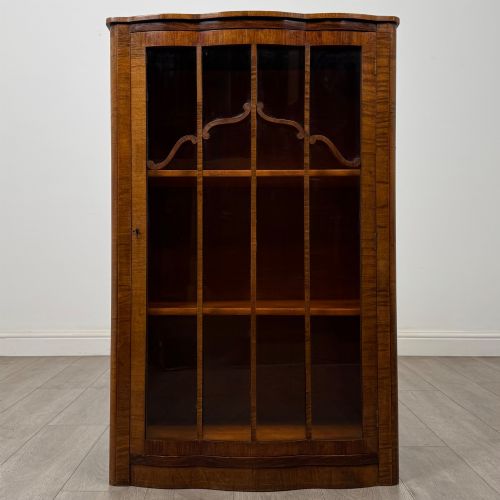


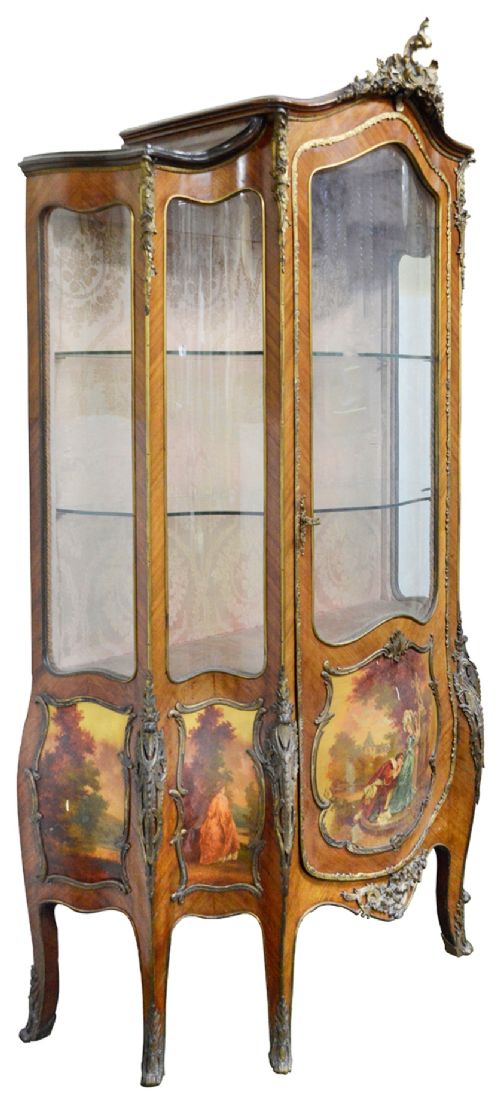

Curved Front Display Case
These curved front display case examples bring together glass and timber to show off precious objects with elegance.
Curved Front Display Case
A curved front display case brings together glass and timber to present objects clearly from multiple angles. These cabinets take forms such as corner cupboards, standing display cabinets, and shop display units.
The pieces seen here span periods from the Georgian era through Victorian and Edwardian times up to the Art Deco period. Buyers will encounter both freestanding room cabinets and specialised shop display furniture.
Makers utilise styles including Louis XV Revival, Sheraton Revival, and French Louis XVI alongside simpler Georgian and Edwardian designs. Mahogany, walnut, oak, and satinwood form the primary bodies of these cabinets.
How they were made
Cabinet makers constructed these pieces using solid timbers like mahogany, oak, and walnut, frequently applying figured veneers to curved surfaces. Marquetry inlay and ormolu mounts add decorative detail to many examples.
Curved glass, concave glass, and bow-fronted glazing required specialist glass-bending techniques to fit the sweeping wooden frames. Fabric linings often furnish the interior spaces behind glazed doors.
Curved Front Display Case Retail Price Guide 2026
Typical asking prices for curved front display case among the pieces listed under this phrase on Sellingantiques today, from the lower quarter to the upper quarter. They describe what is for sale here now, not the wider market.
Curved glass required daring nineteenth-century bending methods that occasionally left tiny, charming ripples across the view.
What varies in quality
The standard of timber preparation and the subtlety of veneer selection separate standard cabinets from finer productions. Finely figured walnut and mahogany veneers require expert application to follow compound curves.
The execution of brass ormolu mounts and delicate marquetry inlay indicates the level of craftsmanship invested in a piece. Original curved glass and well-fitted doors reflect superior workshop standards.
F. Sage And Co·Edwards And Roberts
The Curved Front Display Case Glossary
- Bow front
- A convex curved front projecting outward from the frame. This shape softens the corners of a room cabinet.
- Serpentine front
- A curved front featuring a central convex sweep flanked by concave curves. It requires advanced woodworking skill.
- Marquetry
- Decorative patterns formed by fitting together thin slices of wood veneer. Artisans use contrasting timbers to create floral or geometric designs.
- Ormolu
- Gilt bronze mounts applied for architectural and decorative enrichment. These metallic ornaments highlight the corners and framing of luxury cabinets.
- Vitrine
- A glass-fronted display cabinet designed for porcelain and curiosities. The term originates from the French word for glass.
Curved Front Display Case: Frequently Asked Questions
Where should I place a curved front display case?
These cabinets suit corners or flat walls where their curved glazing can catch ambient light. Placing them away from direct sunlight protects both the timber finishes and interior contents.
Ensure the floor surface is level so that heavy glazed doors hang correctly within their frames. Free-standing models require adequate clearance to open curved doors smoothly.
How do I care for the wood and glass?
Dust timber surfaces regularly with a soft, dry cloth to prevent the buildup of grit. Avoid silicone-based polishes that can degrade antique veneer finishes over time.
Clean glass panels with a mild solution applied to a cloth rather than sprayed directly, protecting adjacent wood and fabric linings. Check internal fabric periodically for dust accumulation.
Can adjustable shelves hold heavy items?
Many cabinets feature adjustable wooden or glass shelving designed for lighter decorative objects and tableware. Check the support brackets and shelf thickness before placing heavier items inside.
Shop display cabinets and larger bookcases handle substantial weight, while delicate vitrines suit lighter ceramics and glass.
How do I distinguish Edwardian pieces from earlier styles?
Edwardian interpretations often draw on Sheraton Revival and Georgian idioms using lighter satinwood or mahogany timbers. They frequently incorporate refined marquetry inlay without heavy Victorian ornamentation.
Earlier Victorian and Georgian pieces display heavier proportions and distinct construction methods visible on internal framing and drawer linings.