



Curio Mirror
These pieces known as a curio mirror combine reflective glass with display space for small treasures, offering a practical wall-hanging cabinet for precious items.
Curio Mirror
When you search for a curio mirror, you are looking at wall cabinets, display cabinets, and wall shelves that incorporate reflective elements into their design. These items bridge the gap between functional looking glasses and miniature display cases for small ornaments.
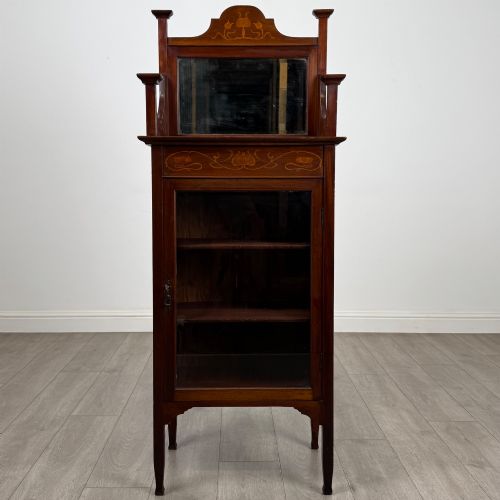
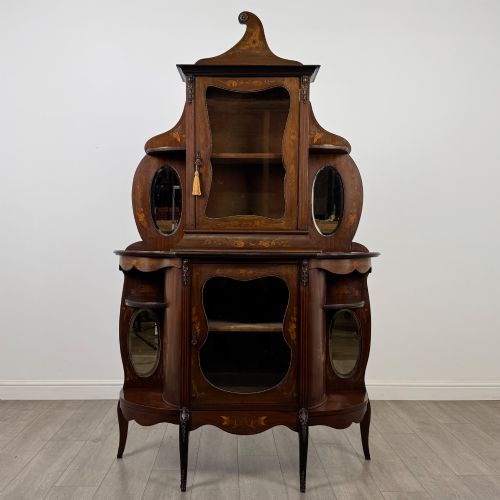
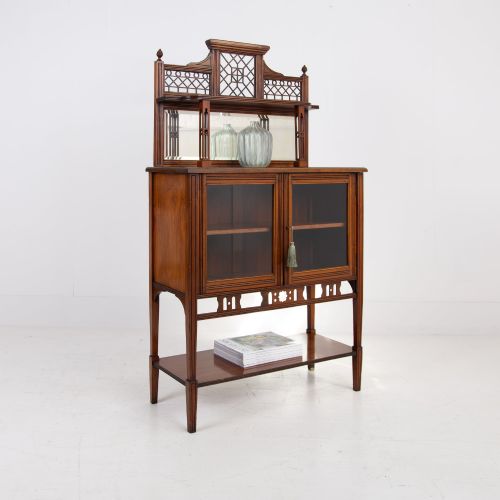
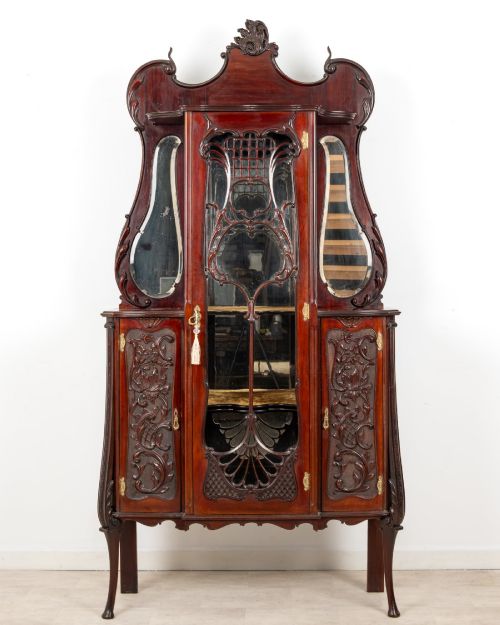
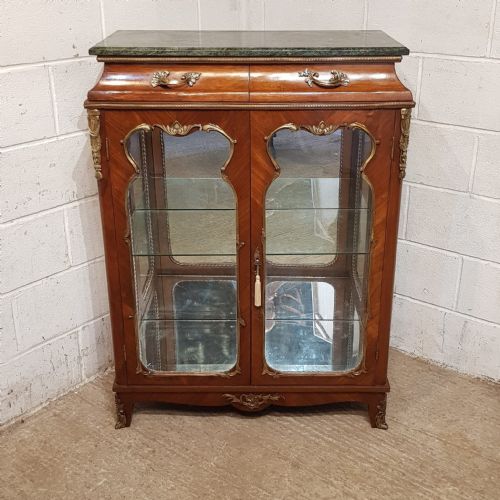
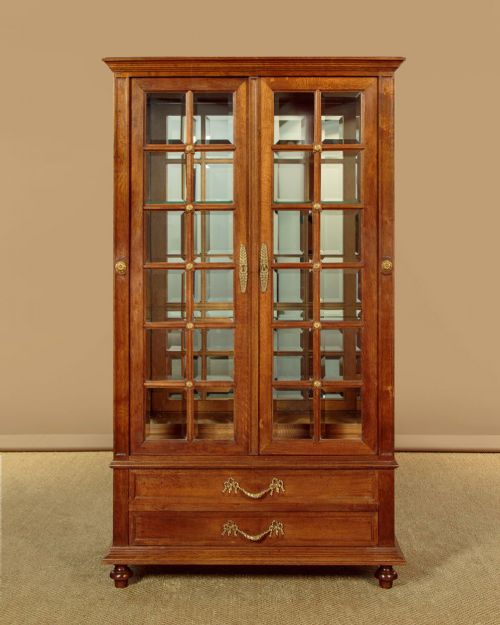
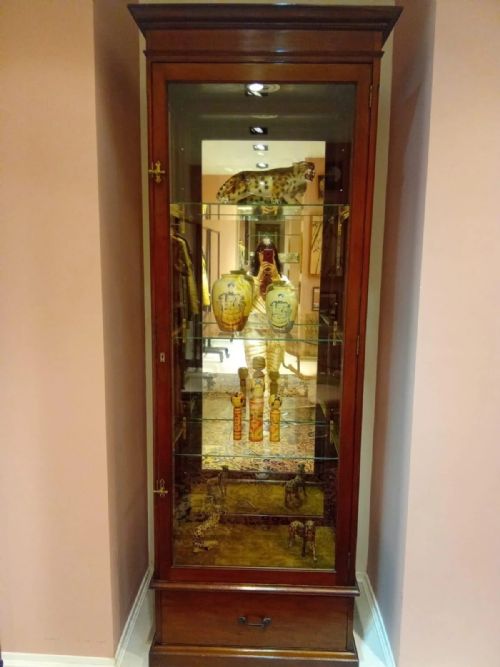
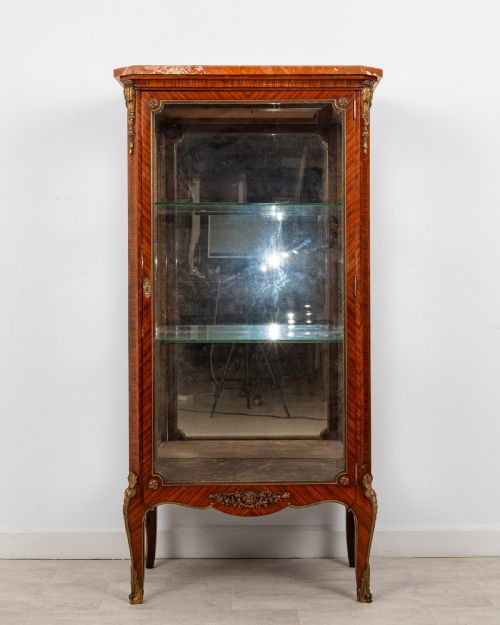
The versions most likely to be met on this page span the Victorian and Edwardian eras up to nineteen twenty, taking the form of inlaid mahogany wall cabinets, gilt mounted oak pieces, and French style vitrines. Many include mirror backs or flanking mirrors alongside glazed doors and shelving.
Makers utilised various timber carcases, particularly mahogany, kingwood, and satinwood, often enhanced with marquetry inlay or ormolu mounts. The inclusion of glass shelves and mirrored panels distinguishes these items from standard household wall cupboards.
Factors determining quality
Quality separates through the selection of timber veneers and the crispness of applied ormolu or gilt metal mounts. Finer examples display meticulous marquetry inlay and careful joinery around curved bow fronts and serpentine structures.
The integration of the mirror glass within the cabinet architecture dictates standard, where bevelled edges and substantial carcase construction elevate the piece. Maker attribution, such as work associated with François Linke, G. Durand, or Paul Sormani, indicates superior workshop execution.
Curio Mirror Retail Price Guide 2026
Typical asking prices for curio mirror among the pieces listed under this phrase on Sellingantiques today, from the lower quarter to the upper quarter. They describe what is for sale here now, not the wider market.
Even the smallest wall brackets found here insisted on having mirrored backs, ensuring that not a single porcelain figurine could escape admiring its own reflection.
François Linke·G. Durand·Paul Sormani
The Curio Mirror Glossary
- Vitrine
- A glass-fronted cabinet designed for displaying fine objects and curiosities. These pieces often feature glazed sides and velvet-lined interiors.
- Ormolu
- Gilt bronze ornamentation applied to furniture carcases. This technique creates metallic highlights popular in French revival furniture.
- Marquetry
- Decorative veneer patterns formed by fitting together small pieces of coloured wood. Craftsmen used this method to create floral or geometric motifs on cabinet doors.
- Aesthetic Movement
- A late nineteenth century design style emphasising visual beauty over narrative subject matter. Cabinets from this movement show simpler lines and refined proportions.
- Serpentine
- A furniture front curving outward in the centre and inward at the sides. This shape requires advanced woodworking skill to achieve.
Curio Mirror: Frequently Asked Questions
What is a curio mirror?
A curio mirror is a wall-mounted display cabinet or shelf that incorporates mirrored glass into its design. It serves both to reflect light in a room and to showcase small collections.
These pieces range from compact wall-hanging cupboards with mirrored backs to larger display structures featuring glass shelving and decorative framing.
How do I date an Edwardian cabinet?
Edwardian cabinets date from nineteen hundred to nineteen ten, typically constructed from mahogany with delicate inlaid marquetry. They often show lighter proportions than their Victorian predecessors.
Examining the interior construction, timber species, and secondary woods helps confirm the period of manufacture alongside stylistic cues like Edwardian inlay.
Where should I hang a wall cabinet?
Wall cabinets require secure placement on solid walls capable of supporting the combined weight of the timber carcase, glass panels, and displayed objects. Main living areas or hallways provide suitable locations.
Positioning the piece at eye level allows the mirrored elements to bounce light effectively while giving clear visibility to the interior contents.
What is the difference between Victorian and French style pieces?
Victorian cabinets tend to use solid mahogany or walnut with straightforward rectilinear or bow front forms. They focus on sturdy construction and practical display space.
French style items, including Louis XV revival works, frequently employ kingwood veneers, ormolu mounts, marble tops, and serpentine contours for a more ornate decorative effect.