



Curio Display Box
A curio display box houses small treasures behind glass, offering a neat way to showcase personal collections.
Curio Display Box
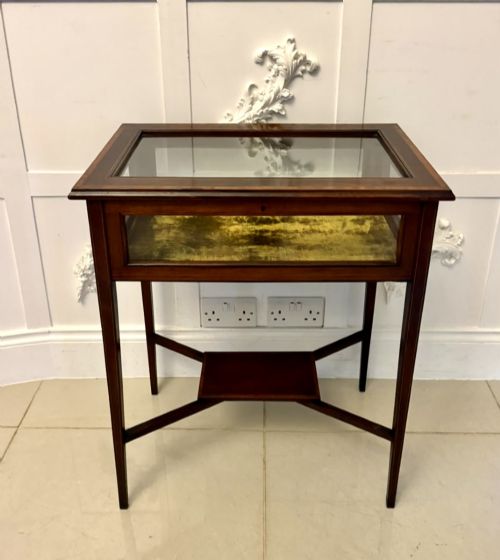
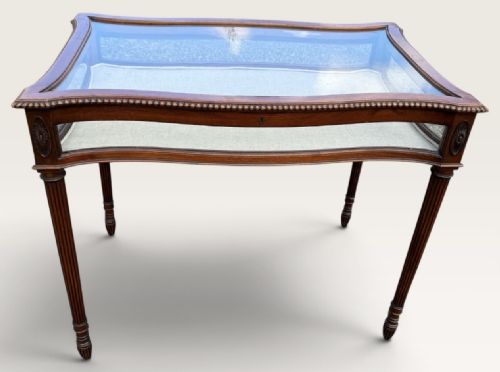
A curio display box encompasses table-top display cabinets, bijouterie tables, and apothecary boxes designed to present small objects. Most examples on this page take the form of bijouterie tables and display cabinets dating from the Victorian and Edwardian eras.
These items serve to protect and exhibit collectibles, medals, and trinkets under glass. The selection ranges from compact table-top cases to substantial freestanding display furniture framed in mahogany, rosewood, and satinwood.
How they were made
Cabinet makers utilised dense hardwoods such as mahogany, rosewood, and satinwood to construct the primary frames and display tables. These timbers were often shaped with serpentine fronts or kidney contours, sometimes incorporating delicate inlay work.
Glazing protects the contents from dust while brass hinges, locks, and ormolu mounts secure and adorn the structures. Interiors frequently feature linings of velvet or fabric to cushion the displayed items.
Curio Display Box Retail Price Guide 2026
Typical asking prices for curio display box among the pieces listed under this phrase on Sellingantiques today, from the lower quarter to the upper quarter. They describe what is for sale here now, not the wider market.
An apothecary box finds new life displaying modern trinkets rather than medical remedies.
What varies in quality
The refinement of the timber selection and the intricacy of the inlay work distinguish different grades of these display pieces. More elaborate items employ figured woods and detailed ormolu mounts rather than plain framing.
Structural joinery and the precision of the glass-fitting dictate the integrity of each cabinet or table. Superior examples exhibit seamless curves, such as serpentine or kidney shapes, executed in quality hardwoods.
The Curio Display Box Glossary
- Bijouterie table
- A glass-topped table specifically designed for displaying small valuables and trinkets. These pieces often feature hinged lids and velvet-lined interiors.
- Ormolu
- Gilded bronze mounts applied to furniture for decorative effect. This technique was frequently utilised during the Victorian period.
- Satinwood
- A durable, lustrous timber with a golden yellow sheen. It was favoured by Edwardian cabinet makers for inlaid display furniture.
- Vitrine
- A glass cabinet used for exhibiting art objects or curiosities. The term covers both table-top and freestanding display formats.
Curio Display Box: Frequently Asked Questions
What is a bijouterie table?
A bijouterie table is a glass-topped display case mounted on legs, designed to showcase small valuable items and curiosities.
These pieces typically feature hinged lids that allow access to a velvet or fabric-lined interior compartment.
How were display cabinets used?
Display cabinets and boxes were utilised in drawing rooms and parlours to exhibit collections of medals, miniatures, and small ornaments.
The glass enclosures protected delicate objects from dust while permitting guests to inspect them easily.
Which woods are common?
Mahogany, rosewood, and satinwood appear frequently in the construction of these display pieces and tables.
Cabinet makers selected these dense timbers for their stability and capacity to receive fine inlay work and polished finishes.
How do I date a piece?
Dating relies on stylistic clues, timber choices, and construction methods characteristic of the Victorian and Edwardian eras.
Heavier rosewood and ormolu mounts often point towards mid-Victorian production, while lighter satinwood and inlaid mahogany frequently indicate Edwardian manufacture.