



Curio Cabinet Mirror
A curio cabinet mirror brings light and reflection into domestic display, framing small treasures in mahogany, satinwood, or kingwood.
Curio Cabinet Mirror
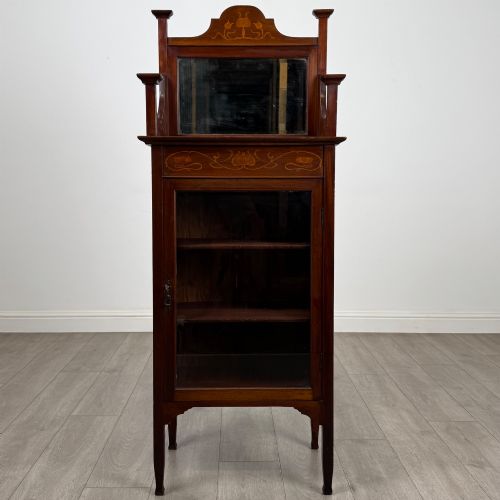
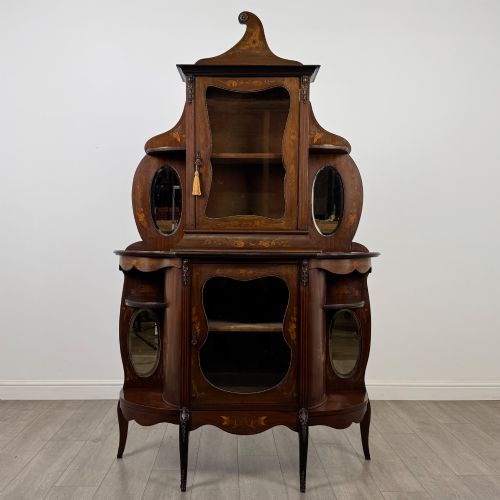
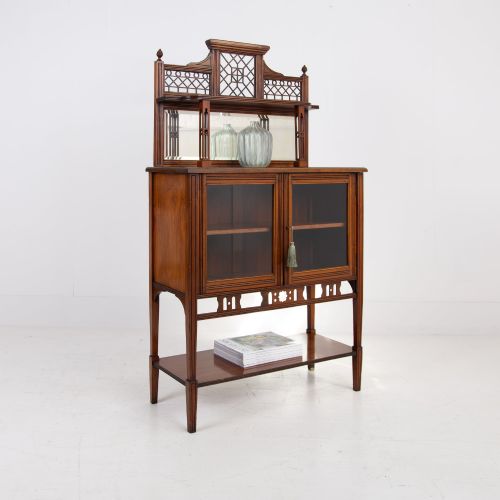
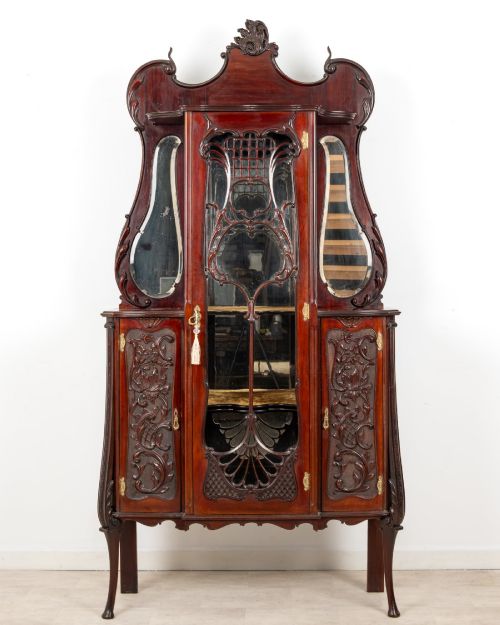
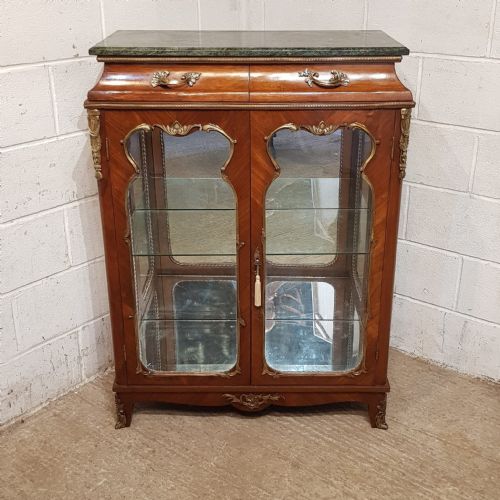
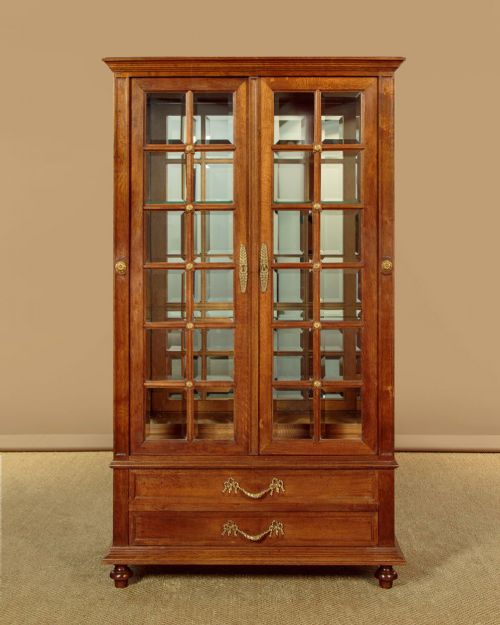
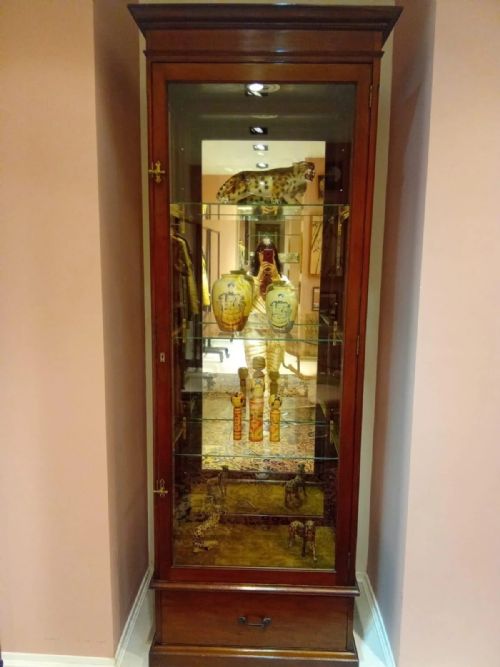
A curio cabinet mirror combines glass shelving and display space with mirrored backs or surfaces, designed to showcase ornaments while brightening a room. The items found here span the Victorian, Edwardian, and early twentieth-century periods, taking the form of both floor-standing vitrines and wall-hanging cabinets.
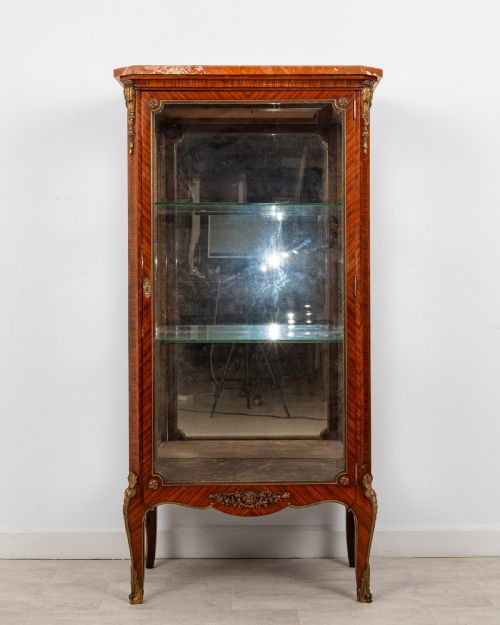
Makers drew on diverse design influences, producing pieces in the Aesthetic Movement, Art Nouveau, and various French Revival styles including Louis XV. Buyers frequently encounter Edwardian inlaid mahogany cabinets alongside pieces featuring serpentine fronts and bow-fronted glazing.
The materials visible across the selection include mahogany, kingwood, oak, and walnut, often enhanced with marble tops, brass, and ormolu mounts. Wall cabinets and larger display units both serve the primary function of holding collectibles while reflecting ambient light.
How they were made
Cabinet makers utilised fine timbers such as mahogany, satinwood, and kingwood, frequently employing intricate inlay techniques to decorate the wooden surfaces. Carved details appear on Victorian examples, while French style pieces often incorporate gilt metal mounts and ormolu.
Structural elements include glazed doors and adjustable glass shelves designed to display small items securely. Marble tops feature on select nineteenth-century vitrines, adding weight and a polished surface above the timber frame.
Curio Cabinet Mirror Retail Price Guide 2026
Typical asking prices for curio cabinet mirror among the pieces listed under this phrase on Sellingantiques today, from the lower quarter to the upper quarter. They describe what is for sale here now, not the wider market.
Early owners used mirrored cabinet backs to trick guests into thinking they possessed twice as much porcelain as they actually did.
What varies in quality
Quality separates cabinets by the fineness of the timber selection and the precision of the marquetry inlay work on the mahogany or satinwood surfaces. The presence of signed maker mounts or detailed ormolu and gilt bronze work elevates a piece above standard production.
François Linke·G. Durand·Paul Sormani
The Curio Cabinet Mirror Glossary
- Vitrine
- A glass-fronted cabinet or display case designed specifically for showing curiosities and fine porcelain. Such pieces often feature glazed sides to maximise light exposure.
- Ormolu
- Gilded bronze mounts applied as decorative ornaments to furniture, frequently seen on French style cabinets. The technique creates a bright metallic contrast against dark kingwood or mahogany.
- Marquetry
- The art of applying pieces of veneer to a structure to form decorative patterns and pictures. Inlaid mahogany and satinwood cabinets rely heavily on this skill.
- Serpentine front
- A furniture front curved with a convex centre flanked by concave ends. This shaping requires expert carpentry and adds movement to display cabinets.
- Aesthetic Movement
- A late nineteenth-century design style emphasising visual beauty over narrative subject matter. Cabinets from this movement show simpler lines and refined proportions.
Curio Cabinet Mirror: Frequently Asked Questions
What is a curio cabinet mirror?
A curio cabinet mirror is a display case that incorporates mirrored glass, either as a reflective back panel inside the display area or as part of a wall-hanging mirror frame with shelving.
These pieces were built to showcase small ornaments, porcelain, and curiosities while using the reflective glass to brighten dark corners and give rooms a greater sense of depth.
Where were these cabinets placed?
Victorian and Edwardian homes positioned these cabinets in reception rooms, drawing rooms, and hallways where guests would admire the displayed objects.
Wall-hanging versions suited smaller spaces or boudoirs, while large floor-standing vitrines anchored larger drawing room walls.
How do I identify French style cabinets?
French style cabinets from the nineteenth and early twentieth centuries often feature curved serpentine fronts, kingwood veneers, and elaborate ormolu or gilt metal mounts.
Maker attributions to workshops like those of François Linke or Paul Sormani point to the high level of craftsmanship typical of these Parisian-inspired pieces.
Are shelves adjustable in these antiques?
Many display cabinets feature adjustable glass shelves to accommodate objects of varying heights within the glazed interior.
Shop display cabinets and larger Edwardian vitrines particularly utilised this flexible shelving system for practical merchandising or home collection display.