


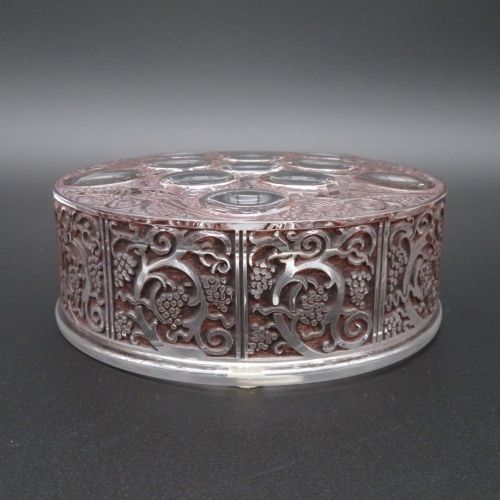


Crystal Vanity Jar
A crystal vanity jar brings tactile weight to a dressing table, combining cut glass with precious metal mounts.
Crystal Vanity Jar
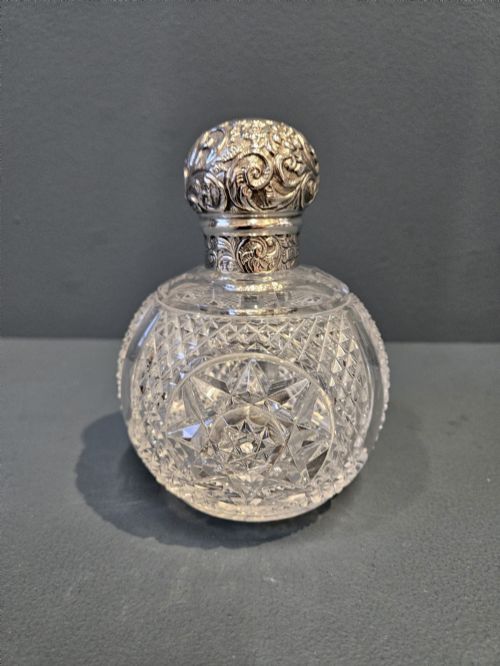
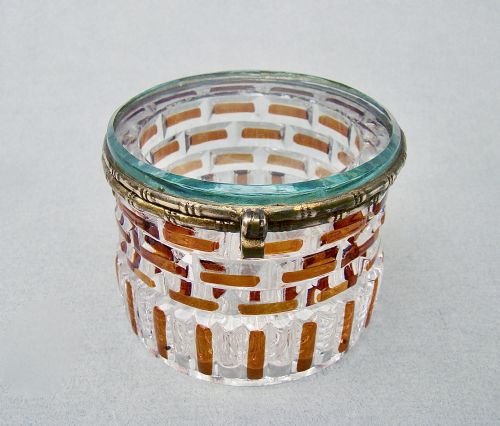
A crystal vanity jar serves as a container for perfumes, powders, and dressing table accessories, appearing frequently in Edwardian, Victorian, and Art Deco designs. These pieces range from small scent bottles to large lidded boxes made of cut glass or cut crystal.
The selections on this page span the nineteenth and twentieth centuries, including French Baccarat and Lalique works alongside English sterling silver mounted pieces. Buyers encounter forms such as powder boxes, trinket boxes, and cologne bottles.
Makers and workshops from Britain, Germany, and France created these objects to sit upon dressing tables, utilising fitted hinged lids and secure stoppers.
How they were made
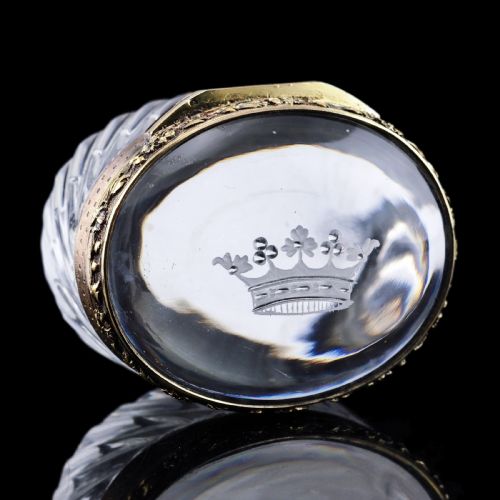
Cut glass and cut crystal vessels are formed by heavy moulding or blowing before artisans grind geometric and floral patterns into the surface, creating light-refracting facets. These glass bodies meet fitted mounts made from sterling silver, silver gilt, and German silver.
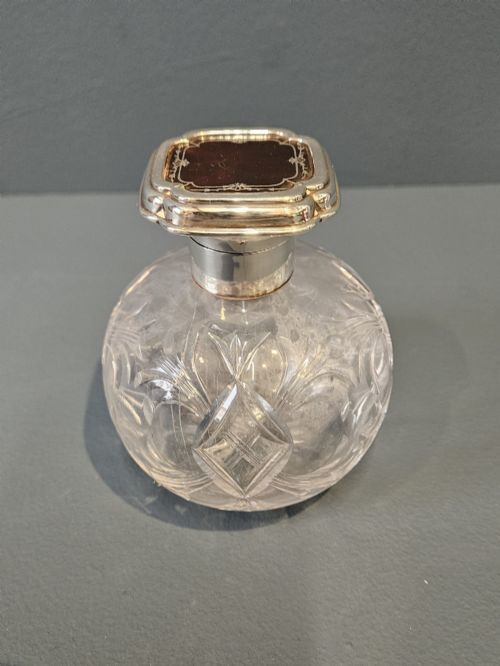
Lids incorporate decorative techniques including tortoiseshell inlays and vitreous blue enamel layers. Silver mounts frequently carry full hallmarks denoting the assay office and year of creation.
Crystal Vanity Jar Retail Price Guide 2026
Typical asking prices for crystal vanity jar among the pieces listed under this phrase on Sellingantiques today, from the lower quarter to the upper quarter. They describe what is for sale here now, not the wider market.
Gentlemen required lockable cologne bottles to prevent staff from sampling their spirits.
What varies in quality
Depth and crispness of the glass cutting distinguish standard vessels from superior examples, where facets align sharply and catch the light evenly. The weight of the crystal body and the thickness of the silver lid define the tactile impression of the piece.
The integration between the glass base and the metal mount determines structural success, with tight hinges and unblemished enamel or tortoiseshell panels marking the finest specimens.
Posen of Frankfurt and Berlin·Barnsley and Co·Jonathan Douglas·Asprey
The Crystal Vanity Jar Glossary
- Sterling silver
- An alloy containing 92.5 percent silver by mass, widely used for the lids and collars of dressing table jars. It carries assay marks to verify its standard.
- Cut crystal
- Glass containing lead oxide, which increases brilliance and density, allowing deeper facets to be carved into vanity jars. This material yields a resonant tone when struck gently.
- Tortoiseshell
- The mottled brown material derived from the shell of certain turtle species, inlaid into silver lids during the Edwardian and Art Deco periods. It provides a warm contrast to polished metal and clear glass.
- Hallmark
- A series of official marks stamped onto silver mounts indicating the maker, assay office, and year of testing. These stamps allow precise dating of vanity accessories.
- Enamel
- A glassy substance melted onto metal surfaces at high temperatures, seen in shades of blue on Art Deco bottle tops. It adds colour and smooth texture to the metal mount.
Crystal Vanity Jar: Frequently Asked Questions
How were crystal vanity jars used?
These vessels held perfumes, colognes, loose powders, and small trinkets on nineteenth and twentieth-century dressing tables. Lidded boxes kept delicate cosmetics secure while scent bottles utilised stoppers to preserve volatile fragrances.
Gentlemen also utilised lockable cologne bottles for travel or personal grooming use. The matching sets coordinated the appearance of the dressing surface.
How do I date a silver mounted jar?
Assay office marks and date letters stamped onto the sterling silver lids provide the exact year of manufacture. Birmingham, Sheffield, and foreign hallmarks appear on many pieces from the Victorian and Edwardian eras.
Stylistic cues such as geometric Art Deco enamelling or ornate Neoclassical Revival silver repoussé help narrow down pieces lacking legible stamps.
What is the difference between glass and crystal?
Crystal contains lead oxide, which grants the material a greater weight, higher refractive index, and softer hardness for deep cutting. Standard glass lacks lead content and feels lighter in the hand.
Both materials were utilised across the Victorian and Art Deco periods for vanity jars and scent bottles.
How do I clean tortoiseshell and silver?
Silver mounts require gentle polishing with a soft cloth to avoid touching adjacent glass, enamel, or tortoiseshell panels. Tortoiseshell must be kept dry and away from harsh chemical solvents to prevent warping.
Glass bases tolerate warm water and mild soap once separated from delicate lidded components.