



Crystal Table Salts
Crystal table salts are brilliant tabletop vessels designed to hold seasoning, offering a refined touch of period craftsmanship to any dining setting.
Crystal Table Salts
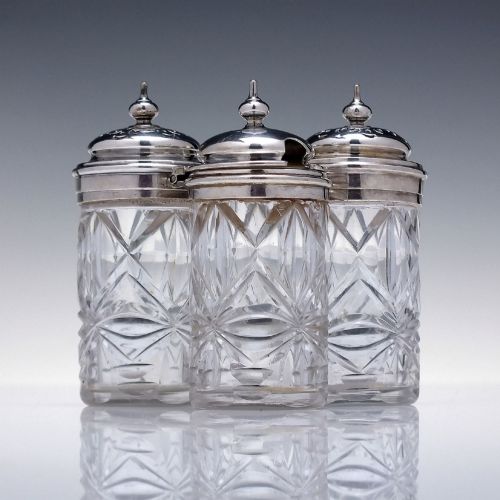
Crystal table salts are small vessels designed to hold seasoning at the dining table, often appearing as individual cellars or as part of larger cruet sets. When searching for crystal table salts, buyers encounter various forms ranging from Georgian seven bottle cruet sets to Edwardian silver plated frames and simple glass dishes.
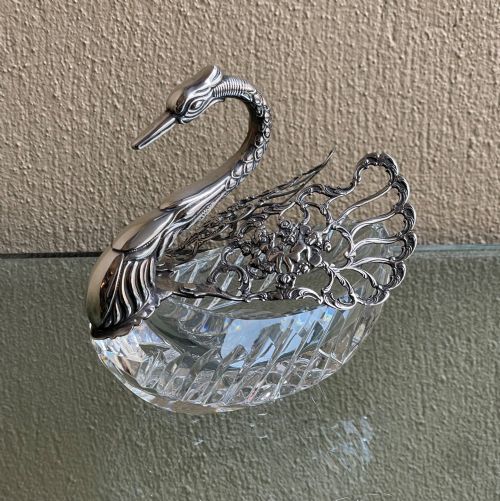
The pieces on this page span the Georgian, Victorian, Edwardian, and Art Deco periods, alongside mid-century examples such as cut glass and silver swan dishes. Most items integrate cut glass or lead crystal with sterling silver or silver plate mountings, reflecting traditional dining habits.
How they were made
Makers utilised heavy lead crystal and cut glass for the body of the vessels, achieving brilliant refraction through deep geometric or floral wheel-cutting. These glass elements were frequently paired with cast or stamped sterling silver and silver plate for rims, tops, and frames.
Metal components such as silver tops and cruet frames were shaped using traditional smithing techniques, incorporating hallmarks or quality plating to secure the glass securely within decorative mounts.
Crystal Table Salts Retail Price Guide 2026
Typical asking prices for crystal table salts among the pieces listed under this phrase on Sellingantiques today, from the lower quarter to the upper quarter. They describe what is for sale here now, not the wider market.
Materials appearing across the current selection include cut glass, crystal, lead crystal, sterling silver, and silver plate.
What varies in quality
The distinction between standard and superior pieces rests on the crispness of the glass cutting and the weight of the metal mounts. Heavier lead crystal exhibits sharper facets and a clearer ring, while better silver plate and sterling silver retain more defined cast detail in their decorative borders.
Completeness also influences the standing of a piece, particularly in multi-bottle cruet sets where matching condiment bottles and intact hallmarked silver tops elevate the overall standard of the assembly.
The Crystal Table Salts Glossary
- Cut Glass
- Glass shaped and patterned by abrasive wheels, creating faceted surfaces that catch the light. This technique defines the sparkle of traditional condiment vessels.
- Cruet Set
- A fitted stand holding multiple bottles or containers for oil, vinegar, mustard, and table salts. These sets organise condiments neatly at the dining table.
- Silver Plate
- A base metal coated with a thin layer of silver, offering the appearance of solid silver at a different cost. Many Edwardian condiment frames utilise this technique.
- Sterling Silver
- An alloy consisting of silver and other metals, marked by specific hallmarks to denote standard purity. This material frequently forms the rims and tops of salt cellars.
Crystal Table Salts: Frequently Asked Questions
What are crystal table salts used for?
These vessels held loose salt for individual diners before modern shakers became common.
Guests would use a small spoon or pinches to take salt directly from the cellar onto their plates.
How do I date a cruet set?
Dating relies on stylistic clues like Rococo Revival curves or geometric Art Deco lines.
Silver components often feature hallmarks that reveal the exact year and city of manufacture.
Are silver plated items durable?
Silver plate provides a sturdy metal structure coated in a decorative layer of real silver.
Careful handling prevents wear to the underlying metal over years of use.
How do I clean cut glass?
Warm soapy water and a soft brush keep cut glass brilliant without scratching the facets.
Harsh chemicals and extreme temperature changes should be avoided to protect antique glass.