



Crystal Table Candelabra
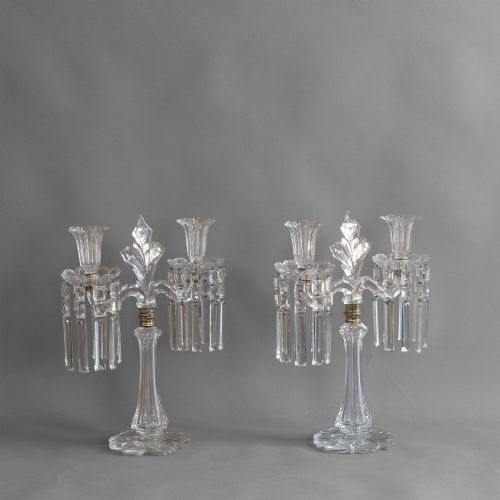
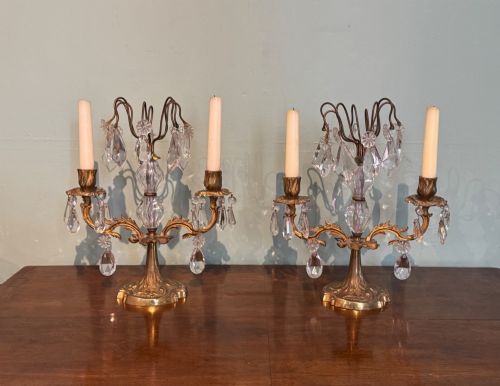
These crystal table candelabra bring genuine sparkle to a room, catching the candlelight and throwing reflections across the walls.
Crystal Table Candelabra
When you search for crystal table candelabra, you encounter pieces designed to hold multiple candles upon a table or sideboard. These items date from the nineteenth and early twentieth centuries, spanning periods such as Regency, Victorian, and Edwardian. French workshops generated many of the surviving examples found here, often working in Louis XVI or Rococo revival styles.
You are most likely to meet pairs of multi-branched fixtures made from brass, gilt metal, and glass. Forms include triple-arm candelabra, girandoles, and table lamps fitted with hanging drops. These pieces combine metal frames with faceted crystals to illuminate dining spaces and formal reception rooms.
How They Were Made
Makers constructed the primary frames of these pieces using cast brass, bronze, or ormolu, sometimes applying a gilt or silvered finish. Craftsmen mounted arms around a central stem and secured them with threaded bolts or pins. These metal structures provided the rigid support necessary for heavy branch assemblies.
Workers suspended cut glass and crystal drops from the arms using wire loops or pinned metal tabs. The glass components underwent manual cutting and polishing to create sharp facets that refract light. Combinations of green marble bases, brasswork, and dangling lustres completed the assemblies.
Crystal Table Candelabra Retail Price Guide 2026
Typical asking prices for crystal table candelabra among the pieces listed under this phrase on Sellingantiques today, from the lower quarter to the upper quarter. They describe what is for sale here now, not the wider market.
Listings for crystal table candelabra feature French origins prominently, alongside nineteenth-century brass, ormolu, and cut glass examples.
What Varies in Quality
The precision of the metal casting and the depth of the chasing separate standard examples from finer pieces. Superior items display crisp foliate details on the brass and ormolu mounts rather than soft, smoothed edges. Heavier gauge metal provides better stability for the extending candle arms.
The clarity and weight of the glass drops dictate the brilliance of the refraction. Better pieces utilise heavy cut crystal that maintains sharp facet lines and clear transparency. Original matching drops and consistent metal patination distinguish superior survivors from composite or heavily altered pieces.
The Crystal Table Candelabra Glossary
- Candelabra
- A branched candlestick designed to hold multiple candles at once. These fixtures often feature removable nozzle pans to catch melting wax.
- Girandole
- An ornamental branched candlestick or candelabra, frequently incorporating a mirror backplate or designed as a table centrepiece. The term also describes table chandeliers with hanging crystal drops.
- Ormolu
- Gilt bronze produced by applying a mercury-gilding mixture to a bronze base. This technique creates a rich golden finish found on nineteenth-century French frames.
- Lustre
- A glass pendant or hanging drop suspended from a candelabra or candlestick. Lustres catch and multiply the light from the candles.
- Regency
- A British design period spanning the early nineteenth century. Pieces from this era often incorporate classical bronze and ormolu elements.
Crystal Table Candelabra: Frequently Asked Questions
How do I clean a crystal candelabra?
Remove the hanging glass drops carefully before washing them in lukewarm soapy water. Wipe the metal frame gently with a dry or slightly damp cloth to preserve the finish.
Avoid using harsh chemical polishes on gilt or ormolu surfaces as this strips the original gilding. Rehang the crystal drops only after every component is completely dry.
Were these candelabra electrified later?
Many surviving examples retain their original configuration for wax candles. Others underwent conversion to electricity during the twentieth century to function as table lamps.
Buyers find both unmodified candle-holding pieces and converted lamp versions on the market. Check the wiring or socket fittings if you intend to use an electrified piece.
How do I identify French pieces?
French examples from the nineteenth and early twentieth centuries often display distinct cast metal details like Rococo scrollwork or Louis XVI neoclassical motifs. Workshops in Paris and regional centres utilised specific brass and ormolu finishes.
Stylistic cues such as heavy gilt bronze mounts and elaborate crystal drop arrangements point towards French production.
Can missing crystal drops be replaced?
Sourcing matching antique replacement drops requires matching the cut pattern, glass tint, and size of the originals. Many pieces survive with minor losses to their hanging lustres.
Collectors often accept matched period replacements provided the overall visual balance remains undisturbed.