



Crystal Lustre Pendant
A crystal lustre pendant brings a sparkle of cut glass and polished metal to a room, catching the light from every angle.
Crystal Lustre Pendant
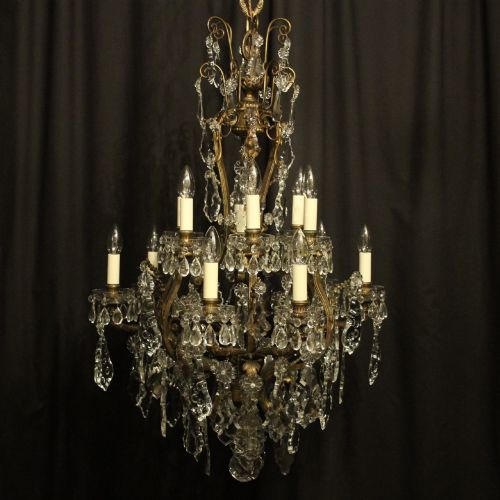
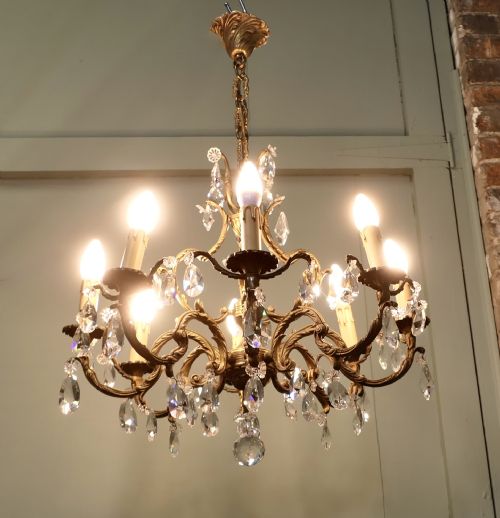
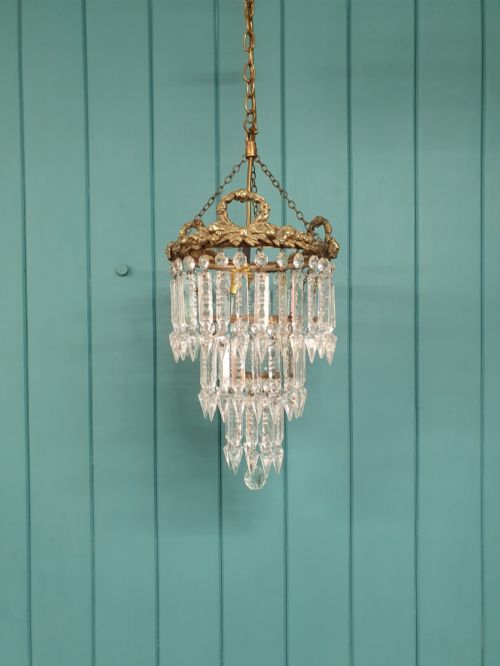
A crystal lustre pendant illuminates a space by suspending glass drops from a central frame, catching and refracting the light through cut prisms. These fixtures appear in forms ranging from simple single-bulb drops to multi-armed chandeliers, drawing the eye upwards to decorative glasswork.
The pieces available on this page span the nineteenth century up through the nineteen-thirties, reflecting Edwardian tastes alongside French and Italian stylistic influences. Buyers encounter smaller nine-inch drop fittings alongside substantial multi-light chandeliers hung with rich arrays of glass lustres.
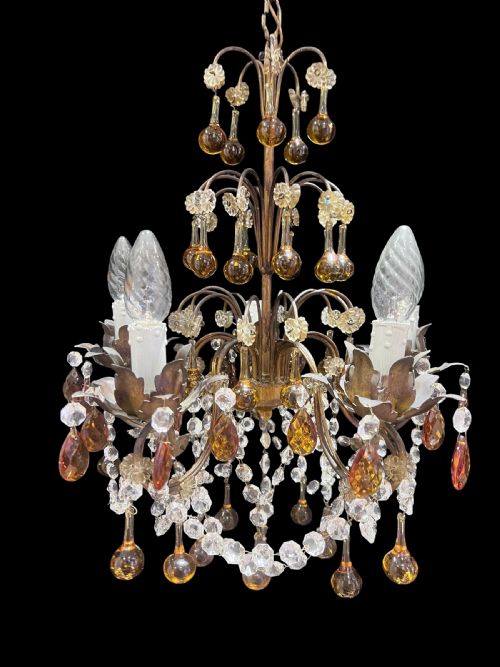
Origins stretch across English, French and Italian workshops, employing brass, gilt metal, and gilded bronze alongside clear and coloured crystals. This geographical variety ensures a mix of classical French chateau designs and simpler early twentieth-century ceiling lights.
Materials and construction
Makers constructed the structural frames of these pendants using cast brass, gilt metal, and silver-gilded bronze, providing a sturdy skeleton to support heavy glass components. Metalwork was frequently chased or gilded to enhance the decorative appeal of the fixture before any glass was attached.
Pendants incorporate hand-cut crystal glass drops, often referred to as lustres, suspended from the metal arms and rings by tiny wire links. These glass elements were shaped and polished to maximise light refraction, while some pieces introduce coloured crystals for added visual warmth.
Crystal Lustre Pendant Retail Price Guide 2026
Typical asking prices for crystal lustre pendant among the pieces listed under this phrase on Sellingantiques today, from the lower quarter to the upper quarter. They describe what is for sale here now, not the wider market.
Listings feature items from the nineteenth century, the Edwardian era, and the nineteen-thirties, constructed from glass, brass, crystal, and gilded bronze.
Assessing quality and craftsmanship
The distinction between standard fixtures and finer examples lies in the precision of the metalwork and the depth of the glass cutting. Heavier bronze frames with meticulous chasing and heavier, hand-polished crystal drops indicate superior craftsmanship.
Proportion and the integrity of the suspended elements define the overall presence of a pendant. Uniformity in the cut glass prisms and sturdy wire attachments ensure the piece retains its historical character and structural balance.
The Crystal Lustre Pendant Glossary
- Lustre
- A cut glass pendant or drop hung from a chandelier or ceiling light to reflect light. These decorative elements catch ambient illumination and create a sparkling effect.
- Gilded Bronze
- Bronze metal coated with a thin layer of gold leaf or gold powder. This technique provides a rich, warm metallic finish that resists tarnishing.
- Crystal Glass
- High-clarity glass containing lead oxide, which increases the weight and refractive index. It allows the fixture to disperse light into spectral colours.
- Chandelier
- A branched ornamental light fixture suspended from the ceiling. These fixtures hold multiple bulbs and feature extensive arrangements of glass drops.
Crystal Lustre Pendant: Frequently Asked Questions
How do I clean a crystal lustre pendant?
Maintenance involves removing the glass drops individually and washing them in warm soapy water before drying with a lint-free cloth. The metal frame can be gently dusted with a soft brush to preserve the finish.
Avoid using harsh chemical cleaners on gilded or plated surfaces, as these can strip the protective finish from the bronze or brass.
What rooms suit a crystal lustre pendant?
These fixtures suit dining rooms, hallways, and living spaces where overhead lighting benefits from decorative sparkle and historical character. Smaller nine-inch versions fit comfortably in compact spaces or low-ceilinged rooms.
Larger multi-light chandeliers require higher ceilings and adequate floor space to balance their visual weight and light distribution.
How do I date a lustre pendant?
Dating relies on examining the metal casting techniques, the wiring methods, and the style of the glass cuts. Nineteenth-century examples often feature heavy gilded bronze frames and hand-cut pendeloques.
Early twentieth-century pieces tend to show simpler brass construction or distinctive Edwardian stylistic motifs in the metalwork.
Can these pendants use modern bulbs?
Most antique pendants accept standard modern screw or bayonet bulbs, provided the wattage matches the historical wiring capacity. Rewiring by a qualified electrician ensures the fixture meets current safety standards.
LED candelabra bulbs work particularly well, offering warm illumination while generating minimal heat near fragile glass components.