



Crystal Glass Salts
Crystal glass salts sit on the dining table to hold seasoning, bringing weight and sparkle from Georgian, Victorian, and later hands.
Crystal Glass Salts
Crystal glass salts are tablewares designed to hold individual portions of salt at dinner. The pieces gathered under crystal glass salts range from Georgian Irish cut glass salts with fitted saucers to Victorian and Edwardian examples.
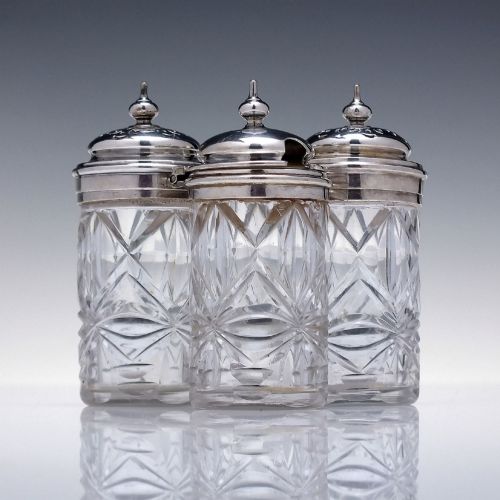
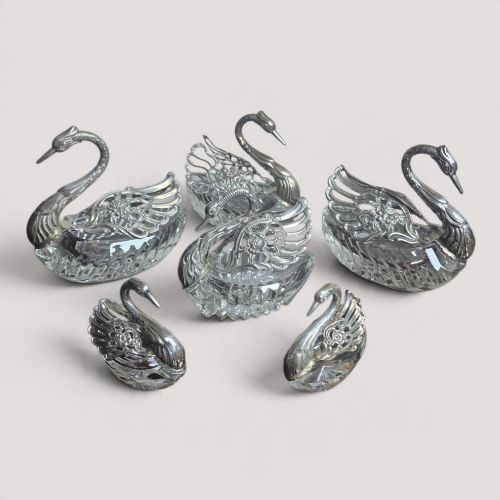
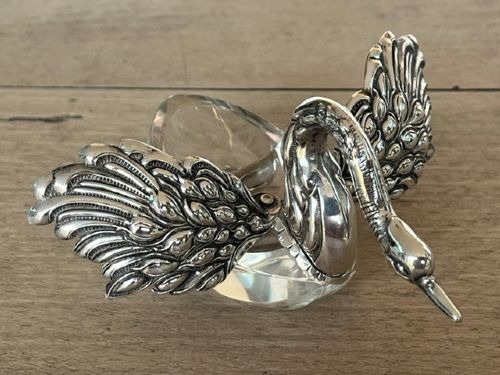
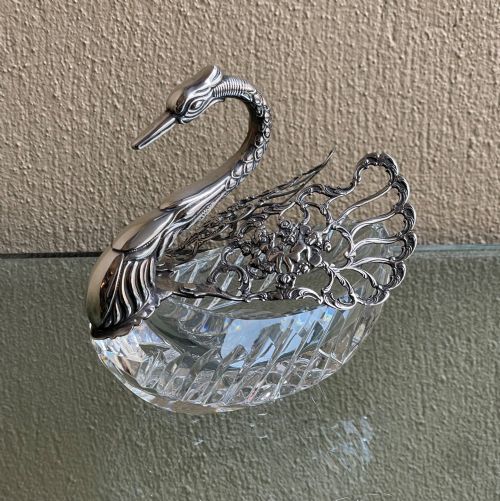
The most common forms on this page include individual table salts, divided swan salt cellars with movable wings, and larger condiment or cruet sets. These items serve both functional and decorative roles on the dining table.
Origins stretch across the nineteenth century into the twentieth, taking in Georgian, Regency, Victorian, Edwardian, and Art Deco periods. Continental and traditional European styles also appear alongside British pieces.
How they were made
Makers shaped the glass bodies through heavy lead crystal and cut glass techniques, producing deep facets and geometric or draped swag designs. Some pieces integrate hand cut heavy lead crystal with ruby glass.
Mounts, rims, and frames rely on sterling silver, silver plate, and hallmarked silver components. Artisans combined metalwork and glass to form cruet sets, fitted saucers, and hinged wings on animal forms.
Crystal Glass Salts Retail Price Guide 2026
Typical asking prices for crystal glass salts among the pieces listed under this phrase on Sellingantiques today, from the lower quarter to the upper quarter. They describe what is for sale here now, not the wider market.
The listings span the Georgian, Victorian, Edwardian, and Art Deco periods, utilising cut glass, lead crystal, ruby glass, sterling silver, and silver plate.
What varies in quality
The depth and crispness of the hand cutting separate standard vessels from finer work. Weight and clarity in the lead crystal dictate the presence and brilliance of the light refraction.
The substance and finish of the silver or silver-plated mounts alter the character of the piece. Matching sets, complete cruet bottles, and intact fitted saucers carry greater cohesion than assembled groups.
S Morden and Co
The Crystal Glass Salts Glossary
- Lead crystal
- Glass containing lead oxide to increase weight, brilliance, and softness for cutting. This material allows deep facets that catch the light.
- Cruet set
- A collection of small glass bottles or jars mounted in a frame for holding condiments at the table. These often feature silver-plated or sterling silver stands.
- Swan salt cellar
- A container shaped like a swan, sometimes featuring movable wings made of silver over a glass body. These act as decorative table salts.
- Draped swag design
- A decorative motif carved or etched into the glass resembling hanging garlands of fabric or flowers. It appears on nineteenth-century pieces.
- Ruby glass
- Deep red glass created by adding gold or copper compounds to the molten batch. It provides rich colour contrast when mounted in silver.
Crystal Glass Salts: Frequently Asked Questions
What are crystal glass salts used for?
These pieces hold dry salt for individual diners before modern shakers became common. They sit directly on the dining table near each place setting.
Larger versions form part of multi-bottle cruet sets that dispense various condiments during a meal.
How do I date an antique salt?
Dating relies on the cutting style, the shape of the glass body, and the hallmarks on any silver mounts. Georgian pieces often feature heavy hand-cut facets and distinct saucer shapes.
Later Victorian and Edwardian examples introduce different mounting techniques and softer decorative motifs like draped swags.
What is a swan salt cellar?
A swan salt cellar is a figural table salt shaped like a bird with a glass body and metal wings. Some versions include movable wings that open to reveal the salt basin.
Silver-plated and sterling silver components combine with cut glass to form the body and neck.
How do I care for antique glass salts?
Wash these pieces by hand in warm water using mild soap, avoiding harsh scrubbing on silver mounts. Dry them promptly with a soft cloth to protect the metal and glass.
Keep them away from extreme temperature shifts to protect the historical material.