



Crystal Drop Candleholders
Crystal drop candleholders bring sparkling nineteenth-century illumination to a room, catching the light with every flicker of a flame.
Crystal Drop Candleholders
When you search for crystal drop candleholders, you encounter nineteenth-century lighting and decorative ornaments designed to catch and refract light. These pieces primarily take the form of mantel lustres, candelabras, and table lustres from the Victorian period.
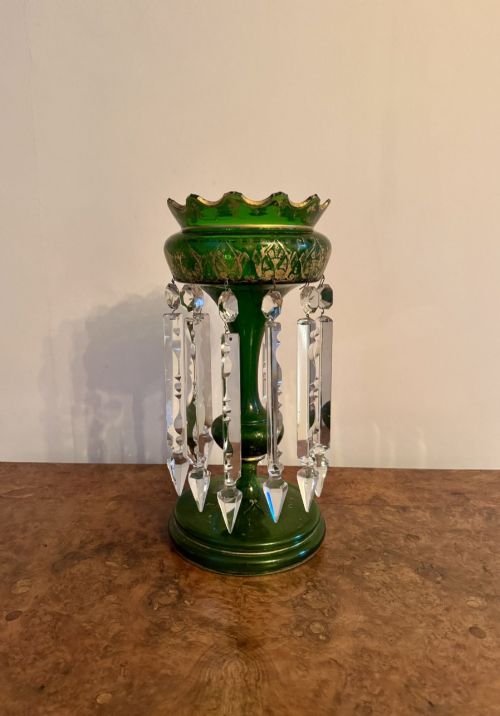
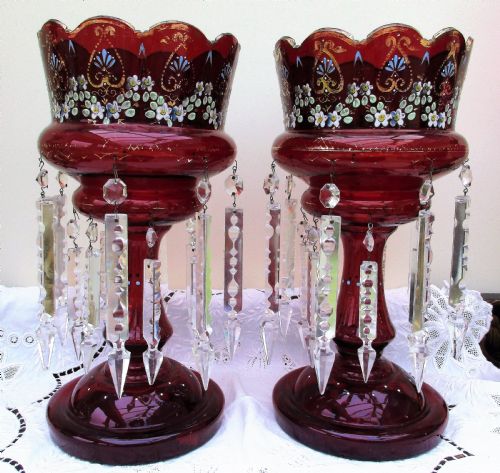
The most common examples on this page are pairs of Victorian ruby, cranberry, or green glass lustres hung with long cut crystal pendants. Alongside these glass table pieces, the selection includes gilt, brass, and bronze candelabras and girandoles influenced by Louis XVI and Rococo Revival styles.
Originating in English and continental workshops, these items served both a practical lighting purpose and a decorative function on mantelpieces and tables. Their enduring appeal lies in the way glass prisms dangle from the rims, shimmering whenever a candle is lit.
How they were made
Glassmakers shaped these objects using rich coloured glass, including ruby, cranberry, and green hues, frequently applying overlay techniques where clear crystal glass is flashed with colour and then cut away to reveal the layer beneath. Cut crystal pendants and drops were hand-faceted to maximise their refractive brilliance before being suspended from the main body.
Metalwork components such as brass, bronze, and gilt frames were cast and assembled to support multiple candle branches and secure the hanging prisms. Gold leaf accents and enamel decoration were often added by hand to enhance the decorative surface of the glass and metal.
Crystal Drop Candleholders Retail Price Guide 2026
Typical asking prices for crystal drop candleholders among the pieces listed under this phrase on Sellingantiques today, from the lower quarter to the upper quarter. They describe what is for sale here now, not the wider market.
Listings feature Victorian pieces spanning from eighteen-fifty to nineteen-twenty, incorporating materials such as ruby glass, gilt, brass, and cut crystal.
What varies in quality
The distinction between ordinary and exceptional examples rests upon the depth of the glass colour and the crispness of the hand-cut facets on the hanging drops. Superior pieces display substantial weight in the glass and precise cutting that produces sharp, brilliant light reflections.
Proportion and decorative detail also elevate a piece, particularly where enamel work is finely applied or where gilt and brass mounts are cast with clear definition. Complete sets of matching original crystal drops contribute significantly to the integrity of a lustre or candelabra.
The Crystal Drop Candleholders Glossary
- Lustre
- A decorative tabletop ornament featuring a central vase or column hung with long cut glass pendants. They became extremely popular on Victorian mantelpieces.
- Candelabra
- A branched candlestick holder designed to support multiple candles at once. These often incorporate metal arms and crystal drops.
- Flash glass
- Glass created by blowing a thin layer of coloured glass over a thicker base of clear glass. This technique allows artisans to cut through the coloured exterior to create patterns.
- Girandole
- A decorative wall sconce or branched candlestick fitted with mirrors or crystal drops to multiply the flickering light of the candles.
- Rococo Revival
- A nineteenth-century design style drawing on eighteenth-century French motifs, characterised by flowing asymmetrical curves, naturalistic scrollwork, and ornate ornamentation.
Crystal Drop Candleholders: Frequently Asked Questions
What is a lustre?
A lustre is a decorative ornamental vase fitted with a ring of hanging crystal prisms. They were placed on mantelpieces to catch the ambient light.
While they can hold candles, their primary purpose in the nineteenth century was decorative display rather than serious illumination.
How do I clean crystal drops?
Cleaning crystal drops requires removing them gently from the main body to wash them in lukewarm soapy water. Harsh chemicals must be avoided to protect the glass.
Once washed and dried with a soft cloth, each pendant is rehung carefully using its original wire or brass connector.
Where were these displayed?
These pieces were traditionally arranged on the mantelpiece above a fireplace, flanked by matching ornaments or clocks. Their crystal drops were positioned to catch the firelight.
They also found places on entrance hall tables, sideboards, and drawing-room mantel shelves where daylight could pass through the prisms.
How do I date a Victorian piece?
Dating relies upon examining the manufacturing techniques, glass colours, and stylistic influences present in the object. Victorian pieces often show distinct hand-cut facets and specific colour palettes.
Comparing the form to documented nineteenth-century examples helps narrow down the period of manufacture.