


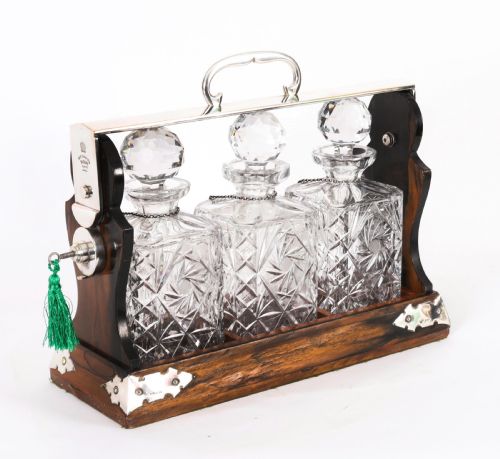



Crystal Drinks Bottle
These crystal drinks bottle pieces bring Victorian and Edwardian craftsmanship directly to your sideboard, offering both utility and historic charm.
Crystal Drinks Bottle
When you search for a crystal drinks bottle, you encounter various forms including tantalus sets, decanter stands, and saddle flasks dating from the Victorian and Edwardian eras. These items served a practical domestic purpose in nineteenth-century households, holding spirits securely while displaying them attractively.
You are most likely to meet oak and silver-plated tantalus arrangements on this page, alongside glass bottles housed in leather cases or fitted wooden stands. The pieces span several decades of the nineteenth and early twentieth centuries, reflecting the changing tastes of the period.
The selection ranges from single-bottle oak cases to elaborate three-decanter sets featuring coromandel wood, satinwood inlay, and brass mountings. Each variation illustrates how spirits were stored and presented in period homes.
Materials and construction
Makers utilised heavy cut glass for the bottles, pairing them with robust timber frames made from oak, coromandel wood, and satinwood. Metal components in brass and silver plate provided structural reinforcement and security mechanisms.
Leather was employed for specialised travel items like saddle flasks, ensuring durability during journeys. Wood inlay and careful silver hallmarks added decorative refinement to the stationary tantalus designs.
Crystal Drinks Bottle Retail Price Guide 2026
Typical asking prices for crystal drinks bottle among the pieces listed under this phrase on Sellingantiques today, from the lower quarter to the upper quarter. They describe what is for sale here now, not the wider market.
Listings feature oak, coromandel wood, brass, and cut glass across Victorian and Edwardian periods.
Distinctions in quality
The sophistication of the timber work and the complexity of the locking mechanism separate standard items from finer examples. Cases utilising exotic woods like coromandel and intricate satinwood inlay demonstrate superior craftsmanship.
The clarity and depth of the cut glass bottles, combined with substantial brass mounts or silver plate quality, determine the overall execution of the piece. Complete sets with matching decanters represent a higher standard than assembled or incomplete arrangements.
The Crystal Drinks Bottle Glossary
- Tantalus
- A locked cabinet holding decanters that displays the contents while preventing unauthorised pouring without a key. This device became popular in late Victorian households for securing expensive spirits.
- Saddle flask
- A portable glass bottle shaped to fit inside a leather case for transport during equestrian pursuits. These items typically date from the Edwardian period.
- Coromandel wood
- A dense, dark timber with contrasting light streaks imported from Asia and utilised for high-end Victorian cabinet work. It provides a striking striped appearance on luxury tantalus frames.
- Silver plate
- A thin layer of silver applied to a base metal to give the appearance of solid silver. This technique was widely used on mounts and handle hardware during the nineteenth century.
Crystal Drinks Bottle: Frequently Asked Questions
What is a tantalus?
A tantalus is a locked wooden frame designed to hold spirit decanters securely. It keeps the bottles visible while preventing guests or servants from accessing the contents without the key.
Most examples from this era utilise oak or exotic timbers fitted with brass locking bars.
How were saddle flasks used?
Saddle flasks were carried by riders during hunting and equestrian activities in the Edwardian period. The glass bottle slides securely into a moulded leather case designed to attach to a saddle.
These pieces combined practical utility with portable luxury for outdoor pursuits.
What woods are common?
Oak is the predominant timber found in these frames, particularly from the Victorian era. More elaborate pieces incorporate decorative veneers such as coromandel wood and satinwood inlay.
These materials reflect the cabinet-making standards of the late nineteenth century.
How do I date these pieces?
Dating relies on stylistic clues, materials, and any present silver hallmarks or manufacturer details. Late Victorian and Edwardian examples show distinct changes in locking mechanisms and wood finishes.
Comparing the construction methods to known period pieces helps establish the decade of origin.