



Crystal Biscuit Barrel
A crystal biscuit barrel brings cut glass and gleaming silver work to the sideboard, offering a handsome vessel for storing dry sweets.
Crystal Biscuit Barrel
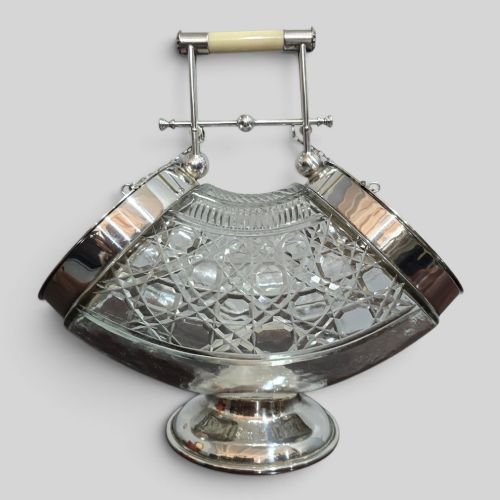
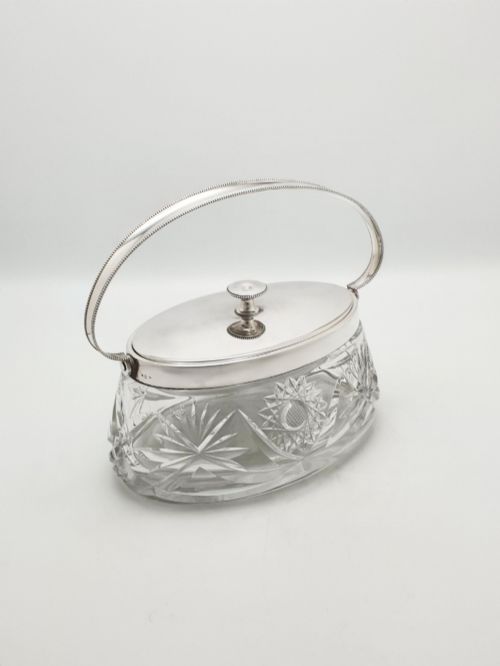
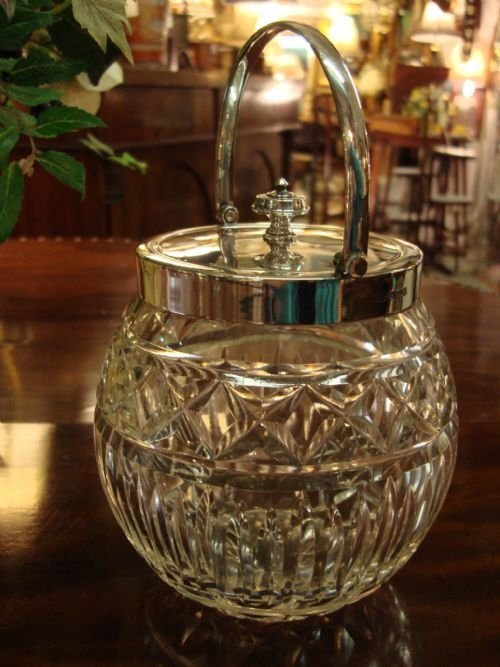
A crystal biscuit barrel combines a heavy glass body with metal mounts, swing handles and fitted lids to serve dry goods in domestic rooms. These table containers appear across several periods, stretching from the Georgian era through Victorian times into the Edwardian years and early twentieth century.
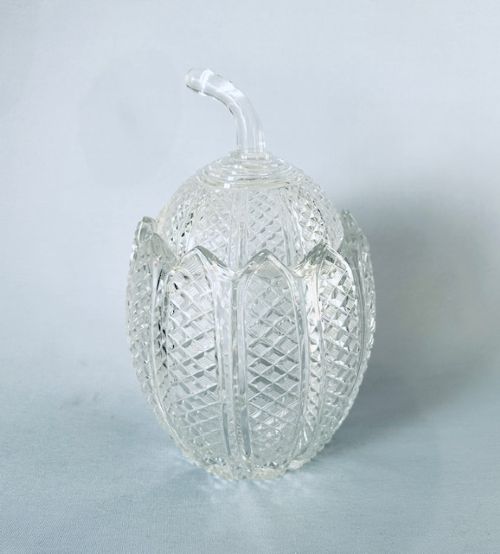
The versions most commonly met on this page date from the Victorian and Edwardian periods, frequently combining cut glass bodies with silver plated mounts or sterling silver collars. Makers also produced novelty forms, such as melon shapes and heraldic dragon finials, alongside standard cylindrical jars.
Object types on offer include both biscuit barrels and biscuit boxes, housing dry provisions for the parlour or dining room. Styles range from plain late Victorian examples to Jugendstil and George V designs.
How they were made
Makers formed the vessels from lead crystal and cut glass, applying deep geometric cutting such as hobnail patterns to refract light through the heavy walls. The glass blanks were blown and then hand cut on stone wheels before polishing.
Metalworkers constructed the mounts, lids and swing handles from silver plate, sterling silver and standard silver. These metal components were fastened to the glass rims, often incorporating hinged mechanisms or decorative finials.
Crystal Biscuit Barrel Retail Price Guide 2026
Typical asking prices for crystal biscuit barrel among the pieces listed under this phrase on Sellingantiques today, from the lower quarter to the upper quarter. They describe what is for sale here now, not the wider market.
Listings on this site span the Georgian period, Victorian era, Edwardian years, and the early twentieth century including George V and Jugendstil designs.
What varies in quality
Quality rests in the crispness of the glass cutting and the weight of the lead crystal body. Deeper, sharper facets create a more brilliant sparkle, whereas softer or shallower cuts lack the same definition.
The standard of the metalwork also separates examples, with hallmarked sterling silver mounts and intricate figural finials indicating superior manufacture compared to simpler silver plated hardware.
James Dixon and Sons·Walker and Hall·WMF
The Crystal Biscuit Barrel Glossary
- Biscuit barrel
- A covered container designed specifically for holding biscuits and dry sweet goods on the dining table or sideboard. These vessels typically feature a vertical cylindrical glass body with a metal handle.
- Cut glass
- Glass decorated by grinding facets and patterns into the surface using rotating wheels. This technique creates geometric designs that catch the light.
- Silver plate
- A base metal, such as copper or Britannia metal, coated with a thin layer of silver. This process provided the appearance of solid silver at a lower cost.
- Finial
- A decorative knob or ornament attached to the top of a lid. On these pieces, finials sometimes take figurative forms like heraldic dragons.
- Jugendstil
- The continental European counterpart to Art Nouveau, spanning the late nineteenth and early twentieth centuries. Pieces in this style feature organic, flowing lines.
Crystal Biscuit Barrel: Frequently Asked Questions
What is a crystal biscuit barrel?
A crystal biscuit barrel is a covered container made from cut glass or lead crystal, usually fitted with a metal handle and lid. These vessels were designed to store and present biscuits in the dining room or drawing room.
Craftsmen combined heavy glass bodies with silver or silver plated mounts to create functional table wares. They remain popular decorative items for traditional interiors today.
How do I date a biscuit barrel?
Dating a barrel involves examining the style of the glass cutting, the hallmarks on the metal mounts, and the overall design characteristics. Victorian examples often display heavier ornamentation, while Edwardian pieces can be lighter in feel.
Checking for maker marks or silver hallmarks provides the most reliable guide to a specific decade of manufacture. Stylistic shifts from Georgian through to George V eras also help narrow the period.
Were these used daily?
Households in the Victorian and Edwardian periods used these barrels during afternoon tea and formal gatherings to keep dry biscuits fresh. The fitted lid helped protect the contents from moisture and air.
They sat on sideboards or tea tables as part of standard dining room service. Today, collectors often use them for display or repurpose them as storage jars.
How do I care for cut glass?
Cut glass requires gentle hand washing in warm, soapy water using a soft cloth to protect the sharp facets. Harsh detergents and abrasive scourers can scratch the surface or dull the polish.
Silver mounts should be cleaned with a dedicated silver cloth, taking care not to let polish residue build up in the glass crevices. Proper handling preserves the clarity and brilliance of the crystal.