



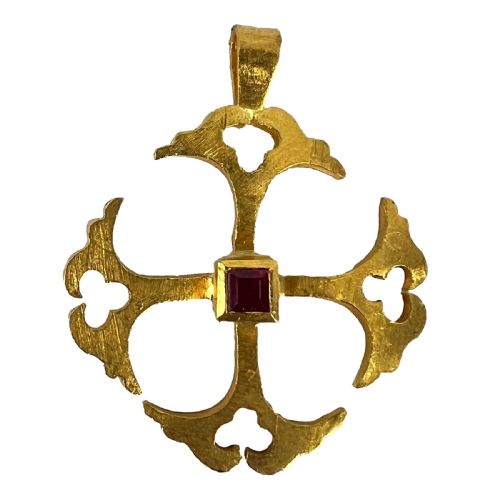


Cross Pendant Necklace
A cross pendant necklace is a wearable statement of faith and craftsmanship, uniting centuries of devotional design with precious metals and stones.
Cross Pendant Necklace
A cross pendant necklace combines devotional symbolism with wearable art, taking forms from simple geometric shapes to elaborate Maltese and sunburst designs. When exploring a cross pendant necklace, you encounter pieces originating from the Georgian era through to the mid-twentieth century.
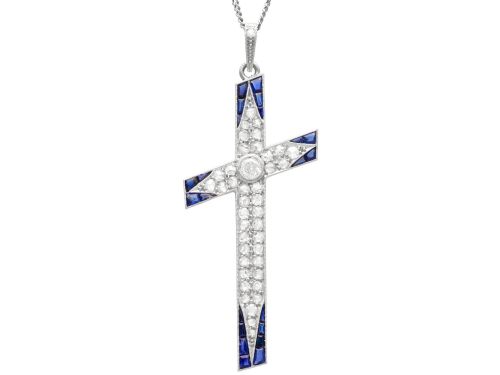
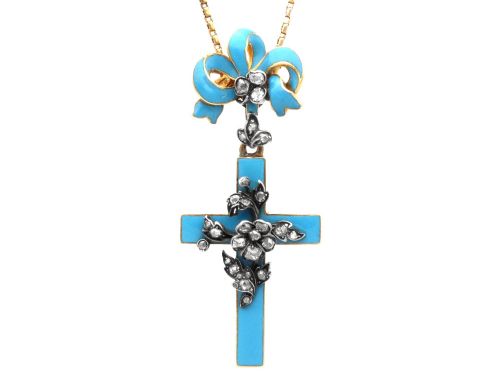
The selection ranges from delicate seed pearl and turquoise Victorian pieces to substantial diamond and sapphire examples set in yellow or white gold. Silver and marcasite versions with amethyst or enamel also appear regularly, offering diverse material expressions of the same enduring form.
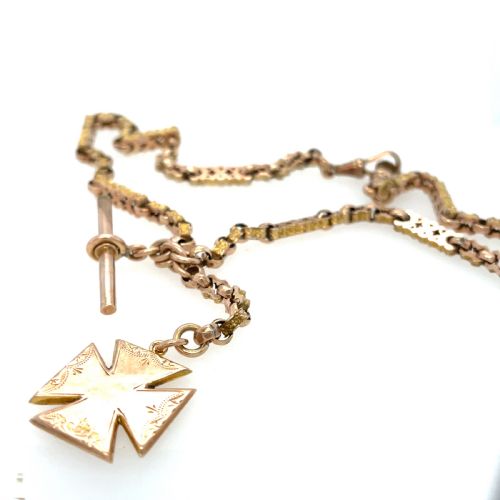
Object classifications span pendants, necklaces, Albert chains with fobs, and complete suite sets. You are most likely to meet mid-twentieth-century gold and diamond pieces alongside Victorian and Georgian silver and paste creations.
Materials and construction methods
Materials utilised across these pieces include gold in various purities, silver, and platinum, paired with precious and semi-precious stones. Diamonds, sapphires, rubies, garnets, topaz, and amethysts provide colour and brilliance, while seed pearls, turquoise, coral, and blue enamel add traditional texture.
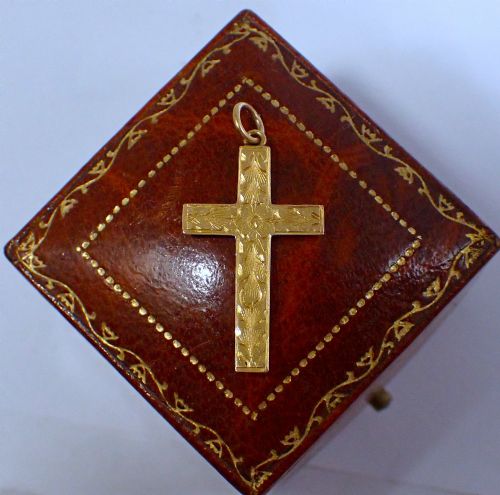
Metalworking techniques involve casting, engraving, and filigree work, alongside meticulous stone setting such as foil-backed pastes and brilliant-cut diamond arrangements. Marcasite decoration and applied gold detailing demonstrate the varied bench skills employed by makers across different periods.
Cross Pendant Necklace Retail Price Guide 2026
Typical asking prices for cross pendant necklace among the pieces listed under this phrase on Sellingantiques today, from the lower quarter to the upper quarter. They describe what is for sale here now, not the wider market.
A radiating sunburst medal cross reminds us that someone once wanted their devotion to shine like midday in provincial France.
Factors determining quality
Quality reveals itself in the precision of the stone setting and the crispness of metal engraving or casting work. Superior examples display harmonious proportions, secure collet or prong settings, and stones selected for uniform colour and clean cutting.
The integrity of the construction, from the sturdiness of the suspension loop to the matching quality of any integrated chain or Albert fitting, separates standard production from finer workshop output. Preservation of original enamelling, foiled backs, and delicate seed pearls also influences the standing of a piece.
The Cross Pendant Necklace Glossary
- Albert chain
- A heavy pocket watch chain often adapted to hold pendants or fob medals. These sturdy chains frequently feature decorative links and T-bars.
- Paste
- Hand-cut lead glass used historically to imitate gemstones. Georgian paste is often foiled at the back to enhance its colour and reflective brilliance.
- Marcasite
- Small faceted crystals of iron pyrite polished and set closely in silver. This technique creates a dark, glittering frame reminiscent of steel jewellery.
- Maltese cross
- A cross form with eight points and diverging arms that narrow towards the centre. This distinctive shape appears frequently in mid-century gold and diamond designs.
- Seed pearl
- Very small natural pearls drilled and threaded or stitched onto backing materials. They are characteristic of Victorian and Georgian devotional jewellery.
Cross Pendant Necklace: Frequently Asked Questions
How do I date an antique cross pendant?
Dating relies on material combinations, gemstone cuts, and construction traits typical of specific eras. Georgian pieces often use silver-topped gold with foiled paste stones, while Victorian examples frequently incorporate seed pearls and turquoise.
Later mid-century items display distinct platinum or white gold mountings and brilliant-cut diamond arrangements. Hallmarks and maker's marks, where present, provide additional chronological reference.
Were these always worn as necklaces?
Many items began as standalone pendants or devotional medals attached to chatelaines, rosaries, or Albert chains rather than modern neck chains. Adaptations over time mean pieces from earlier centuries are frequently suspended from replacement gold or silver chains.
Examining the original suspension loop often reveals how a piece was intended to be secured and worn by its first owner.
How should I care for gemstone crosses?
Maintenance depends entirely on the specific materials set within the metal frame. Foiled stones, enamel, and seed pearls are sensitive to moisture and ultrasonic cleaning, requiring gentle dry wiping with a soft cloth.
Sturdier precious stones set in solid gold or platinum tolerate careful professional cleaning, but antique mountings generally benefit from cautious handling and safe storage away from harder jewellery.