

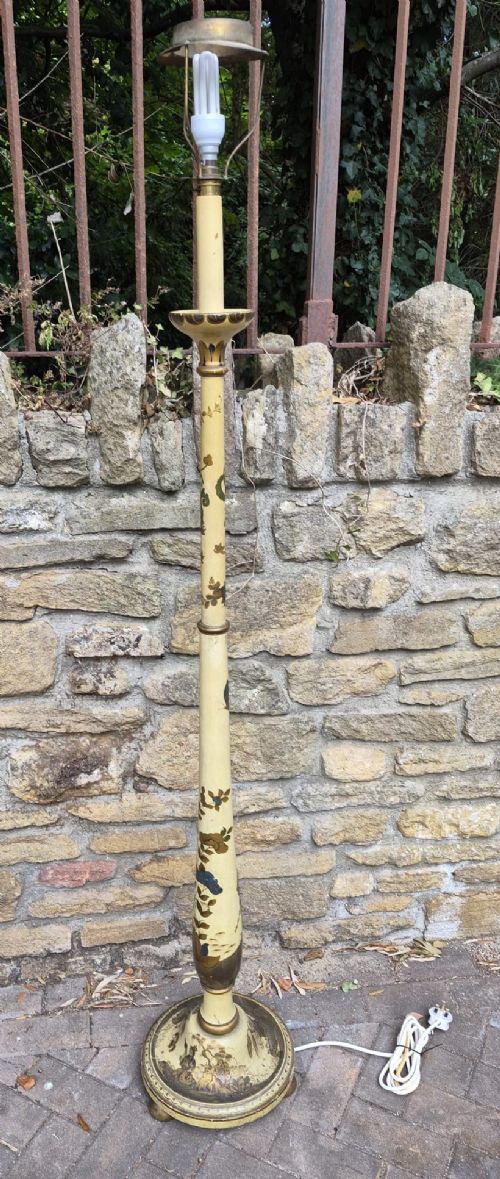
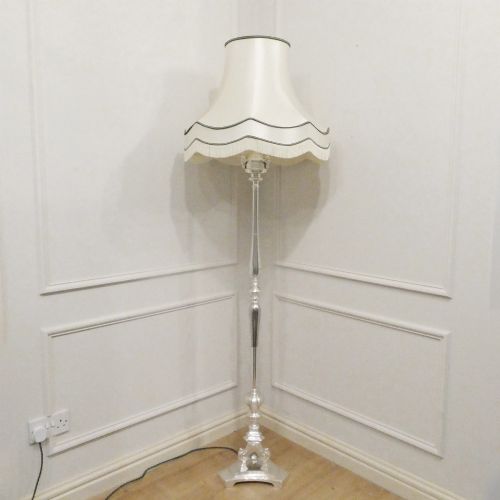
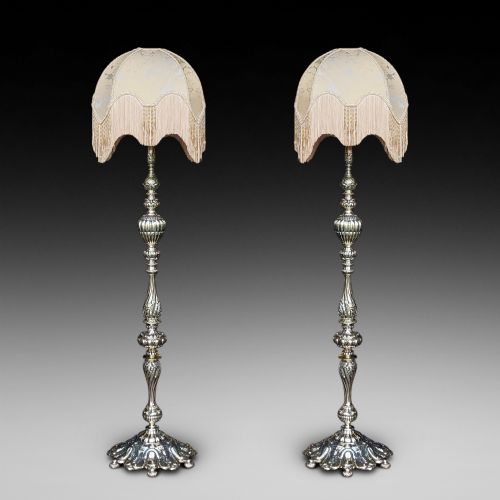
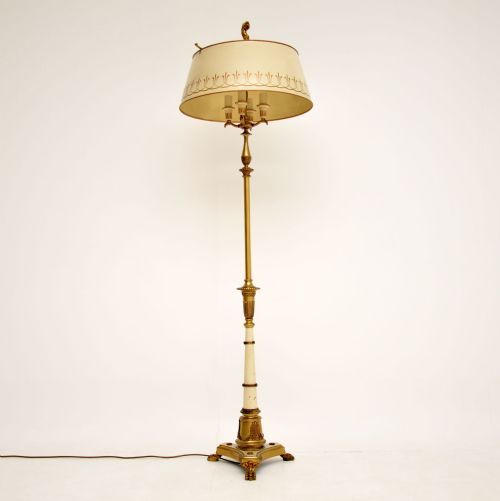


Cream Standard Lamp
A cream standard lamp brings height and focused illumination to a room, drawing on decades of decorative floor lighting.
Cream Standard Lamp
A cream standard lamp provides vertical illumination and stands directly on the floor, serving as a prominent feature in sitting rooms and studies. These floor-standing fixtures elevate light sources above table height to cast a wider glow across a space.
The selections available here span the 19th Century, Victorian, Edwardian, and 1930s periods, encompassing diverse aesthetic traditions. Examples range from French Neoclassical and French Chateau to Arts and Crafts, English Country, and Tibetan designs.
Makers utilised various physical forms, including torchere vases, tripod bases, and standard floor configurations, sometimes incorporating adjustable arms or paired arrangements. Materials such as painted wood, fabric, fringe, and tole finish the pieces in cream and neutral tones.
How they were made
Construction relies upon robust structural materials like brass, wrought iron, silver plate, and mahogany to support the vertical shaft. Wood components are often painted to achieve the characteristic cream coloration seen across the period styles.
Shades and upper elements incorporate fabric and fringe to diffuse the light and soften the silhouette of the fixture. Metal parts undergo casting, turning, or hammering to shape the weighted bases and slender stems that keep the tall lamps stable.
Cream Standard Lamp Retail Price Guide 2026
Typical asking prices for cream standard lamp among the pieces listed under this phrase on Sellingantiques today, from the lower quarter to the upper quarter. They describe what is for sale here now, not the wider market.
One unexpected offering repurposes a ceremonial copper horn from the 19th century into a striking floor-standing lamp.
What varies in quality
The integrity of the structural metalwork and the weight of the base determine the stability and physical presence of the floor lamp. Solid brass, heavy iron, and dense mahogany offer a substantial feel that distinguishes them from lighter constructions.
Subtlety of finish and detailing in painted wood or decorative metalwork reveal the care taken in original production. Pieces retaining original fabric elements or specialised forms like adjustable arms demonstrate higher degrees of period craftsmanship.
The Cream Standard Lamp Glossary
- Standard Lamp
- A tall floor-standing lamp designed to illuminate a room from an elevated position. These fixtures typically feature a vertical pole supported by a weighted base.
- Torchere
- A tall ornamental stand or lamp modelled on a torch holder. They often feature slender columns and decorative upper sections.
- Tole
- Painted or enamelled metalware, frequently used for decorative canisters and lamp components. It provides a smooth surface suitable for muted or cream finishes.
- Canterbury
- A low wooden stand with partitions, occasionally combined with lamp standards to hold books or music sheets. This dual-purpose furniture piece appears in early 20th-century listings.
Cream Standard Lamp: Frequently Asked Questions
Where should I place a standard lamp?
These tall floor lamps work best in corners or beside seating areas where they can cast ambient or reading light downwards.
Their height allows them to illuminate dark spaces without cluttering tabletops or requiring surface space.
How do I identify an Edwardian standard lamp?
Edwardian models often feature lighter proportions and refined decorative details compared to heavier Victorian predecessors.
Look for stylistic influences such as chinoiserie or classic brass work characteristic of the early 20th century.
What materials are typical for these lamps?
Common materials include brass, mahogany, painted wood, and wrought iron for the structural columns and bases.
Upper sections frequently incorporate fabric shades and fringe to complete the traditional silhouette.