



Cream Linen Textile Panel
A cream linen textile panel brings tactile history into a room, offering centuries of hand-stitched artistry for modern interiors.
Cream Linen Textile Panel
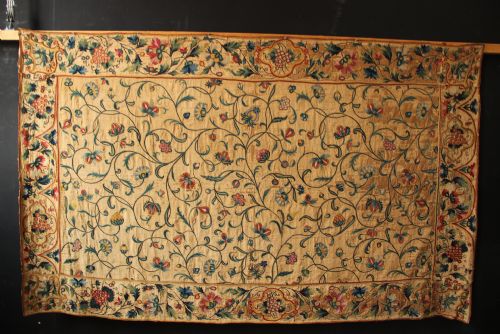
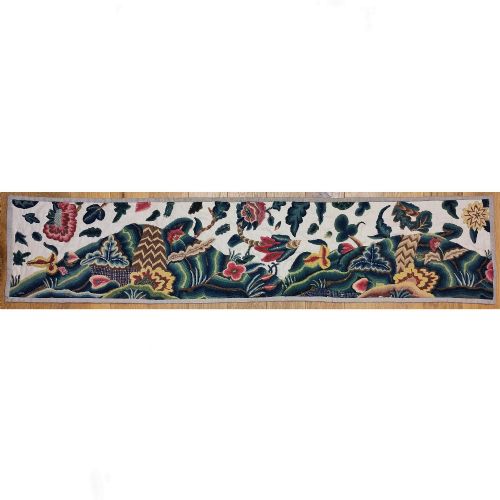
A cream linen textile panel encompasses historic needlework, samplers, and embroidered wall hangings spanning from the seventeenth century through the Victorian era.
Buyers encounter diverse regional expressions, including English crewelwork, Greek Island embroidery from Skyros, and Central Asian suzanis worked on natural grounds.
Forms range from framed wall art and band samplers to larger coverlets and embroidered panels originating from Britain, France, and the Ottoman Empire.
Materials and construction methods
Pieces are constructed primarily from natural linen grounds embellished with silk thread, wool, and cotton embroidery.
Traditional needlework techniques involve crewelwork stitching and intricate band sampler execution carried out by hand.
Cream Linen Textile Panel Retail Price Guide 2026
Typical asking prices for cream linen textile panel among the pieces listed under this phrase on Sellingantiques today, from the lower quarter to the upper quarter. They describe what is for sale here now, not the wider market.
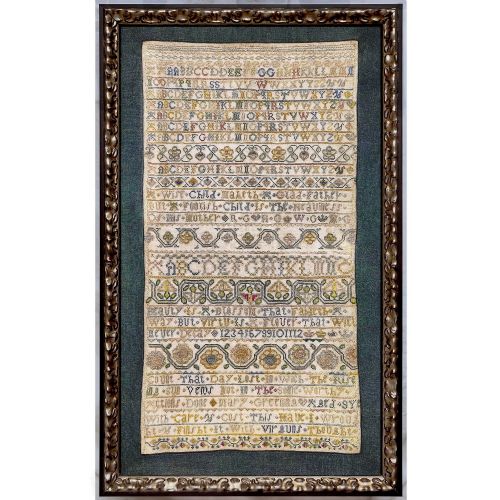
Young Margaret Ann Blackow carefully stitched her age as twelve into a mid-Victorian sampler, leaving a permanent record of childhood patience.
Assessing quality in historic textiles
Quality rests upon the intricacy of the needlework, the precision of the stitching, and the overall survival of the original fibres.
Execution ranges from fine early English crewelwork to simpler regional folk art, where the density of the threadwork determines the visual impact.
The Cream Linen Textile Panel Glossary
- Crewelwork
- Embroidery executed using wool yarn on a linen ground. This technique creates textured, organic designs often seen in seventeenth-century English pieces.
- Band sampler
- A long, narrow piece of linen featuring horizontal rows of various embroidery stitches and patterns. Makers used these to demonstrate their needlework proficiency.
- Coverlet
- A decorative bedcover or top spread made from textiles. These functional pieces frequently incorporate embroidered linen or pieced panels.
- Needlework sampler
- A piece of canvas or linen worked with various stitches, alphabets, and motifs. Historic examples often record the maker's name and age.
Cream Linen Textile Panel: Frequently Asked Questions
How should I hang a textile panel?
Historic textiles require careful mounting to distribute weight evenly across the fabric without causing strain.
Professional framing behind glass or gentle stitching to a padded, fabric-covered board helps protect fragile linen and thread.
Are these pieces cleaned easily?
Historic needlework cannot withstand standard washing methods due to fragile threads and aged linen foundations.
Surface dust is best removed by very gentle vacuuming through a protective mesh screen, avoiding any water or chemical cleaning.
How do I date an antique sampler?
Many samplers include embroidered dates, makers' names, and sometimes specific locations or ages worked directly into the linen.
Stylistic clues such as alphabet styles, motifs, and the type of linen also help narrow down the period of production.
Where were these textiles made?
The pieces originate from various regions including England, France, Greece, and Central Asia.
Each area developed distinct embroidery traditions, utilising local motifs, specific stitch types, and regional linen weaves.