






Cream Fabric Ottoman
A cream fabric ottoman offers a versatile seating and storage solution, bringing period charm and quiet comfort to a room.
Cream Fabric Ottoman
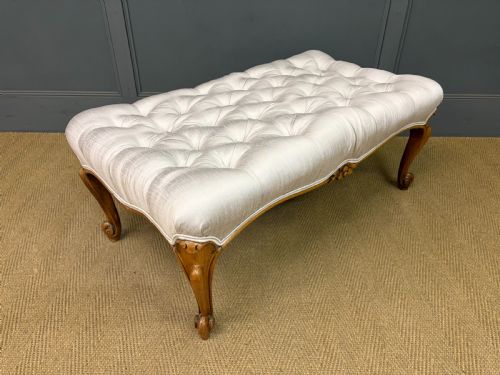
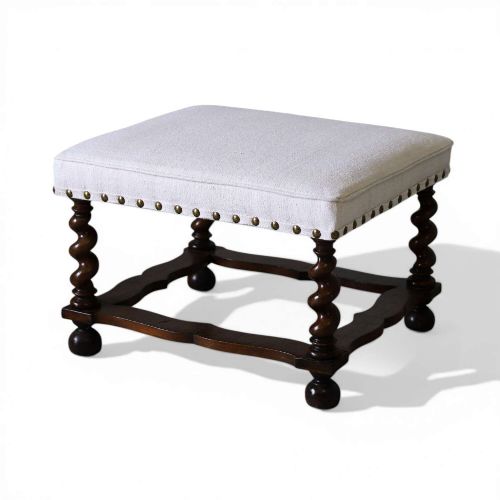
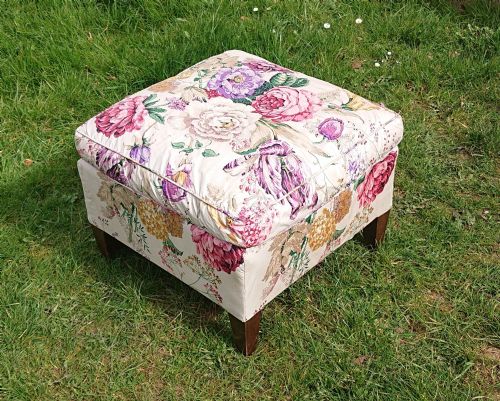
A cream fabric ottoman encompasses footstools, cushion top footstools, armchairs with matching stools, and storage chests spanning the Victorian, Edwardian, and eighteenth-century periods. Buyers searching for a cream fabric ottoman encounter pieces ranging from eighteen-seventies rosewood and walnut frames to earlier timber storage trunks.
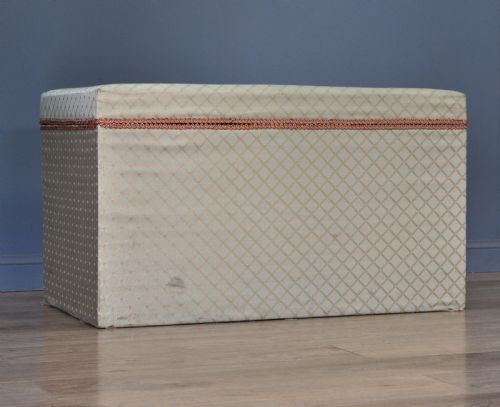
The selection includes Victorian deep buttoned stools on castors, gilded footstools, and walnut cabriole legged examples alongside William and Mary era pieces. Larger storage forms such as pine kist chests sit alongside upholstered seating options designed for domestic utility.
Materials and construction methods
Construction relies on traditional timbers including mahogany, walnut, rosewood, pine, and timber frames paired with upholstery fabric and textile coverings. Joinery techniques support heavy buttoning, cushion tops, and turned elements such as barley-sugar legs.
Decorative detailing incorporates brass castors, oyster-veneered stretchers, gilding, and deep buttoned upholstery work. Frames reflect specific historical movements from Victorian Rococo Revival to English Country and French Chateau aesthetics.
Cream Fabric Ottoman Retail Price Guide 2026
Typical asking prices for cream fabric ottoman among the pieces listed under this phrase on Sellingantiques today, from the lower quarter to the upper quarter. They describe what is for sale here now, not the wider market.
Several pieces rest upon small brass wheels designed to roll smoothly across thick carpets without scuffing the floorboards.
Indicators of distinction
Quality reveals itself in the fidelity of historical styles, such as the proportions of cabriole legs or the execution of barley-sugar turnings and oyster veneers. The complexity of the frame construction, from simple pine storage boxes to elaborate rosewood and gilded seating, sets distinct tiers.
The refinement of the upholstery work, including buttoning technique and the integration of matching armchairs or specific maker attributions, elevates certain examples above standard utility pieces.
Howard and Sons
The Cream Fabric Ottoman Glossary
- Cabriole leg
- A furniture leg that curves outward and then tapers inward, mimicking an animal's curving leg. This shape appears frequently on Victorian walnut frames.
- Barley-sugar leg
- A turned wooden leg resembling the twisted spiral of traditional confectionery. This decorative joinery feature is seen on eighteenth-century pieces.
- Oyster veneer
- Thin circular slices cut horizontally from small branches or roots to create an intricate oyster-shell pattern on wooden surfaces. It requires high skill to lay across a stretcher.
- Deep buttoning
- An upholstery technique where stitches pull the fabric tight into recessed points in a geometric diamond pattern. This method provides structured depth to Victorian seats.
- Kist chest
- A traditional wooden storage trunk used for blankets or household goods. These sturdy pine boxes provide foundational storage forms.
Cream Fabric Ottoman: Frequently Asked Questions
What is an oyster-veneered stretcher?
An oyster-veneered stretcher is a lower wooden cross-bracing piece decorated with concentric grain patterns cut from small branches. This technique creates a decorative surface near the base of seventeenth and eighteenth-century furniture.
Such decorative elements indicate higher workshop skill and distinguish more refined seating frames from plain utility furniture.
How were these pieces used historically?
Stools and ottomans served as movable seating, foot rests, and paired accessories alongside larger armchairs in period drawing rooms. Upholstered cushion tops provided comfortable support during long periods of sitting.
Enclosed trunks and kist chests functioned as practical storage for textiles, blankets, and household items in bedrooms and living spaces.
Are storage chests and footstools from the same period?
Storage chests and footstools both appear across nineteenth and eighteenth-century inventories, serving complementary domestic functions. Pine storage trunks date from the Victorian era while certain seating frames extend back to the seventeen-nineties.
Both categories utilise traditional timber construction methods appropriate for heavy daily household use.