

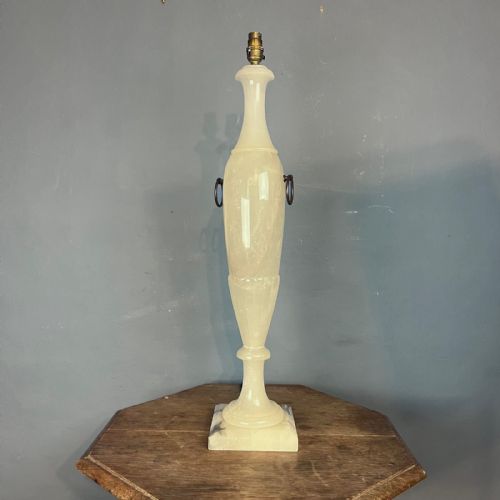

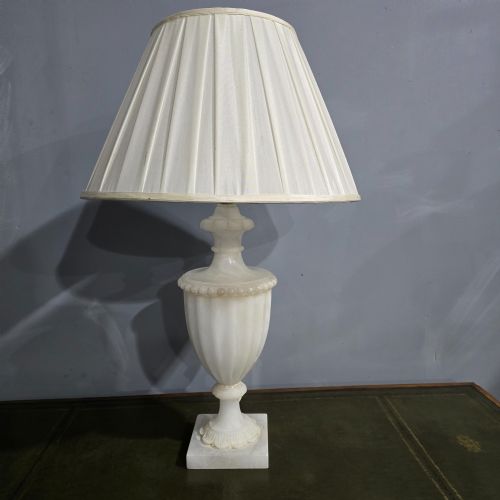
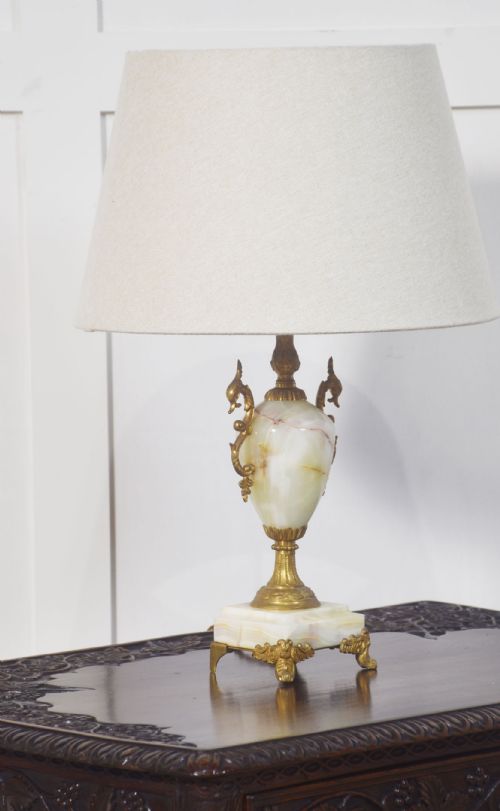


Cream Alabaster Lamp
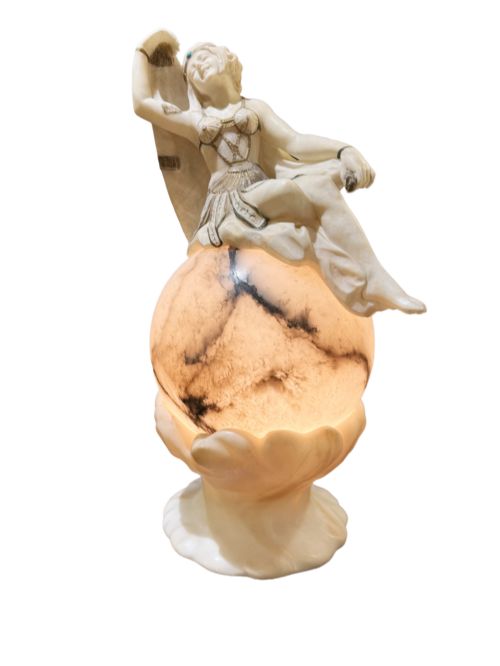
These cream alabaster lamp examples offer a soft, translucent glow through carved stone, bringing classic warmth to any interior.
Cream Alabaster Lamp
A cream alabaster lamp brings a warm, diffused glow to a room by letting light pass through its natural stone body. When you search for a cream alabaster lamp, you encounter table lamps and pendant lights spanning the nineteenth century up through the nineteen-thirties.
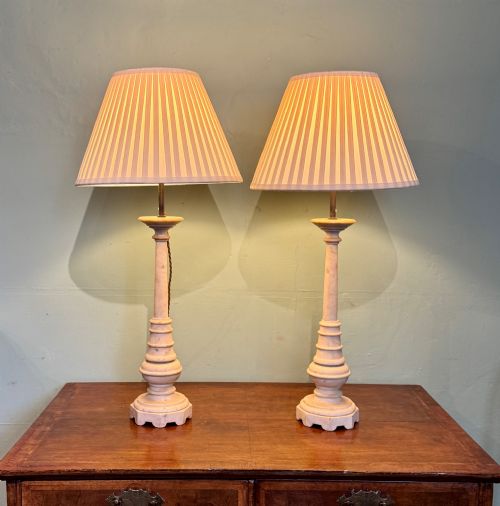
The pieces on this page mostly take the form of table lamps, often substantial in scale. You will find single table lamps and matched pairs originating from periods such as the Edwardian era and the nineteen-twenties.
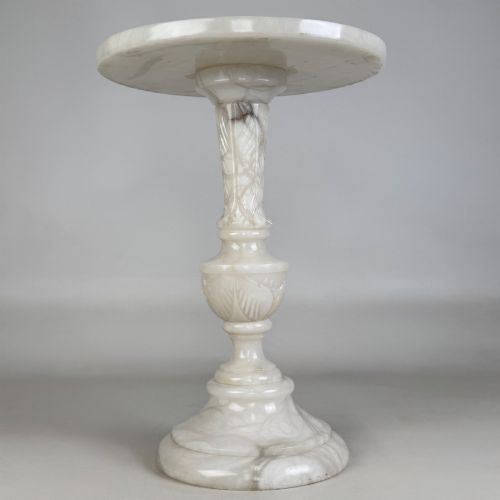
Alongside pure alabaster, the selections include related variants in white marble, onyx and marble-effect stone. These are paired with metal mounts, brass details and fabric shades to complete the lighting fixtures.
Materials and construction
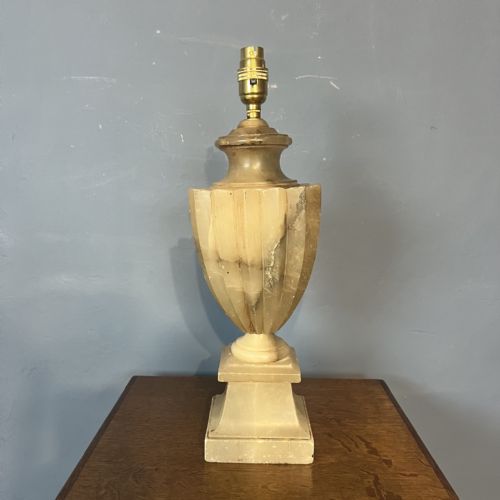
Alabaster and marble form the primary body of these lamps, shaped by hand or turned on a lathe to create smooth classical columns and urns. Artisans selected stone with natural clouding and veining that diffuses light evenly across the surface.
Metal components such as brass and other metals provide structural support, mounts and fitters for the stone bodies. Fabric and velvet shades or glass elements complement the stone structures on pendant lights and table lamps.
Cream Alabaster Lamp Retail Price Guide 2026
Typical asking prices for cream alabaster lamp among the pieces listed under this phrase on Sellingantiques today, from the lower quarter to the upper quarter. They describe what is for sale here now, not the wider market.
Listings span from the nineteenth century to nineteen-thirty, combining alabaster, marble, and onyx with brass and fabric.
Assessing quality and craftsmanship
The quality of a piece rests in the purity of the stone and the finesse of the carving. Superior examples show subtle, even veining and precise turning without abrupt colour breaks.
Metal mounts and fixings distinguish standard productions from finer work. Heavier gauge brass and integrated mounts demonstrate better workshop standards than lighter stamped fittings.
The Cream Alabaster Lamp Glossary
- Alabaster
- A fine-grained, translucent stone prized for lighting because light passes directly through the material. It takes a smooth polish and displays natural banding.
- Neoclassical
- A revival style drawing on classical Greek and Roman architecture and motifs. It appears in the clean columns and urn shapes of early lighting.
- Onyx
- A banded stone related to calcite, often utilised interchangeably with alabaster in period lighting. It offers similar translucency with distinct layered patterns.
- Pendant light
- A hanging lighting fixture suspended from the ceiling by a cord, chain or metal rod. The selection includes stone bowls hung for downward illumination.
Cream Alabaster Lamp: Frequently Asked Questions
How do I clean an alabaster lamp?
Use a soft, dry cloth to remove dust from the stone surface. Avoid using water or chemical cleaners, as porous stone absorbs moisture easily.
Keep the lamp away from damp areas to preserve the natural polish and finish of the material.
What periods do these lamps come from?
The available lighting spans from the nineteenth century through the nineteen-thirties. This covers late Victorian, Edwardian, and Art Deco eras.
Design aesthetics shift from ornate classical revival forms toward streamlined geometric lines as the decades progress.
Are these lamps heavy?
Alabaster and marble are dense, heavy stones that give these table lamps a solid base. They remain stable on side tables and desks.
Ensure your furniture can support the weight, particularly when placing large paired fixtures in living spaces.
How do I identify Art Deco lighting?
Art Deco pieces from the nineteen-thirties favor geometric symmetry, stepped profiles and streamlined metal mounts. Pendant lights often feature clean hemispherical stone bowls.
Decoration is minimal, relying on the natural grain of the alabaster rather than applied ornamentation.