



Cranberry Glass Fixture
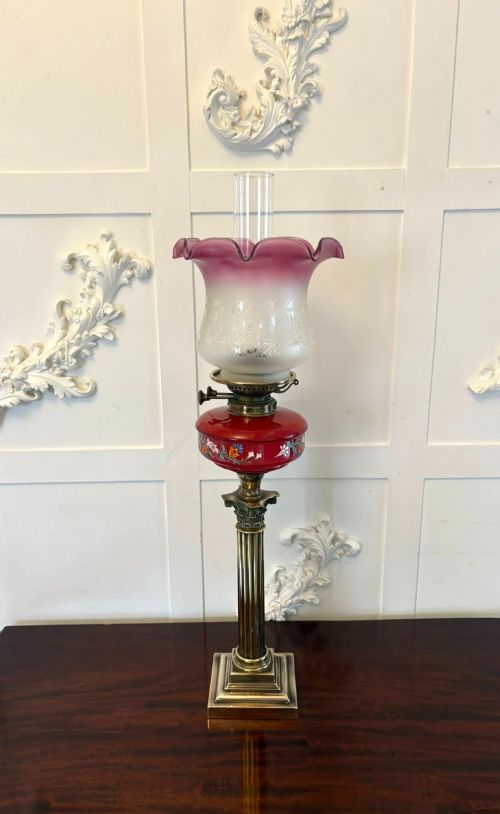
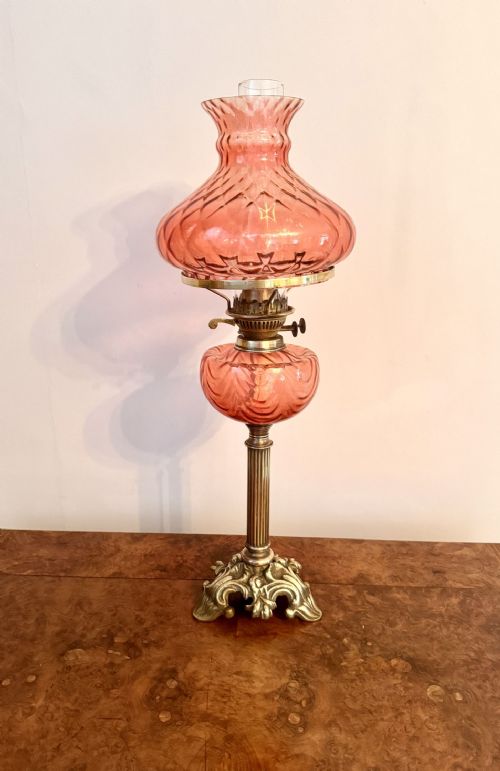
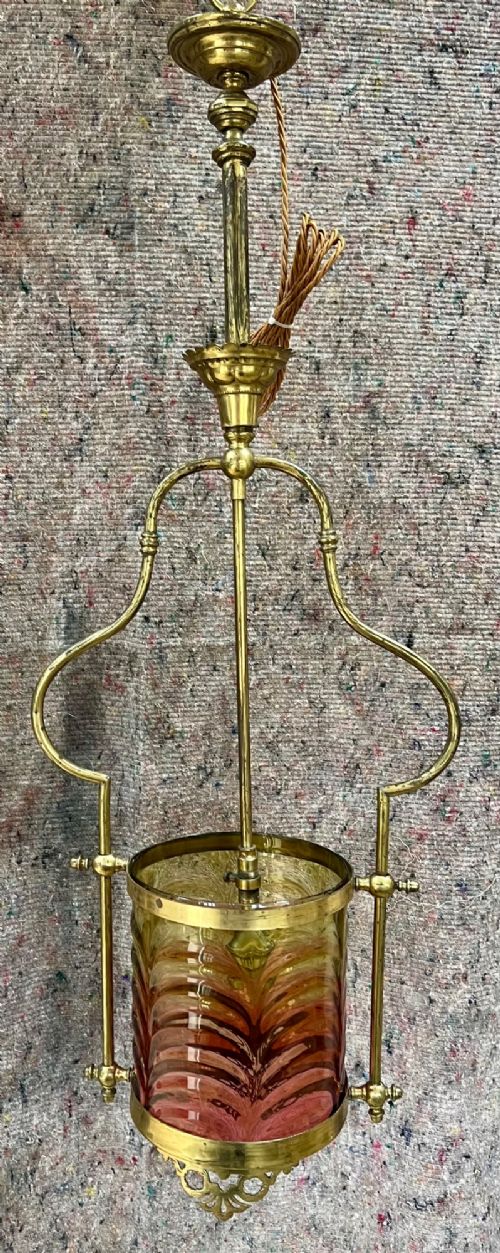
These cranberry glass fixture examples bring a warm, rich glow to a room through deep pink and ruby hues paired with polished brass.
Cranberry Glass Fixture
A cranberry glass fixture comprises lighting pieces fashioned from distinctively tinted pink and ruby glass, frequently mounted in brass. When people search for a cranberry glass fixture, they encounter oil lamps, ceiling lights, pendant lights, and ceiling pendant shades.
The pieces seen on this page span several distinct periods, including the nineteenth century alongside Victorian, Edwardian, Arts and Crafts, and Art Nouveau eras. The most common forms are oil lamps with coloured glass fonts and brass columns, as well as ceiling pendant shades.
Origins and designs range from tall adjustable floor oil lamps to multi-branch ceiling fittings and hanging lights. Each version combines functional illumination with decorative glasswork characteristic of late nineteenth and early twentieth-century domestic interiors.
How they were made
Makers utilised brass for the structural frames, columns, and hanging mounts of these lights, providing a sturdy metallic contrast to the translucent glass. Heavy brass stands and multi-branch structures required skilled metalworking and casting techniques.
The glass components include cranberry glass, pink glass, ruby glass, and cut or etched glass, sometimes decorated with enamel. Skilled glassblowers shaped the fonts and crimped shades, while artisans added surface decoration through etching or cutting patterns into the material.
Cranberry Glass Fixture Retail Price Guide 2026
Typical asking prices for cranberry glass fixture among the pieces listed under this phrase on Sellingantiques today, from the lower quarter to the upper quarter. They describe what is for sale here now, not the wider market.
Some tall oil lamps feature heavy adjustable brass stands, proving that nineteenth-century readers appreciated a flexible reading light just as much as we do today.
What varies in quality
Quality in these lighting pieces rests upon the depth and uniformity of the glass colour, alongside the weight and finish of the brass mounts. Heavy brass stands and finely cut or etched glass surfaces distinguish the finer examples from simpler utilitarian items.
The integration between the glass font or shade and the brass framework reveals the level of craftsmanship involved. Superior execution shows in crisp metal casting, clean glass edges, and well-balanced proportions across oil lamps and ceiling fittings.
The Cranberry Glass Fixture Glossary
- Cranberry glass
- A rich pink or red transparent glass created by adding gold chloride to the molten batch. This distinctive colour defines the fonts and shades of many Victorian lighting pieces.
- Brass
- A durable alloy of copper and zinc utilised extensively for the columns, bases, and mounts of period lamps and chandeliers. It provides a stable metallic structure with a warm golden tone.
- Font
- The reservoir portion of an oil lamp that holds the fuel beneath the burner. In these pieces, the font is frequently fashioned from coloured or cranberry glass.
- Crimped glass shade
- A lampshade whose heated edges have been manipulated into ruffled or fluted shapes by hand. This technique softens the profile of ceiling pendants and hanging lights.
- Etched glass
- Glass decorated by applying an acidic substance to eat away exposed surfaces, leaving a frosted design. This method creates decorative patterns on shades and lamp globes.
Cranberry Glass Fixture: Frequently Asked Questions
What is a cranberry glass fixture?
A cranberry glass fixture is a period lighting piece incorporating translucent pink or ruby glass elements paired with brass mounts. These items include oil lamps, ceiling lights, and pendant shades.
They reflect decorative styles from the Victorian, Edwardian, and Art Nouveau periods, combining coloured glass with functional metalwork.
How do I date a brass and glass lamp?
Dating these pieces involves examining the materials, construction methods, and stylistic cues present in the brasswork and glass. Victorian and Edwardian examples often feature specific column designs and burner mechanisms.
Periods represented on this page range from the nineteenth century through to the early twentieth century, including Arts and Crafts and Art Nouveau designs.
Were these lights originally for oil or electricity?
Many of the earlier pieces on this page were originally designed as oil lamps with glass fonts and brass stands. Over time, some domestic lighting of this type was adapted for electrical use.
Ceiling lights and pendant fittings from later periods were typically manufactured specifically for electrical illumination or gas.
How do I clean cranberry glass and brass?
Cleaning cranberry glass requires mild soapy water and a soft cloth to avoid scratching the surface or damaging any etched details. Harsh abrasives should be avoided on both the glass and the metal components.
Brass parts may be gently wiped or polished depending on the desired finish, taking care not to let cleaning agents touch the antique glass.