


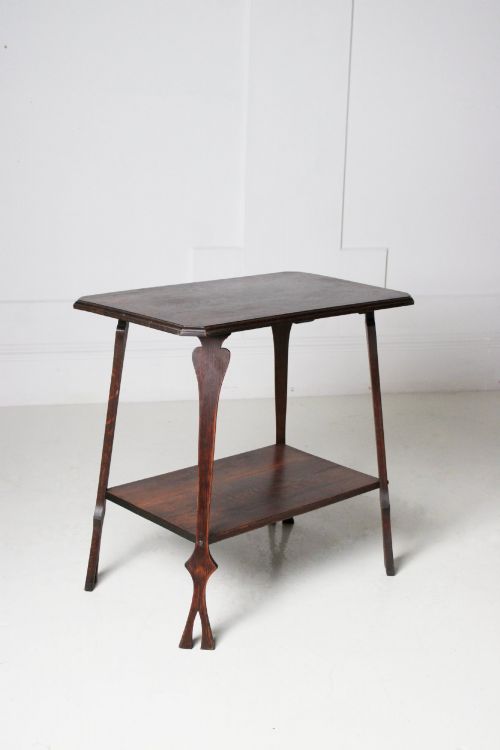
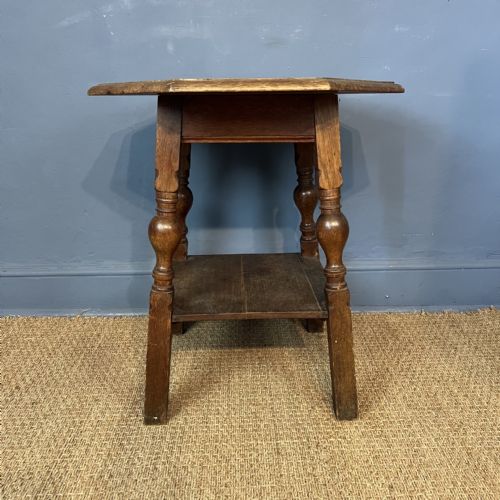


Craftsman Side Table
A craftsman side table brings honest construction and simple utility into a room, rooted firmly in the Arts and Crafts tradition.
Craftsman Side Table
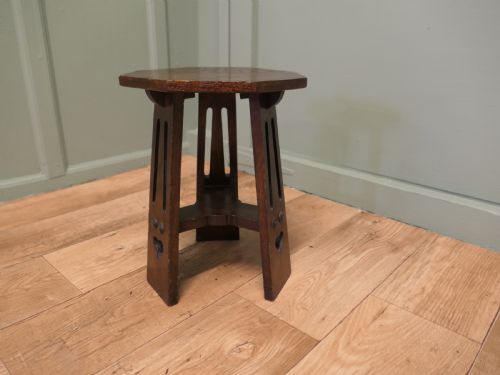
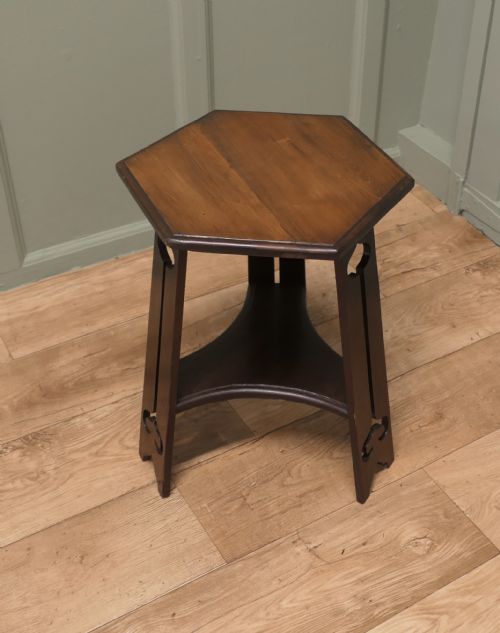
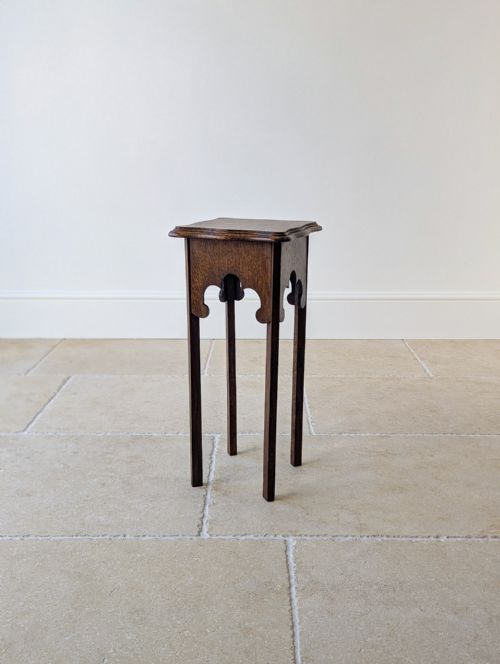
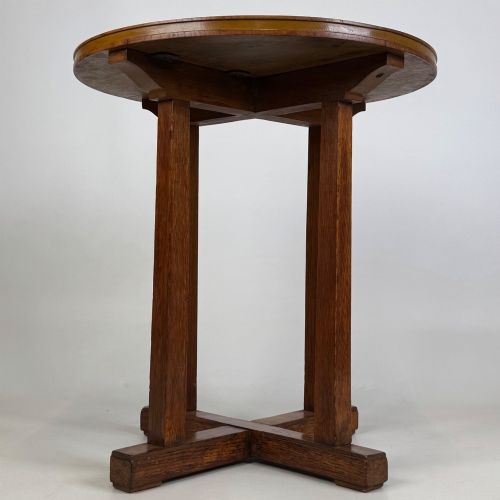
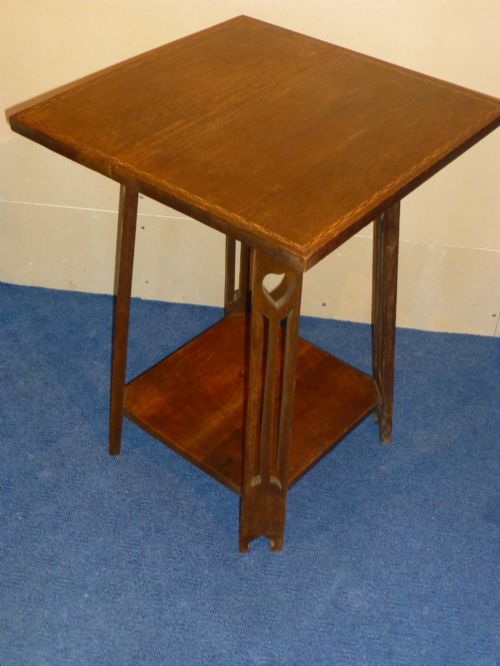
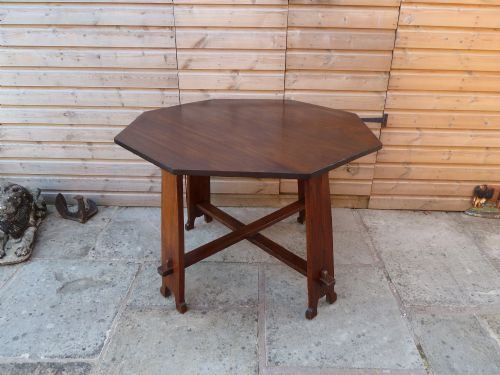
A craftsman side table embodies the utilitarian philosophy of the late nineteenth and early twentieth centuries, spanning periods from the Victorian era through to the Edwardian years and into the 1930s. These low or occasional surfaces take many forms, including octagonal plant stands, round lamp tables, centre tables, and bedside cabinets.
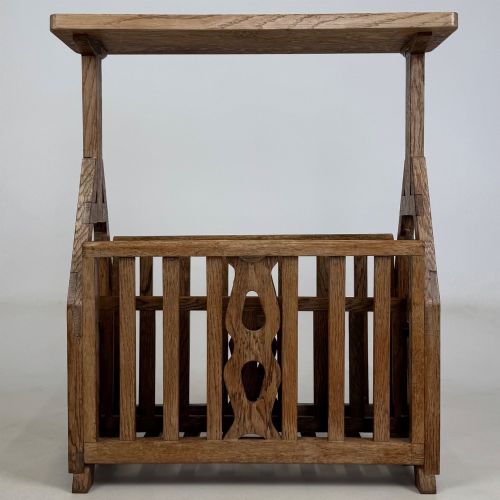
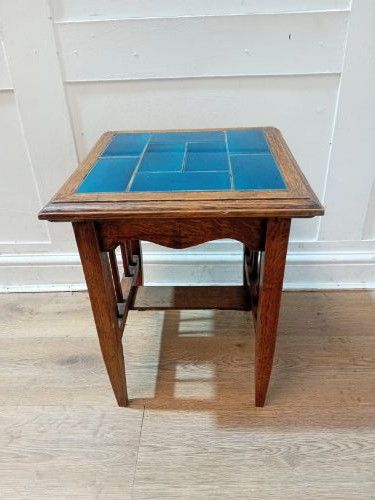
Most examples found in this selection are constructed from oak, though elm appears alongside occasional pieces incorporating ceramic tiles or metal accents. Their forms reject excessive ornamentation in favour of sturdy frames, visible joinery, and functional design suited to domestic spaces.
How they were made
Makers relied primarily on solid oak and elm to build these tables, selecting timber for its strength and natural grain. Construction techniques emphasised exposed joints and honest carpentry rather than hidden fasteners or applied veneer.
Surface details often include copper tops, brass fittings, chequered wood inlay, or inserted ceramic tiles. These additional materials were chosen to add utility and subtle decoration while maintaining the structural integrity of the piece.
Some small oak tables began life as apprentice pieces, built by trainees to prove their mastery of joint work before tackling full-sized furniture.
What varies in quality
Quality in these pieces rests upon the integrity of the timber selection and the precision of the joinery. Tables built with well-figured oak and balanced proportions demonstrate a higher level of workshop execution.
The integration of secondary materials such as hand-hammered copper, ceramic tiles, or careful wood inlay separates standard production furniture from works attributed to specific makers or influential retailers.
Liberty and Co·William Birch·Baillie Scott
The Craftsman Side Table Glossary
- Arts and Crafts
- A design movement valuing handcraftsmanship, simple forms, and traditional materials over mass production. It influenced furniture design from the late nineteenth century onwards.
- Occasional table
- A small, movable table designed for a specific, intermittent domestic use such as holding a lamp or book. These pieces are easily repositioned within a room.
- Occasional table
- A small, movable table designed for a specific, intermittent domestic use such as holding a lamp or book. These pieces are easily repositioned within a room.
- Plant stand
- A tall, compact table or pedestal designed specifically to elevate potted plants. They often feature octagonal or square tops.
- Inlay
- A decorative technique where contrasting materials are inserted into recessed portions of a wooden base. Common examples include chequered patterns using different woods.
Craftsman Side Table: Frequently Asked Questions
What is a craftsman side table?
A craftsman side table is a small utilitarian surface produced during the late nineteenth and early twentieth centuries. These pieces reflect the tenets of the movement through solid timber construction and restrained decoration.
They appear in forms ranging from octagonal plant stands to round lamp tables and bedside cabinets, constructed predominantly in oak with occasional metal or tile additions.
How do I date these tables?
Dating relies on stylistic markers, construction methods, and recorded periods such as the Victorian and Edwardian eras. Pieces often date from the 1880s through to the 1930s.
Examining the joinery, timber treatment, and any associated hardware helps place an item within this broad chronological span.
Are all these tables made of oak?
Oak is the predominant material seen across the selection, prized for its durability and grain. However, elm also appears in specific centre table forms.
Selected examples incorporate secondary materials like copper, brass, ceramic tiles, or wood inlay to provide surface variety.
How were these tables used originally?
These tables served various practical functions in domestic interiors, acting as surfaces for lamps, plants, books, or bedside necessities. Their compact sizes allowed them to be placed wherever an extra surface was required.
Stands and small tables were easily moved around a room to support daily activities in sitting rooms and bedrooms.