




Country River Painting
A country river painting captures the quiet rural waterways of past centuries through the hands of accomplished Victorian and Edwardian artists.
Country River Painting
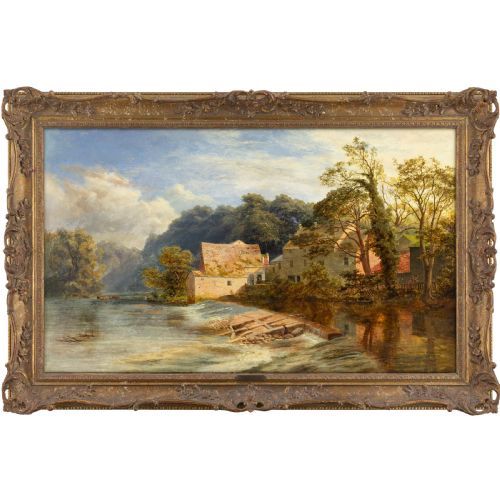
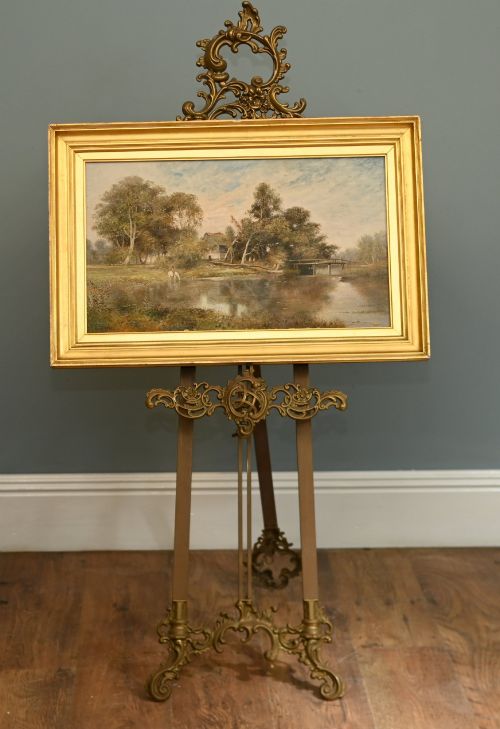
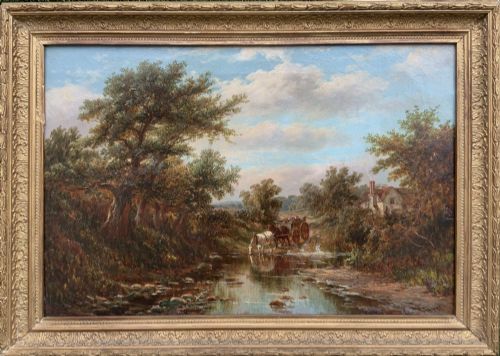
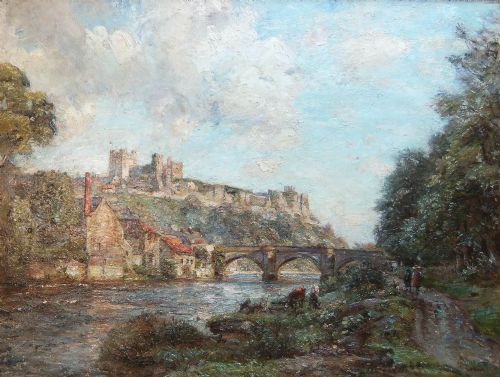
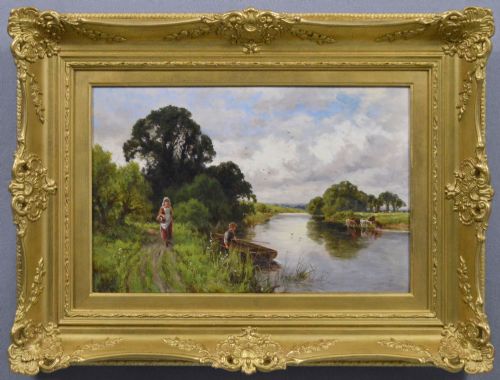
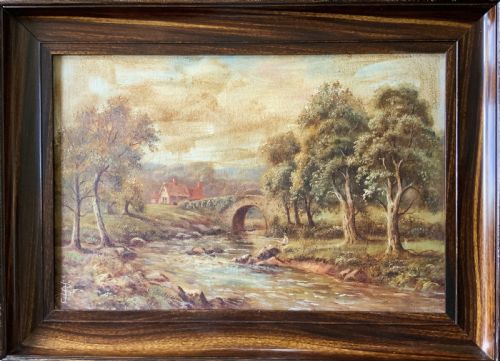
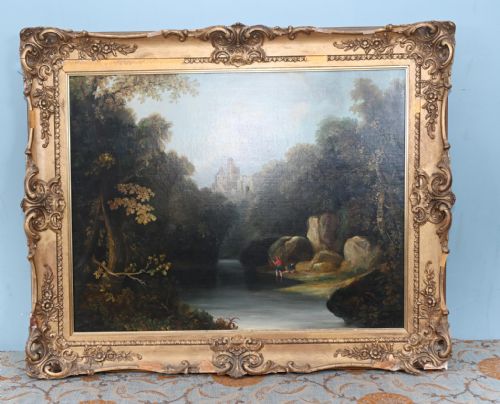
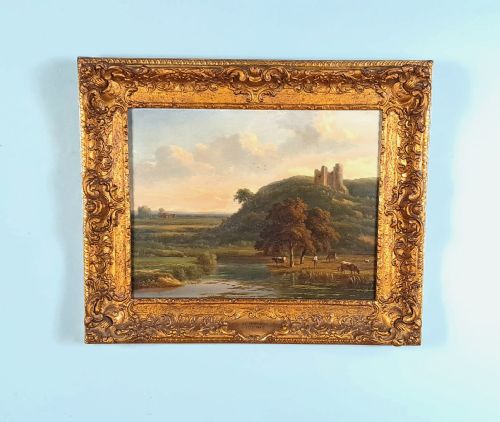
A country river painting depicts rural watercourses, mills, and riverbanks executed primarily during the nineteenth and early twentieth centuries. These works record specific waterways across British and European landscapes, often featuring figures, livestock, or anglers positioned near the water.
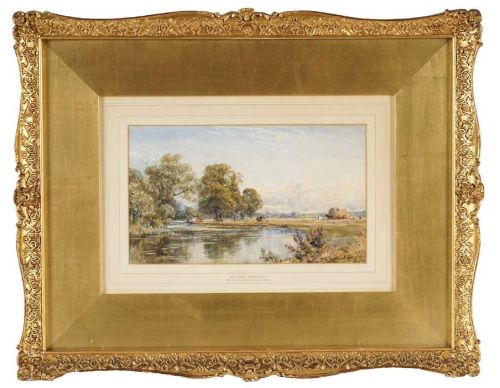
The selections available here range from detailed Victorian pastoral scenes to looser Edwardian and mid-century impressionist interpretations. Buyers encounter works rendered in both oil and watercolour across formats that include canvas, wood panel, and paper.
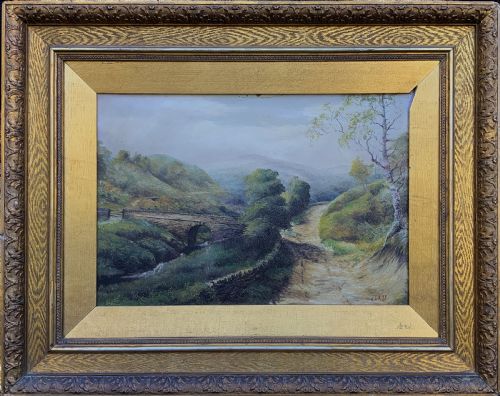
Framed examples frequently arrive in period giltwood and gesso settings that complement the traditional subjects. These pieces offer a direct connection to historical topography and the changing artistic movements of the British and continental schools.
How They Were Made
Artists relied upon oil paint applied to stretched canvas, wooden boards, or paper supports, building compositions through layered brushwork and glazing. Watercolour on paper served as a primary medium for detailed topographical views created both in the studio and directly on location.
Prepared grounds provided a stable foundation for pigments, while traditional framing employed carved timber finished with gesso and gold leaf. Many supports carry historical stretcher marks and inscriptions that record the exact geographical location of the river scene.
Country River Painting Retail Price Guide 2026
Typical asking prices for country river painting among the pieces listed under this phrase on Sellingantiques today, from the lower quarter to the upper quarter. They describe what is for sale here now, not the wider market.
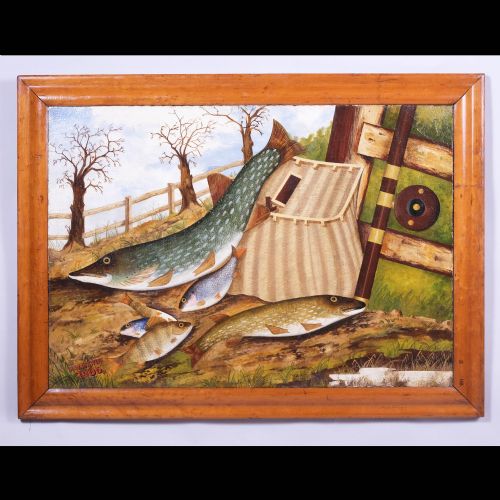
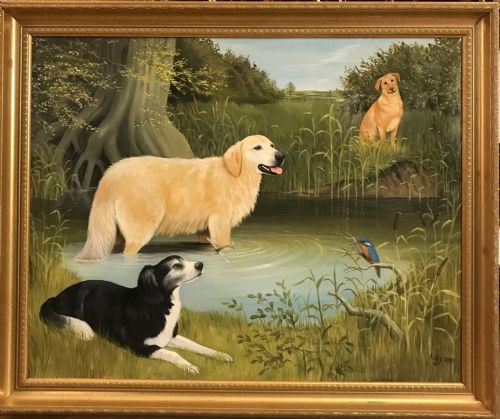
Surprise encounters with wandering livestock and fishing assistants populate these riverbanks across the centuries.
What Varies In Quality
Quality rests upon the artist's command of light, atmospheric perspective, and the natural movement of water across the canvas or paper. Stronger examples display confident brushwork and precise topographical observation rather than formulaic execution.
The integrity of the original surface, the preservation of the pigment, and the presence of contemporary framing contribute significantly to the standing of an individual work. Signed pieces with well-documented provenance from recognised regional schools hold particular distinction.
Robert Gallon·Herbert Royle·Paul Desire Trouillebert·George Hilditch·William Langley
The Country River Painting Glossary
- Gesso
- A plaster-like mixture applied to wood or canvas as a base for painting or as a smooth surface for gilding frames. This material allows intricate decorative mouldings to be applied to antique frames.
- Giltwood
- Timber that has been coated with a thin layer of gold leaf or gold paint. This finish defines the ornate frames frequently found surrounding nineteenth-century paintings.
- Barbizon School
- A mid-nineteenth-century French movement focused on plein-air landscape painting and naturalism. Artists within this circle emphasised direct observation of light and rural scenery.
- Stretcher
- The wooden frame upon which a canvas is stretched taut before painting. Inscriptions and labels attached to these timbers often reveal the history of the artwork.
- Tondo
- A circular work of art, whether a painting or a relief. This format offers a distinct compositional challenge compared to traditional rectangular canvases.
Country River Painting: Frequently Asked Questions
What periods do these paintings span?
The works originate largely from the nineteenth century and the early decades of the twentieth century. Examples extend from the Georgian era through Victorian pastoralism to mid-century impressionism.
Specific dates on canvases or paper help anchor each piece within these established artistic periods.
How were these watercolours and oils framed?
Period works typically feature timber frames finished with gesso and giltwood ornamentation. These surrounds often date from the same period as the artwork itself.
Original frames provide context and protect the edges of the canvas or paper support.
Can I identify the exact river shown?
Many titles and stretcher inscriptions name specific rivers, mills, and counties such as the Thames, the Severn, or Wharfedale. Artists frequently recorded precise geographical locations on the reverse of the canvas.
Local landmarks within the composition assist in verifying the depicted region.
How do I care for antique canvas and paper?
Oil paintings on canvas and watercolours on paper require stable indoor humidity away from direct sunlight. Avoiding extreme temperature fluctuations protects the paint layers and paper supports from degradation.
Glazed watercolours benefit from protection against UV light to prevent fading of the pigments.