
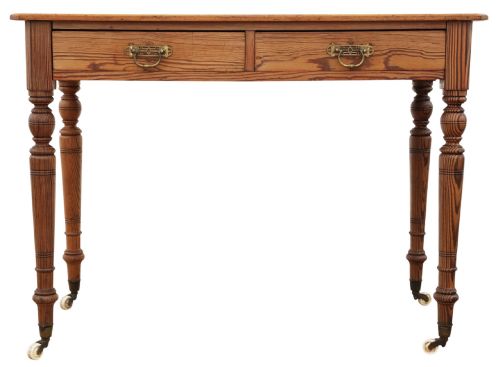
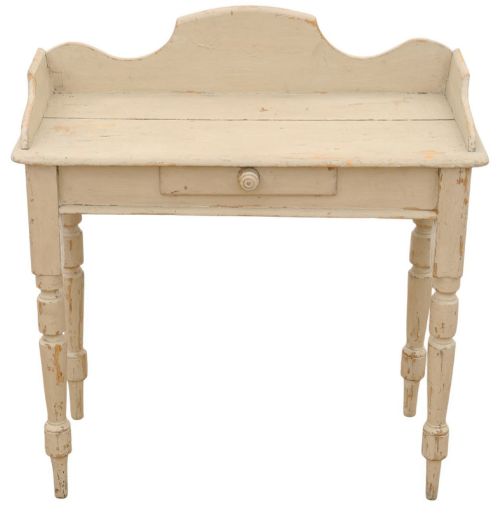
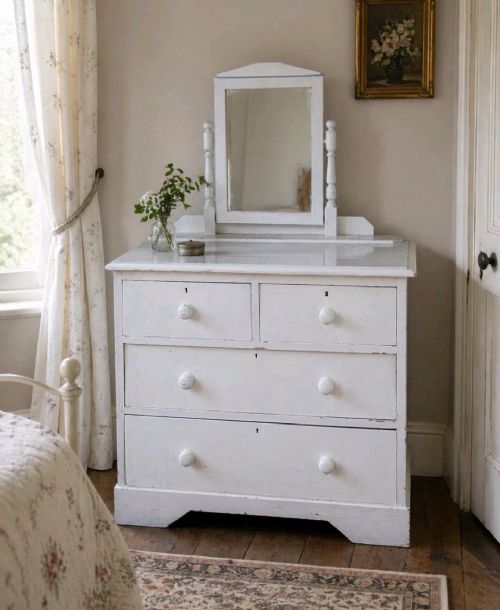
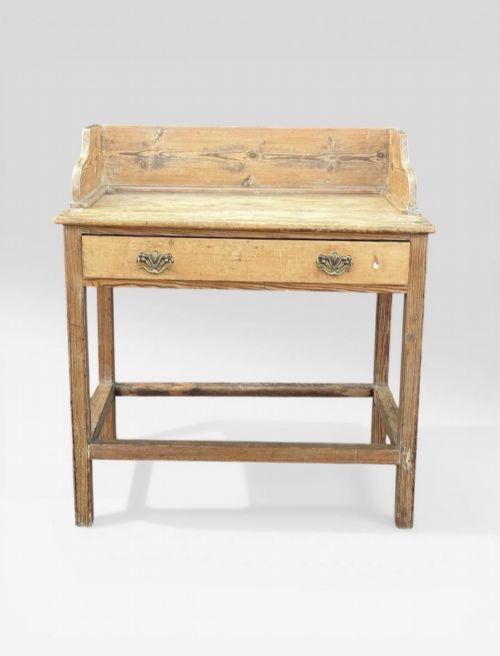




Country Pine Vanity Table
These country pine vanity table pieces are honest, timber-built items shaped for daily grooming and storage.
Country Pine Vanity Table
A country pine vanity table bridges the gap between utilitarian washing furniture and domestic dressing pieces, taking forms such as washstands, dressing tables, and writing desks. When searching this phrase, buyers encounter items spanning the Georgian, Regency, Victorian, and Edwardian periods.
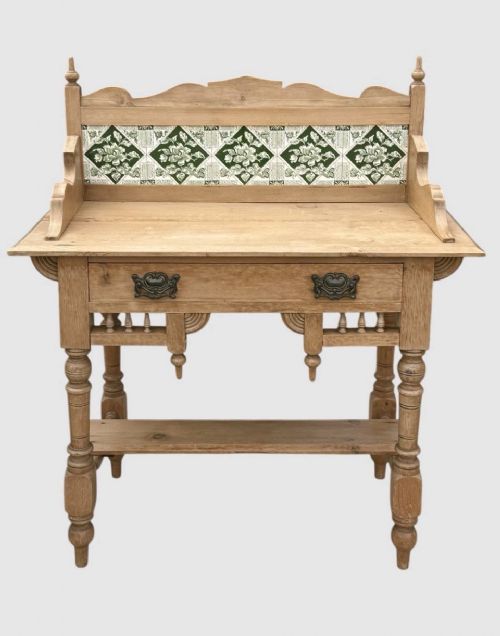
The pieces appearing on this page lean heavily towards Victorian and Edwardian examples, alongside earlier 19th-century and Regency specimens. Functionally, they blur lines between washstands, side tables, and dressing chests, often featuring drawer configurations or tile gallery backs.
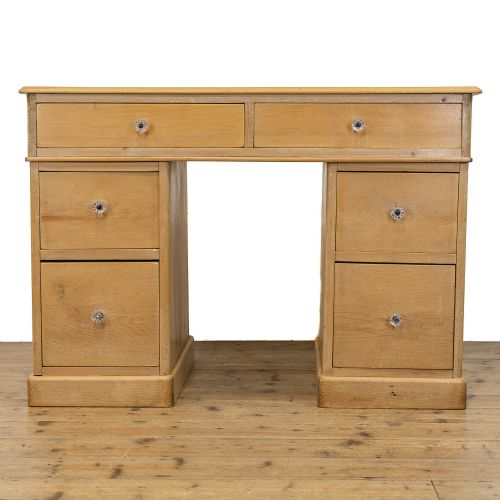
Originating largely from English country houses and farmhouses, these utilitarian items combine robust pine construction with domestic charm. The domestic record shows everything from simple drop-leaf side tables to painted washstands and kneehole desks adapted for personal grooming.
How they were made
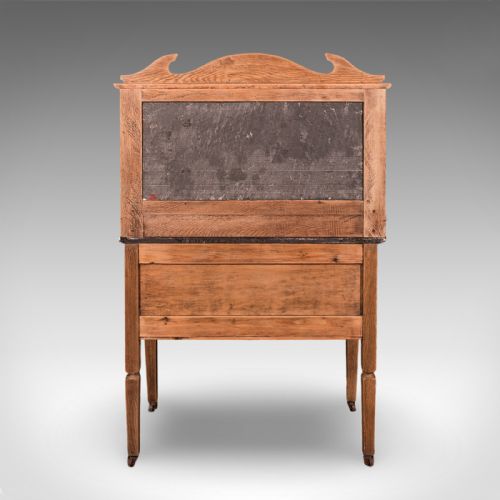
Makers relied primarily on solid pine and pitch pine, selecting softwood timber suited to everyday domestic use and functional longevity. Secondary elements incorporated brass hardware, glass mirrors, ceramic tiles, and slate surfaces.
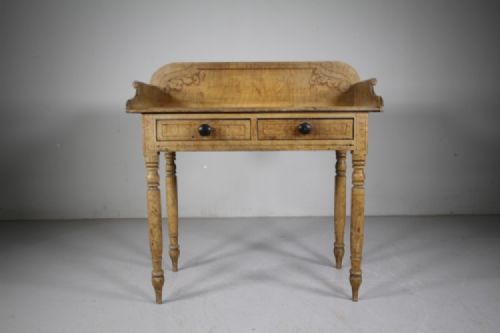
Surface treatments range from plain timber to painted finishes and scumble glazes applied over the pine base. Construction techniques prioritized sturdy utility, resulting in functional joints and practical storage solutions like chests of drawers and bowfront sideboards.
Listings span the 19th century, Victorian, Edwardian, and Georgian eras, utilising pine, pitch pine, brass, glass, paint, ceramic, and slate.
What varies in quality
Quality rests upon the selection of timber, distinguishing standard soft pine from denser pitch pine and well-figured grain. The integrity of original surface treatments, such as early paintwork or scumble glazing, heavily influences the character of each piece.
The Country Pine Vanity Table Glossary
- Pitch Pine
- A dense, resinous variety of pine timber prized for its durability and prominent grain patterns. It often appears in 19th-century desks and tables requiring greater structural strength.
- Scumble Glaze
- A decorative translucent paint technique used to imitate finer wood grains or create mottled patterns. Artisans applied this over a pale base coat to give ordinary pine a richer appearance.
- Tile Gallery
- A raised protective back section inset with decorative ceramic tiles. This feature is commonly found on washstands to shield walls from water splashes during washing.
- Bowfront
- A curved front facade that swells outward in the centre. This curved shaping occasionally softens the austere lines of country sideboards and case pieces.
- Washstand
- A dedicated piece of furniture designed to hold a washbasin, pitcher, and related toiletries. Many include marble or wood tops and tiled splashbacks.
Country Pine Vanity Table: Frequently Asked Questions
What is a country pine vanity table?
These items are domestic wooden furnishings spanning washstands, dressing tables, and writing desks made from pine.
They served practical daily routines in bedrooms and dressing areas across the 19th and early 20th centuries.
Were these tables painted originally?
Many pieces featured painted finishes or scumble glazes applied to protect the softwood and suit domestic interiors.
Original paint surfaces survive on several 19th-century examples, showing the decorative preferences of the period.
How do I care for antique pine?
Pine benefits from stable indoor humidity and minimal exposure to direct heat or moisture.
Gentle dusting and occasional wax maintenance preserve both bare timber and historic painted or glazed surfaces.