



Country Oak and Yew Chair
These country oak and yew chairs combine local timber and vernacular design, offering robust seating with deep regional character for traditional interiors.
Country Oak and Yew Chair
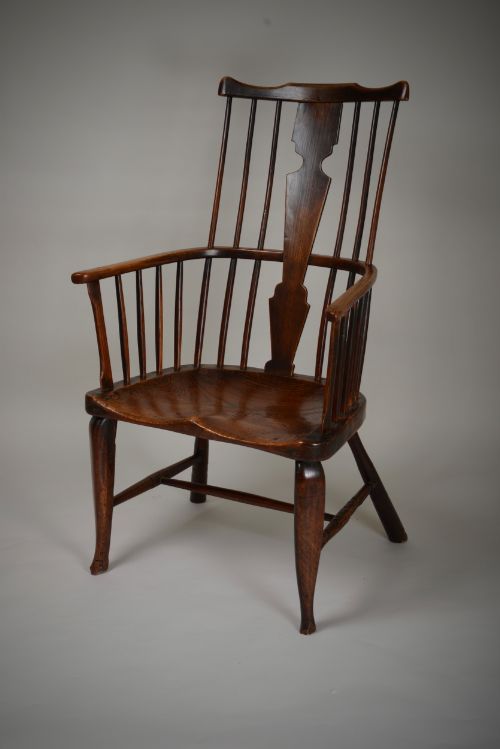
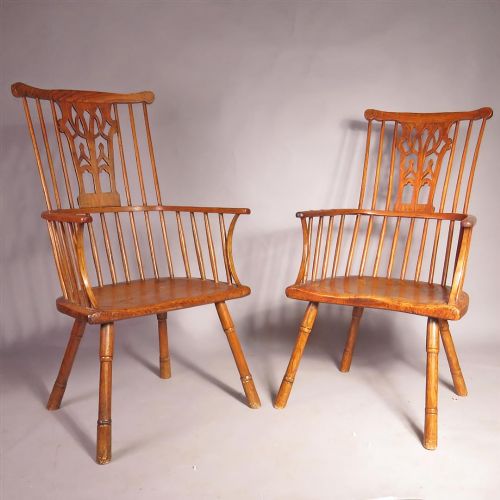
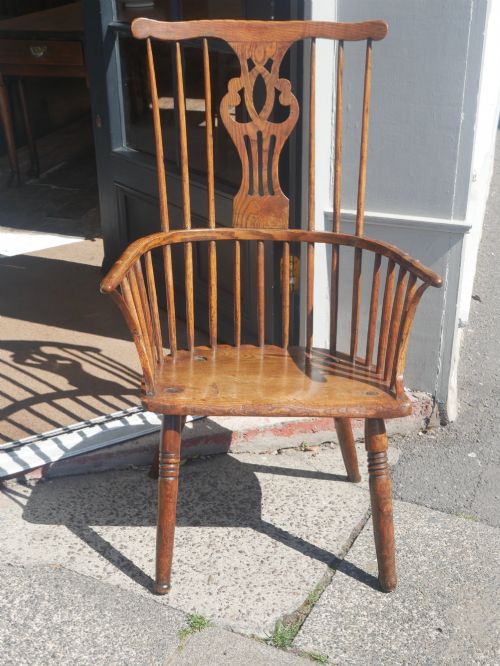
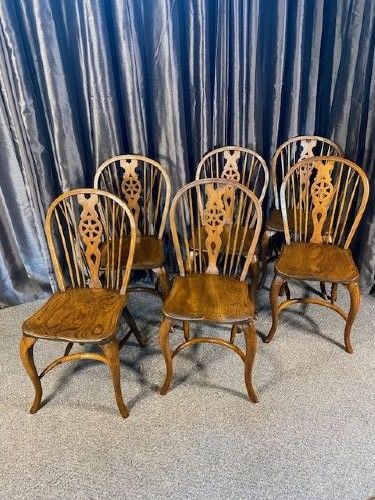
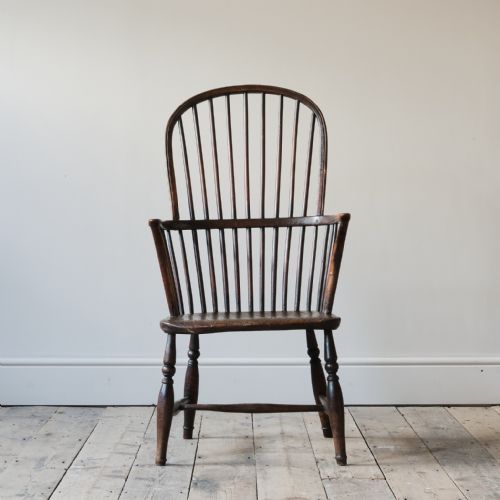
When you search for a country oak and yew chair, you are looking at vernacular wooden seating produced across English regions during the eighteenth and nineteenth centuries. These chairs rely on a central spindle or comb back construction rather than a rigid frame joined by standard upholstery.
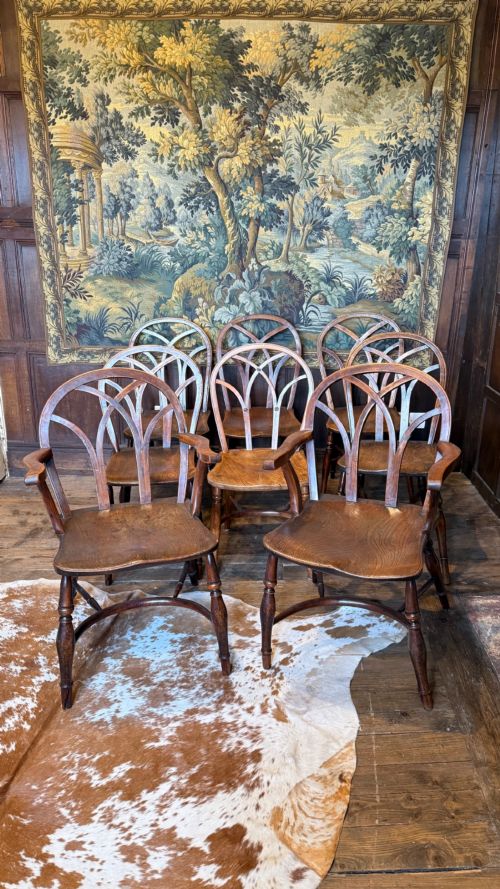
The selections available here range from single armchairs and rocking chairs to sets of dining chairs, alongside smaller child examples and miniature pieces. The typical form encountered on this page is the nineteenth century Windsor chair, shaped for domestic kitchens and parlours.
Regional variations appear frequently, including Thames Valley and Yorkshire origins, alongside Gothic Revival adaptations. These pieces bring functional domestic history directly into modern spaces through enduring wooden forms.
Judging quality in vernacular seating
Quality rests upon the balance of timber selection, particularly the choice of figured yew or substantial elm for the saddle seat. Superior examples display thoughtful grain matching between the bent bow and the central splat.
Construction integrity defines the upper tier, visible in the precision of wedged tenon joints and the retention of original turning details on legs and stretchers. Fine patination develops through decades of domestic use without obscuring the underlying tool marks.
Materials recorded across the inventory include elm, yew, ash, beech, oak, fruitwood, and pine.
The Country Oak and Yew Chair Glossary
- Windsor chair
- A wooden chair built with a heavy solid saddle seat into which the legs, back and arms are separately tenoned. This construction provides structural stability without requiring a bulky wooden frame.
- Comb back
- A Windsor chair style where vertical spindles rise through the arm rail to support a low horizontal top rail resembling a comb. It represents an evolution from earlier stick back designs.
- Crinoline stretcher
- A curved iron or wooden brace connecting the legs of a chair to provide additional structural rigidity. It is frequently found on eighteenth century Thames Valley examples.
- Wheel back
- A chair design featuring a pierced wooden splat carved in the shape of a spoked carriage wheel. This decorative motif gained popularity during the nineteenth century.
- Broad arm
- A chair featuring an unusually wide flat wooden armrest designed for writing or comfort. These variants often originate from Yorkshire workshops.
Country Oak and Yew Chair: Frequently Asked Questions
How do I identify Thames Valley chairs?
Thames Valley chairs are distinguished by their use of yew wood, distinctively figured elm seats, and refined turned details. They frequently incorporate crinoline stretchers for added stability.
These pieces reflect the high standard of regional carpentry found along the river valleys during the Georgian period.
Where were these chairs used?
These chairs served as functional everyday seating in domestic kitchens, farmhouses, and country parlours. Their sturdy construction made them suitable for continuous daily use.
Over generations, this routine handling developed the timeworn patinas seen on surviving examples today.
How do I care for antique wood?
Antique timber benefits from stable indoor humidity levels away from direct heat sources and strong sunlight. Regular dusting with a soft dry cloth helps preserve the historic surface finish.
Application of traditional waxes can maintain the lustre of the wood without building up heavy chemical layers.