






Country House Painted Drawers
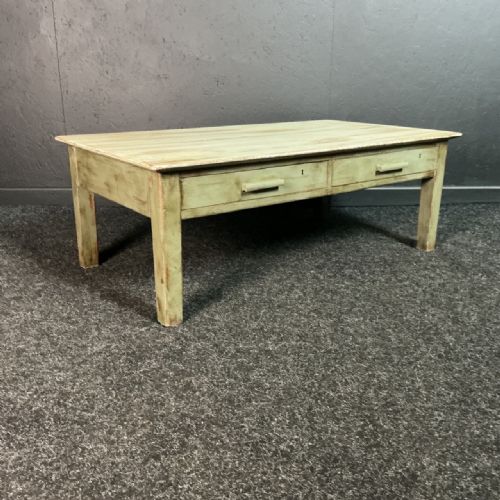
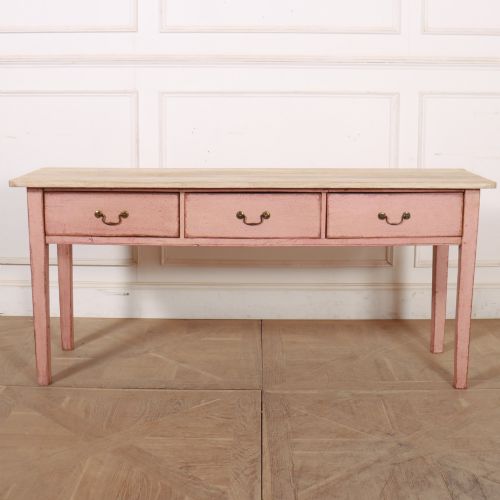
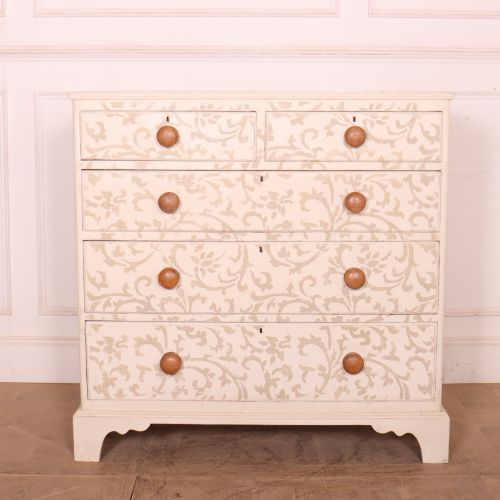
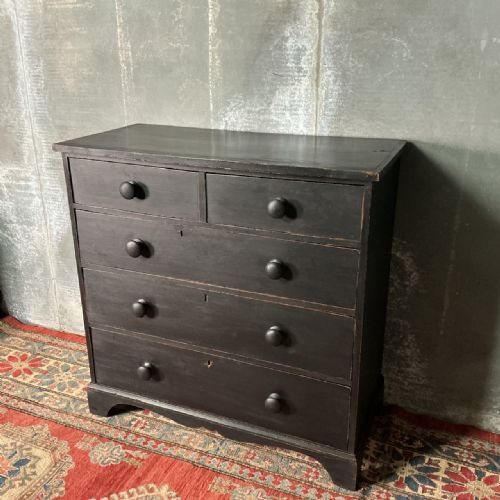
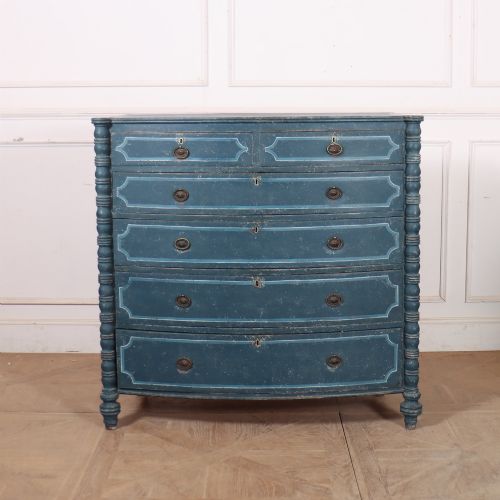
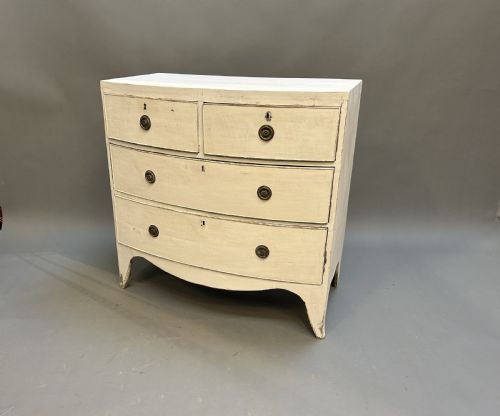
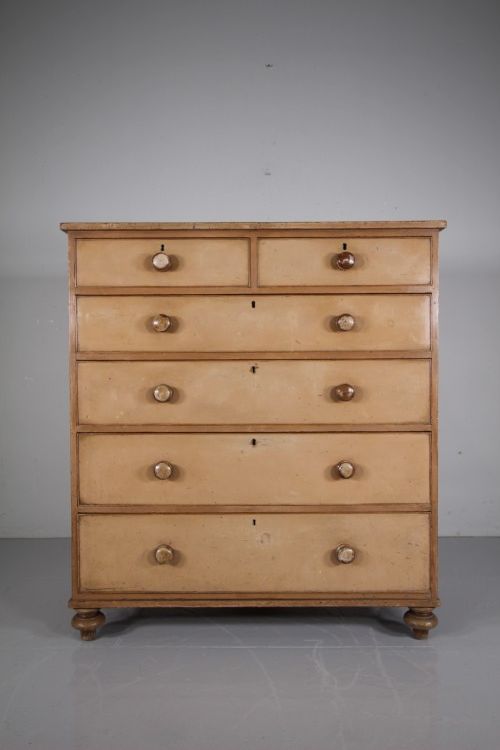
Country house painted drawers bring domestic history into a room through surfaces finished in coat upon coat of historic colour.
Country House Painted Drawers
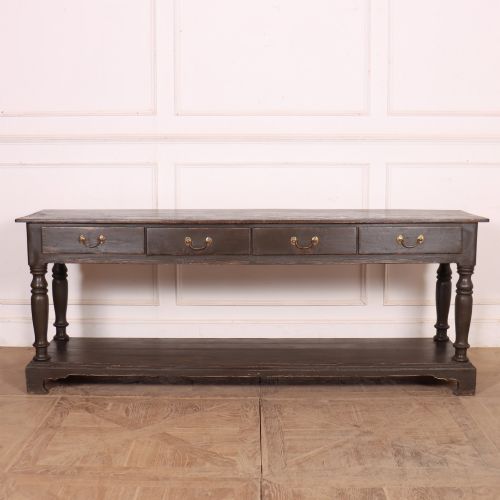
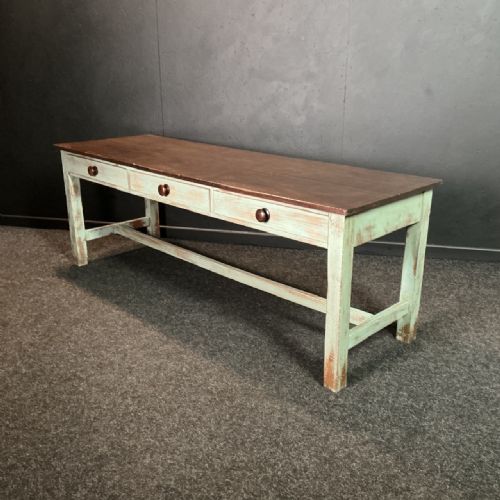
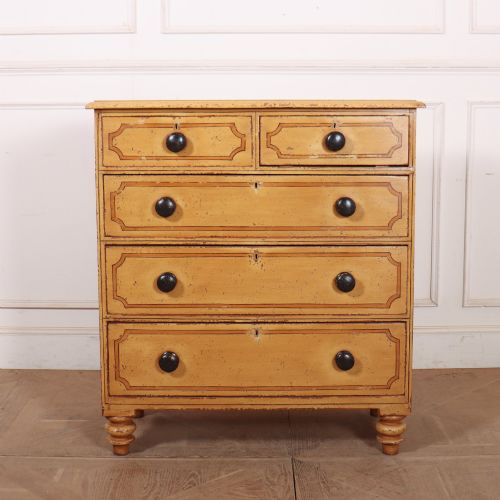
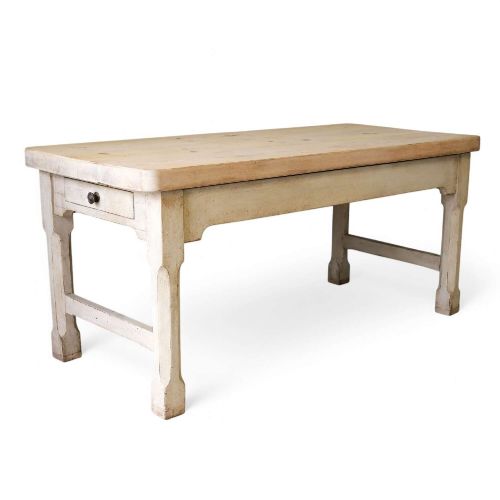
Country house painted drawers encompass practical storage furniture found across English and European domestic interiors from the eighteenth and nineteenth centuries. These pieces appear primarily as chests of drawers, alongside related forms such as dresser bases, writing tables and bedside cabinets, reflecting the utilitarian needs of large estates.
The aesthetic leans heavily into English Country, Victorian Country and Rustic Farmhouse traditions, where utility dictated form rather than formal courtly display. Buyers searching for country house painted drawers seek out items that retain their characterful patination and lived-in proportions rather than pristine factory finishes.
Materials and construction methods
Carpenters typically constructed these carcases using accessible domestic timbers such as pine, birch, walnut and oak, joined with traditional framing techniques to withstand heavy daily use. Drawers feature simple timber runners and hand-cut dovetails that anchor the structural integrity of the piece over centuries of opening and closing.
The characteristic finish relies on layers of paint, often applied as scumble glaze, decorative brushwork or plain colour coats over the raw wood. Brass handles and metal hardware provide functional contrast against painted timber surfaces, while subsequent layers or later coats of paint record the ongoing maintenance of domestic interiors.
Country House Painted Drawers Retail Price Guide 2026
Typical asking prices for country house painted drawers among the pieces listed under this phrase on Sellingantiques today, from the lower quarter to the upper quarter. They describe what is for sale here now, not the wider market.
One cheerful Hungarian cupboard arrives painted in an amazingly bright green, proving country houses loved a bold splash of colour.
Assessing quality and authenticity
Quality rests in the relationship between the original timber carcase and the historical integrity of its surface coating. Pieces retaining original paint schemes or early scumble finishes command greater interest than those subjected to unsympathetic modern stripping or heavy-handed re-painting.
Proportion and structural soundness also separate standard utility items from finer examples originating in substantial country houses. The crispness of drawer construction, the retention of period brass elements and the depth of the accumulated paint layers all contribute to a piece's standing.
The Country House Painted Drawers Glossary
- Scumble paint
- A translucent or opaque glaze applied over a base coat and manipulated with combs, rags or brushes to simulate finer grain or create mottled texture. This technique was frequently employed in country houses to elevate plain pine furniture.
- Dresser base
- The lower portion of a traditional kitchen or dining room storage unit, featuring drawers and cupboards beneath a sturdy work surface. These lowboards served varied prep and serving duties in large domestic quarters.
- Potboard
- An open slatted lower shelf integrated into the base of a dresser or serving table, traditionally designed to hold heavy earthenware pots and platters. It provides foundational bracing while offering practical low-level storage.
- Mule chest
- A traditional storage chest fitted with one or two drawers beneath the main compartment, bridging the evolution from trunk to chest of drawers. These versatile pieces held linens and garments in domestic chambers.
- Bowfront
- A curved cabinet front where the central section projects outward in a smooth convex arc. This refined joinery detail softens the profile of standard chest designs.
Country House Painted Drawers: Frequently Asked Questions
What defines country house painted drawers?
These pieces are domestic storage furniture originating from nineteenth and eighteenth-century domestic settings, finished with historical paint or scumble glaze rather than polished wood.
They combine robust utilitarian construction in pine, oak or hardwood with decorative surface treatments that evolved through generations of domestic use.
How were these drawers used originally?
Staff and family members utilised them in bedrooms, kitchens and service corridors of large estates for storing linens, clothing and household provisions.
Their sturdy tops also doubled as surfaces for folding textiles, preparing food or displaying everyday domestic objects.
How do I care for original paint surfaces?
Dust the timber gently with a dry, soft cloth and avoid chemical cleaning agents or abrasive polishes that might lift the historic paint layers.
Keep the furniture away from direct heat sources and dramatic humidity shifts to prevent the underlying wood from expanding and cracking the paint.
How can I tell original paint from later coats?
Close inspection reveals microscopic crackling, uniform wear patterns around handles, and deep integration of pigment into the timber pores over decades.
Later overpainting often sits flat and glossy without the natural softening and patination accumulated through generations of household cleaning.