

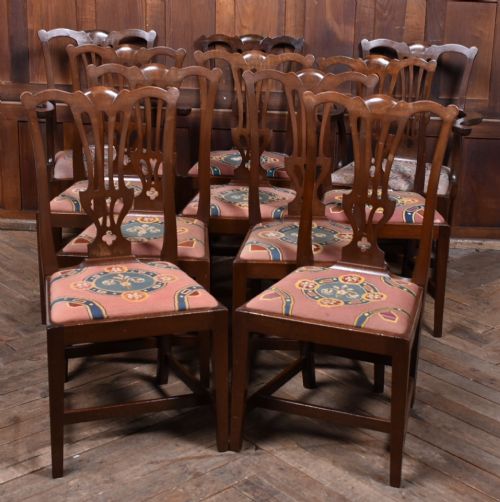

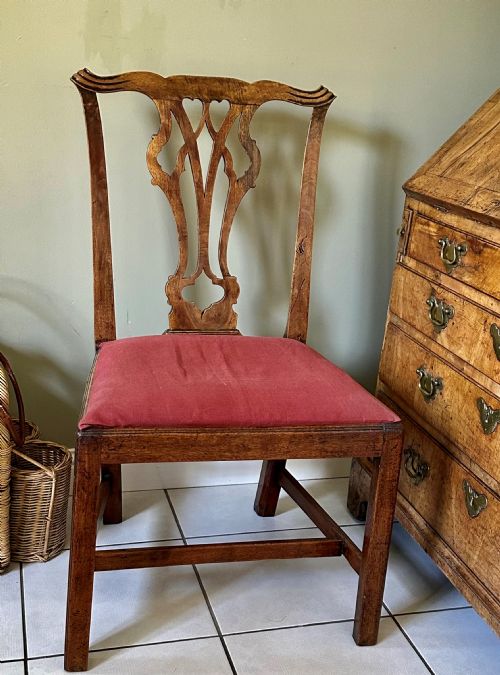


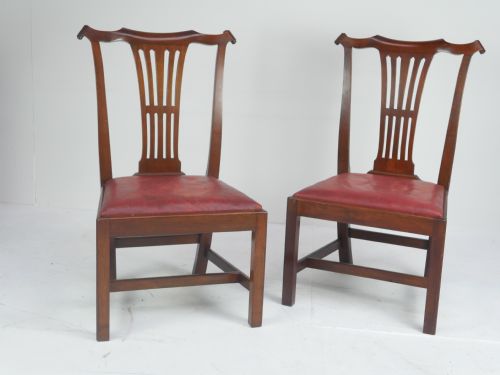
Country Chippendale Side Chairs
Country Chippendale side chairs bring robust vernacular charm to a dining room, offering sturdy construction and classic pierced splats.
Country Chippendale Side Chairs
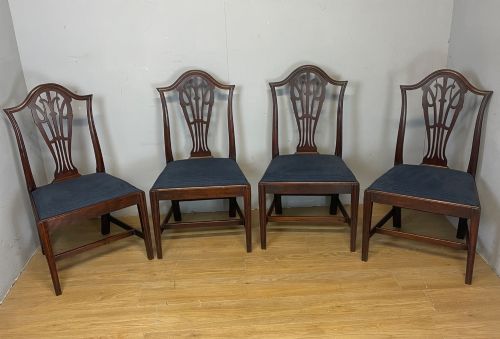
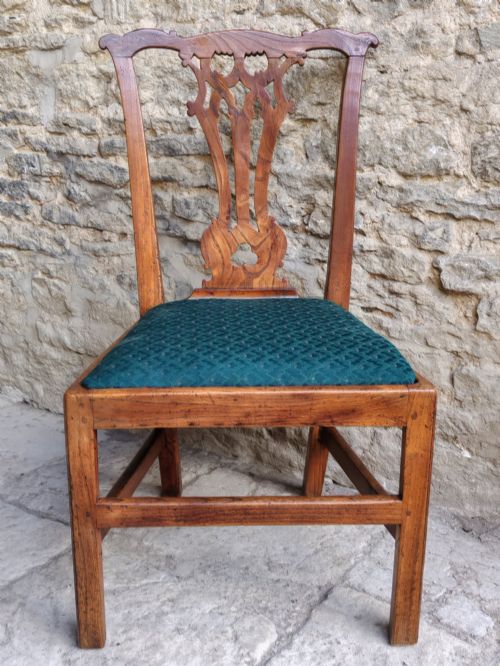
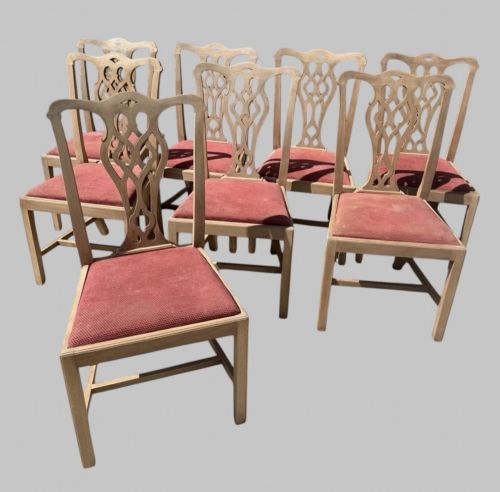
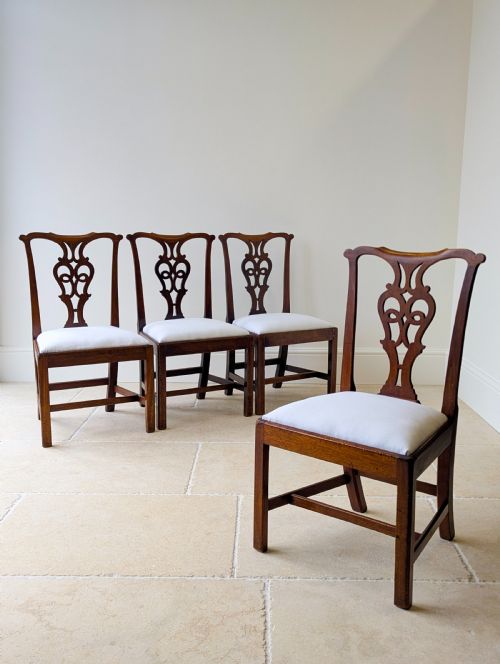
When you search for country Chippendale side chairs, you are looking at sturdy seating that adapts urban 18th-century fashion for provincial homes. These pieces merge fashionable Chippendale-inspired splats with heavier, simpler frames suited to rural life.
The versions you are most likely to meet on this page date from the Georgian period through to later revivals. They appear in timbers such as oak, elm, alder and mahogany, often featuring plain or upholstered seats in leather, fabric and needlepoint.
How they were made
Provincial cabinetmakers relied on locally available hardwoods like oak and elm to construct these frames, utilising traditional joinery to ensure everyday durability. Timber selection often dictated the weight and grain of the finished seat.
Carving on the splats and top rails tends to be simpler than on metropolitan examples, reflecting the practical skills of regional workshops. Seats were frequently dropped in and upholstered in durable textiles, leather or embroidered needlepoint.
Country Chippendale Side Chairs Retail Price Guide 2026
Typical asking prices for country chippendale side chairs among the pieces listed under this phrase on Sellingantiques today, from the lower quarter to the upper quarter. They describe what is for sale here now, not the wider market.
The selection spans eighteenth-century Georgian origins through to Edwardian revival interpretations.
What varies in quality
The distinction between ordinary and superior examples lies in the crispness of the timber carving and the integrity of the original frame construction. Heavier timber selection and well-proportioned splats elevate certain provincial pieces above simpler utilitarian seating.
Survival of original surface finishes and early upholstery materials significantly influences the character of a chair. Pieces that retain their original timber patination without excessive alteration hold greater appeal for traditional interiors.
Wheelers of Arncroach
The Country Chippendale Side Chairs Glossary
- Chippendale Style
- A design vocabulary derived from Thomas Chippendale's published patterns, characterised by pierced splats and subtle curves. Provincial makers adapted these fashionable outlines for local use.
- Splat
- The vertical central slat of a chair back, often shaped and pierced in these designs. Regional interpretations simplified urban ornament into sturdy geometric forms.
- Georgian
- A broad period spanning the reigns of the first four Georges, encompassing significant shifts in furniture design. Much of the rural output reflects these stylistic developments decades later.
- Needlepoint
- A form of canvas work used extensively for historic chair seat covers. Hand-stitched wool designs add colour and texture to wooden frames.
Country Chippendale Side Chairs: Frequently Asked Questions
Are these chairs comfortable for daily dining use?
Most country Chippendale side chairs were designed for upright posture at the dining table rather than deep lounging. Their supportive backs and firm drop-in seats suit them well for regular meal times.
Over the centuries, upholstery padding tends to compress, so modern users sometimes find that adding subtle support underneath restores the original seating height.
How do I identify a true Georgian piece?
Examining the timber joints, hand-cut fixings and general wear patterns helps distinguish pieces made in the eighteenth century from later revival furniture. Regional timbers such as elm and oak often point towards provincial eighteenth-century production.
Comparing the crispness of the hand-carved splat against later machine-tooled examples also clarifies the period of manufacture.
Can I mix different woods around a table?
Historically, country sets were often assembled from various regional workshops over time rather than purchased as a single uniform batch. Mixing oak, elm and mahogany chairs creates an authentic provincial dining arrangement.
Matching the overall height and back style matters more than ensuring identical timber species when grouping chairs together.
How should I care for antique timber and leather?
Keeping wooden frames away from direct sunlight and radiators prevents the oak and elm from drying out or splitting. Gentle dusting and occasional wax application maintain the natural finish of the timber.
For leather or fabric seat pads, regular soft brushing and conditioning keep the historical materials stable without altering their patina.