

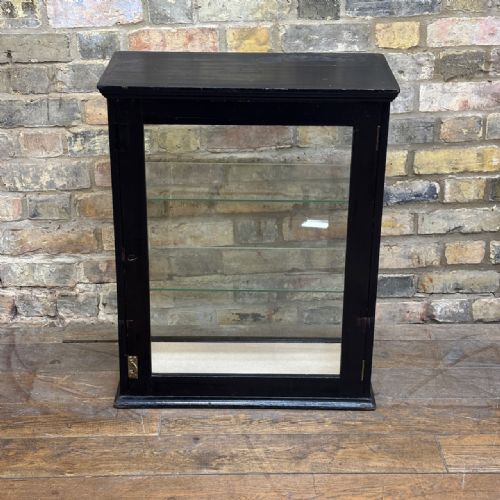
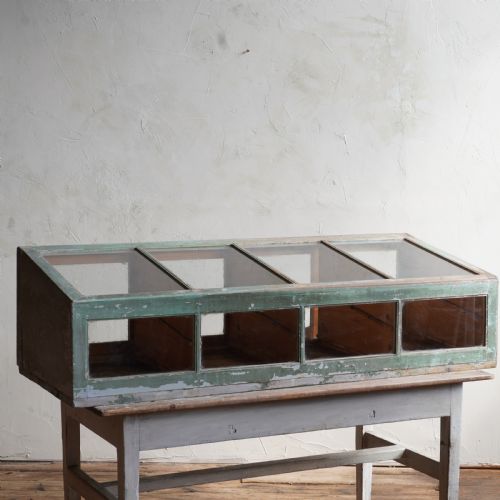


Countertop Vitrine Case
A countertop vitrine case protects and elevates small treasures, offering a clear view from every angle on any surface.
Countertop Vitrine Case
A countertop vitrine case sits upon counters and tables, functioning primarily as a tabletop display cabinet or shop display case. These pieces bring height and structure to a room while keeping delicate objects secure behind glass.
The selections here span the Victorian era, the Edwardian period, and the 1920s, alongside Art Deco and Rustic Industrial styles. Mahogany, pine, brass, and ebonised timber provide the main structural frameworks for these glazed enclosures.
Commercial shop fittings share space with domestic table top display cabinets and apothecary containers. Buyers frequently encounter pieces originating from retail counters, adapted now for home collections or specialised displays.
How they were made
Cabinet makers constructed the primary frames using solid timber such as mahogany and pine, often finished with ebonised treatments or distressed paint layers. Glazed panels formed the viewing walls, secured within wooden or brass framing to maximise visibility.
Internal elements frequently incorporate mirrored backs to reflect light through the enclosed space. Brass hardware, including hinges and latches, fastens the opening doors and access panels.
Countertop Vitrine Case Retail Price Guide 2026
Typical asking prices for countertop vitrine case among the pieces listed under this phrase on Sellingantiques today, from the lower quarter to the upper quarter. They describe what is for sale here now, not the wider market.
Some cases spent decades holding remedies in apothecary shops before retiring to display curiosities in quiet sitting rooms.
What varies in quality
The refinement of the timber framework and the clarity of the glass define the division between standard utility cases and finer pieces. Better examples display careful joinery and well-fitted doors that maintain a tight seal.
Commercial provenance and signature hardware elevate certain cases above domestic equivalents. The choice of materials, from heavy brass framing to polished mahogany, marks the distinction in craftsmanship.
John Stow Ltd of Bradford·F. Sage & Co. London
The Countertop Vitrine Case Glossary
- Vitrine
- A glass-fronted cabinet designed for displaying fine objects or curiosities. These enclosures protect items from dust while maintaining maximum visibility.
- Ebonised
- Wood treated with a chemical stain or finish to imitate ebony. This dark, formal surface treatment appears frequently on pieces from the early twentieth century.
- Apothecary
- Pertaining to the preparation and sale of medicines. Apothecary cases typically feature compartmentalised interiors or specific labelling suited for small bottles and jars.
- Distressed paint
- Surface decoration showing natural wear, age, or intentional weathering. This finish highlights the industrial and commercial origins of older shop fittings.
Countertop Vitrine Case: Frequently Asked Questions
What fits inside a countertop vitrine case?
Small collectibles, pocket watches, medals, and precious specimens suit these enclosures best. The shallow depth keeps items visible without crowding.
Larger pieces of silver or heavy ceramics generally require deeper floor-standing cabinets rather than a tabletop display.
How do I clean the glass safely?
Use a soft cloth and mild glass cleaner applied directly to the cloth rather than the case. This prevents moisture from seeping into old wooden frames or tarnishing brass.
Avoid harsh chemical sprays near painted or ebonised surfaces to preserve the original finish.
Where should I place my case?
Position the vitrine on a sturdy chest of drawers, sideboard, or shop counter where it receives stable support. Ensure the surface remains level so doors swing freely.
Keep cases away from direct sunlight to protect vulnerable items and older timber from fading.
How do I identify the period?
Examine the timber species, hinge design, and overall stylistic cues such as Art Deco geometric lines or Victorian mahogany framing. Commercial pieces often bear maker plaques or stamps.
Distressed paint finishes and brass hardware also offer clues regarding the manufacturing decade.