

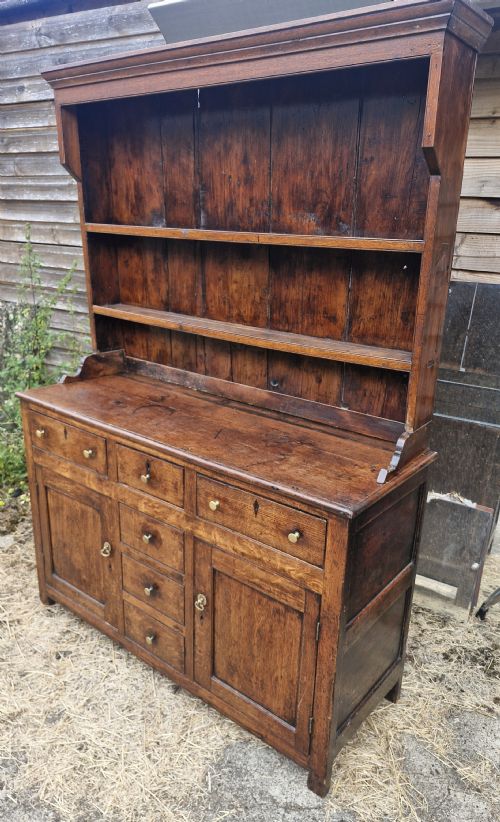


Cottage Dresser
A cottage dresser brings honest utility and vernacular charm into a room, offering open display alongside practical storage.
Cottage Dresser
A cottage dresser combines a lower base of drawers or cupboards with an upper plate rack, built to serve daily domestic life in rural homes. These traditional pieces span periods from the eighteenth century through the Victorian era and into the early twentieth century.
Forms range from small oak examples with accompanying display racks to painted pine chests of drawers and slim Arts and Crafts variations. Each piece reflects the vernacular traditions of its maker and period.
How they were made
Carpenters constructed these pieces primarily using solid oak and pine, selecting timber for local availability and everyday durability. Metal hardware such as brass handles and pulls functionalized drawers and doors.
Surfaces received straightforward treatments, with many examples left as bare stripped wood while others wear historic layers of paint. Construction methods prioritised structural strength over ornate embellishment, using traditional joints suited to heavy domestic use.
Cottage Dresser Retail Price Guide 2026
Typical asking prices for cottage dresser among the pieces listed under this phrase on Sellingantiques today, from the lower quarter to the upper quarter. They describe what is for sale here now, not the wider market.
Some dressers wear their history quite literally, bearing generations of kitchen paint beneath later finishes.
What varies in quality
Quality in a cottage dresser rests on the proportion of the piece, the integrity of the timber, and whether elements like the rack are original to the base. Pieces retaining their original surface patination and honest proportions stand apart from heavily altered examples.
The harmony between the lower storage and the upper plate rack dictates visual balance. Finer vernacular pieces show thoughtful joinery and regional characteristics that distinguish them from simpler utilitarian work.
The Cottage Dresser Glossary
- Plate rack
- The upper open shelving section of a dresser designed to display plates and ceramic ware. It typically attaches securely to the top of the base.
- Vernacular
- Furniture built by regional craftsmen following local traditions rather than formal academic design patterns. These pieces use native timbers and utilitarian forms.
- Patina
- The surface texture and deep colour developed by wood through age, handling, and light exposure over generations. It provides a visual record of a piece's history.
- Dresser base
- The lower section of a dresser comprising cupboards, drawers, or a combination of both. It serves as the heavy foundation supporting the upper display structure.
Cottage Dresser: Frequently Asked Questions
What is a cottage dresser?
A cottage dresser is a traditional piece of vernacular furniture featuring a lower storage base of drawers or cupboards paired with an upper open rack for displaying plates.
Craftsmen built these items for everyday rural homes, where they served as the central storage and display hub for domestic kitchenware.
How do I date a cottage dresser?
Dating relies on observing construction methods, timber choice, hardware, and stylistic traits typical of periods like the eighteenth century or the Victorian era.
Examining drawer joints and the wear patterns on the wood helps determine the chronological age of the piece.
Were these dressers painted originally?
Many pine dressers received coats of paint during the nineteenth and early twentieth centuries to protect the wood and brighten cottage interiors.
Historic paint layers add character and authenticity, while other pieces were left as exposed oak or later stripped down to bare timber.
How do I style a cottage dresser in a modern home?
A cottage dresser works well in kitchens, dining rooms, or living spaces as a functional storage unit and display area for ceramics and books.
Balancing everyday tableware on the upper rack with enclosed storage below keeps the arrangement practical and visually grounded.