



Cornwall Wall Art
Cornwall wall art captures the rugged harbours, fishing luggers and bright coastal light of the West Country through centuries of painting and drawing.
Cornwall Wall Art
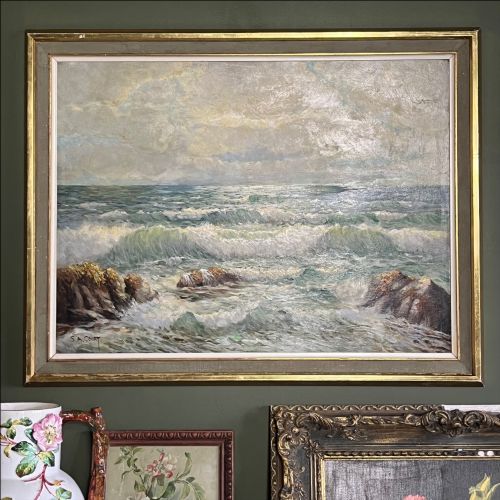
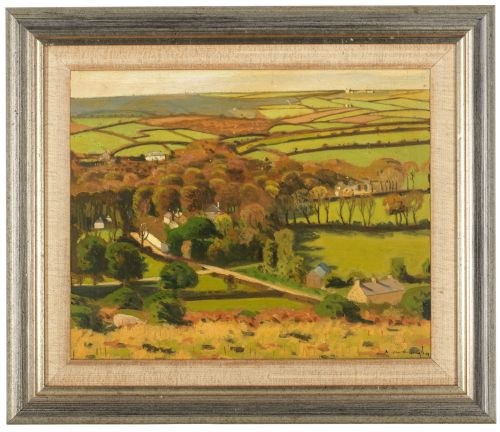
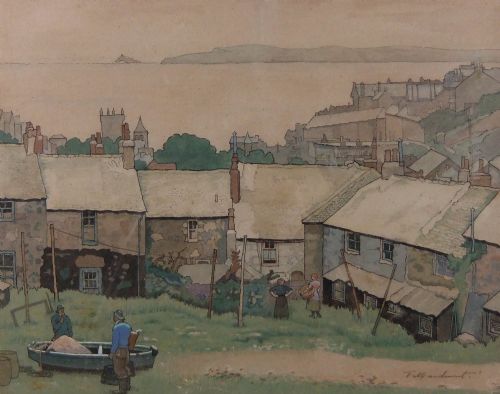
When you search for cornwall wall art, you encounter a rich selection of paintings, watercolours and framed artwork recording the harbours, coastal scenes and fishing villages of the region. The selection spans the nineteenth century through to the mid-twentieth century, capturing the evolution of local artist communities.
The version you are most likely to meet on this page is a framed oil painting or watercolour dating from the Victorian period up to the nineteen-fifties. These works frequently depict familiar locations such as St Ives, Polperro, Mevagissey and Newlyn, reflecting the strong draw of the coastline for painters.
Represented movements include the Newlyn School, British Impressionism and the St Ives School alongside traditional marine and landscape art. Works range from intimate watercolour studies executed en plein air to large oil paintings on canvas depicting tall ships and bustling quaysides.
How they were made
The physical objects combine traditional supports such as paper, canvas and wood with wet media including oil paint, watercolour and pastel. Artists working outdoors favoured portable watercolours and paper for rapid sketching of changing coastal light, while larger studio compositions relied on oil paint on canvas or wooden panels.
Framing often involves gilt wood or period timber mouldings that protect the delicate paper or canvas surfaces. The application varies from fluid, transparent washes in watercolours to thick, textured impasto in impressionist and modern oil paintings.
Artists often packed heavy oil paints and delicate watercolours onto windy Cornish quaysides just to chase a fleeting splash of blue.
What varies in quality
The distinction between standard works and exceptional examples lies in the confidence of the brushwork and the artist's ability to capture transient atmospheric conditions. Superior paintings demonstrate a nuanced understanding of coastal light and shadow rather than mere topographical recording.
Provenance and association with recognised regional artist colonies elevate certain pieces significantly. Works by established figures associated with the Newlyn School or St Ives show greater mastery of composition and colour harmony compared to anonymous amateur productions.
Sidney A Court·William Banks Fortescue·Robert Morson Hughes·Thomas Maidment·George F Pennington·Denis Mitchell·Edward Matthew Elliott·Charles Napier Hemy·Richard Harry Carter·Gyrth Russell·William Pitt·Joseph Farquharson·Ernest F Hill·Jack R Mould·William Lee Hankey·Hendrik Yan Wolter·S J Lamorna Birch·Herbert James·John Baragwanath King·Henry Scott Tuke·J F Poole·Henry Fothergill·Kenneth Carter·Kevin Platt·James George Philp
The Cornwall Wall Art Glossary
- En plein air
- Painting outdoors to capture direct observations of light and atmosphere. This approach was central to the working methods of artists recording the Cornish coast.
- Newlyn School
- An artist colony based in a Cornish fishing village from the late nineteenth century onwards. Members focused on naturalistic depictions of local fisherfolk and coastal life.
- St Ives School
- A group of artists associated with the Cornish port town who embraced both traditional landscape painting and later modernist developments. The grouping spans early twentieth-century realism through to mid-century abstraction.
- Watercolour
- A painting method where coloured pigments are suspended in a water-based solution on paper. It was frequently utilised for rapid coastal sketches.
- Impasto
- Paint applied thickly to a canvas or panel so that the brush or palette knife marks remain visible. This technique adds tactile depth to marine and landscape subjects.
Cornwall Wall Art: Frequently Asked Questions
What periods do these artworks cover?
The pieces span from the eighteenth century through the Victorian era and into the mid-twentieth century. Most examples date from the late nineteenth and early twentieth centuries when artistic interest in the region peaked.
Key movements represented include Victorian fine art, British Impressionism, and the St Ives and Newlyn schools. This timeline reflects the enduring appeal of Cornwall as a destination for painters.
Which Cornish locations appear most often?
St Ives, Polperro, Mevagissey and Newlyn feature prominently across the paintings and watercolours. Artists were drawn to these busy fishing harbours and their distinct coastal topography.
Other works record scenes around Falmouth, Penzance, and the Tamar, capturing both maritime traffic and quiet rural corners of the West Country.
How should I care for antique watercolours?
Works on paper require protection from direct sunlight to prevent fading of watercolours and discolouration of the paper support. Maintaining stable humidity levels prevents foxing and mould growth.
Displaying pieces away from damp exterior walls and heat sources ensures the longevity of both the artwork and its period frame.
How do oil paintings differ from watercolours here?
Oil paintings utilise pigments bound in drying oils on canvas or wood panels, offering rich texture and deep colour saturation. Watercolours employ transparent washes on paper, resulting in lighter, more immediate atmospheric effects.
Oils are generally more durable and less sensitive to light than works on paper, though both benefit from professional framing.